

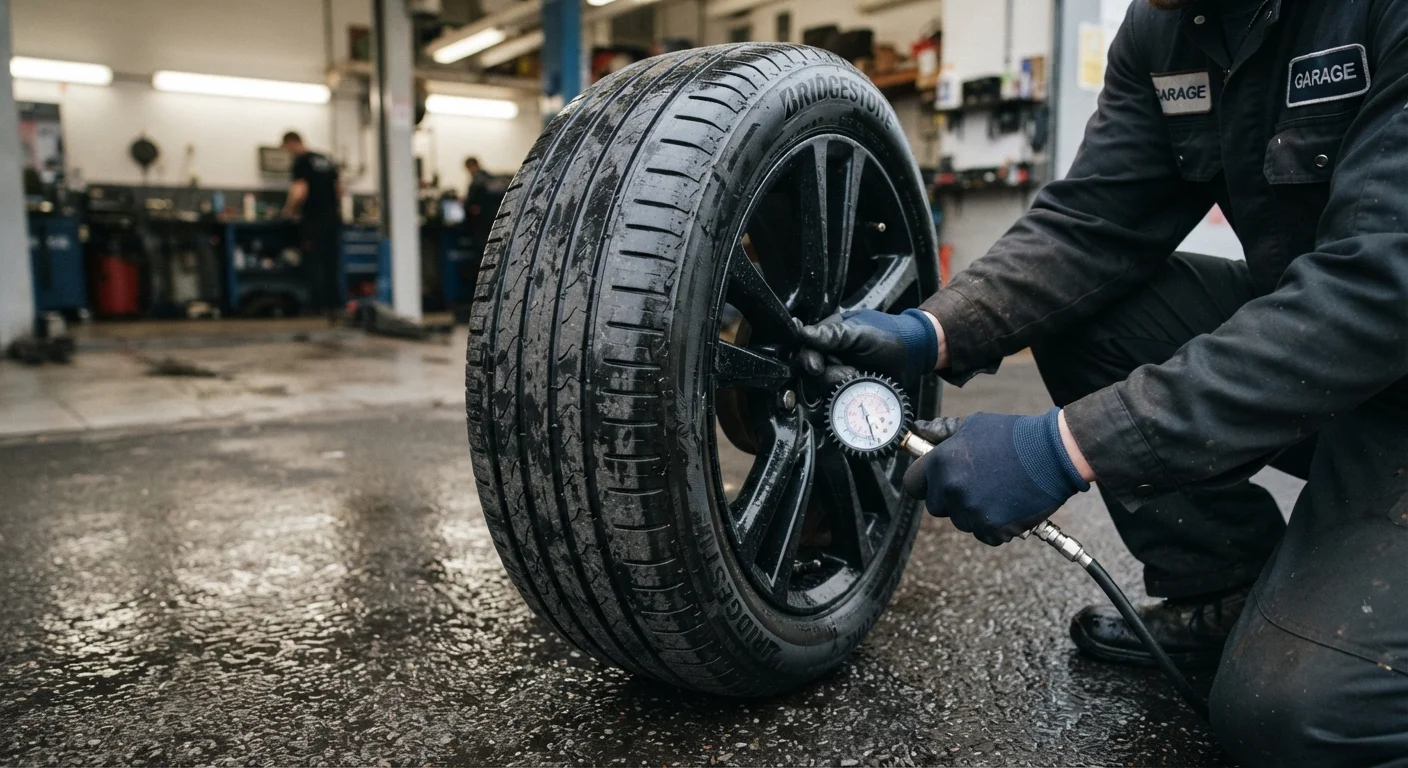
| Recommended Check Frequency | At least once per month (and before long trips) (National Highway Traffic Safety Administration (NHTSA)) |
| Correct Pressure Source | Driver's door jamb sticker or owner's manual |
| Rotation Interval | Every 5,000-7,500 miles (Typical manufacturer guidance) |
| Legal Minimum Tread Depth (most US states) | 2/32 of an inch |
| Recommended Replacement Threshold | 4/32 of an inch (especially in wet/snowy climates) (Tire safety advocacy guidance) |
| PSI Drop Per 10°F Temperature Fall | Approximately 1 PSI (General automotive engineering principle) |
Why Tire Maintenance Matters More Than Most Drivers Realize
Tires are the only part of your vehicle that contacts the road. Their condition directly affects braking distance, handling, fuel economy, and blowout risk - yet tire care is one of the most commonly overlooked aspects of vehicle ownership. The good news: the fundamentals are straightforward and require no special tools beyond a tire pressure gauge and a penny.
This article covers the three pillars of tire upkeep - pressure, rotation, and tread depth - along with the numbers and intervals every driver should know. For a broader look at how these habits fit into overall vehicle longevity, see our guide to maintenance habits that keep cars running longer.
| Recommended Check Frequency | At least once per month (and before long trips) (National Highway Traffic Safety Administration (NHTSA)) |
| Correct Pressure Source | Driver's door jamb sticker or owner's manual |
| Rotation Interval | Every 5,000-7,500 miles (Typical manufacturer guidance) |
| Legal Minimum Tread Depth (most US states) | 2/32 of an inch |
| Recommended Replacement Threshold | 4/32 of an inch (especially in wet/snowy climates) (Tire safety advocacy guidance) |
| PSI Drop Per 10°F Temperature Fall | Approximately 1 PSI (General automotive engineering principle) |
Tire Pressure: The Correct Number and When to Check It
The correct inflation pressure for your tires is not the number printed on the tire sidewall - that's the maximum the tire can hold. The right figure is on the sticker inside your driver's door jamb (or in your owner's manual), expressed in PSI. Most passenger cars fall in the 32-35 PSI range; trucks and SUVs often run higher.
Check pressure when tires are cold - meaning the vehicle has been parked for at least three hours or driven fewer than a mile. Heat from driving expands air and produces falsely high readings. Tire pressure naturally drops roughly 1 PSI for every 10°F decrease in ambient temperature, which is why fall and winter prompt warning lights in many vehicles.
A tire that is underinflated by just 8 PSI can reduce fuel economy and accelerate tread wear significantly. Overinflation causes the center tread to wear faster and reduces the tire's contact patch, affecting grip. Check pressure at least monthly and before any long road trip. Many misconceptions about inflation are covered in common car ownership myths that cost drivers money.
PSI
Pounds per square inch - the unit used to measure tire inflation pressure in the US. Your vehicle's recommended PSI is found on the driver's door jamb sticker, not on the tire itself.
Tread Depth
The measurement of the groove depth remaining on a tire, expressed in 32nds of an inch. Adequate tread depth is critical for water evacuation, braking, and traction on slippery surfaces.
Tire Rotation
The practice of moving tires to different wheel positions on a vehicle to promote even tread wear across all four tires, extending their usable life.
Directional Tires
Tires designed with a one-way tread pattern optimized for rotation in a single direction. They must stay on the same side of the vehicle unless dismounted from the rim for side-to-side swapping.
Contact Patch
The small area of each tire that actually touches the road surface at any given moment. Proper inflation and adequate tread depth keep the contact patch performing as designed.
Tire Rotation: Intervals, Patterns, and What It Prevents
Tires wear unevenly depending on their position. Front tires on front-wheel-drive vehicles steer and power the car simultaneously, causing them to wear faster at the outer edges. Rotating tires - moving them to different positions on the vehicle - distributes that wear more evenly and extends the overall lifespan of the set.
Most manufacturers recommend rotating tires every 5,000-7,500 miles, which aligns conveniently with many oil change intervals. Common rotation patterns include front-to-rear (for same-size, non-directional tires) and the X-pattern, which crosses front and rear tires diagonally. Directional tires - those with a one-way tread pattern - can only move front to rear on the same side of the vehicle unless dismounted from the wheel.
~1 PSI
Pressure loss per 10°F temperature drop
A well-established principle of gas behavior, which is why cold-weather TPMS alerts are common in autumn and winter.
4/32"
Tread depth threshold for wet-weather safety
Many tire safety experts recommend replacement at this point rather than waiting for the legal minimum of 2/32".
5,000-7,500 mi
Typical tire rotation interval
Aligns with most oil change schedules, making it easy to combine both services in a single shop visit.
Skipping rotation doesn't just cost you tire life; uneven wear can affect vehicle handling and, in advanced cases, cause vibration or pulling. A qualified tire technician can also spot issues like uneven wear patterns that indicate alignment or suspension problems during a rotation service.
Tread Depth: How to Measure It and When to Act
Tread depth is measured in 32nds of an inch. New tires typically start at 10/32" to 11/32" of depth. The legal minimum in most US states is 2/32", but many safety experts recommend replacing tires at 4/32" - particularly if you drive in rain or snow regularly, since shallower tread struggles to channel water away from the contact patch.
The classic penny test: insert a penny into a tread groove with Lincoln's head facing down. If you can see the top of Lincoln's head, the tread is at or below 2/32" - replacement is overdue. A quarter works better for the 4/32" threshold: if Washington's head is fully visible, you're approaching the replacement zone.
Worn tread dramatically increases the risk of hydroplaning on wet roads, where a film of water lifts the tire off the pavement. It also reduces braking effectiveness in rain and snow. If you regularly drive in adverse conditions, see how tread condition relates to overall wet-weather driving strategy in our piece on adapting to rain, snow, ice, and fog. And if a tire fails before you can address wear, knowing what to do is critical - review how to handle a tire blowout while driving before you need it.