

Key Takeaways
- Aspect ratio is the width-to-height proportion of any screen or image frame.
- Filmmakers choose aspect ratios intentionally to shape the emotional impact of a story.
- The most common TV and streaming format today is 16:9, also called widescreen.
- IMAX and ultra-wide formats like 2.39:1 create an immersive, cinematic sweep.
- Black bars on a screen usually signal a mismatch between the content's ratio and the display's ratio.
- Understanding aspect ratio helps viewers appreciate why certain films look and feel the way they do.
Aspect Ratio
Aspect ratio describes the proportional relationship between a screen's width and its height, expressed as two numbers separated by a colon - like 16:9 or 4:3. It determines the shape of the image you see, whether that's a wide, horizontal rectangle or something closer to a square. Filmmakers and TV creators choose aspect ratios intentionally, not arbitrarily, because the shape of the frame affects how a story feels.
Aspect ratio is a dimensionless ratio, meaning it describes proportion only - not physical size. A 16:9 image can appear on a phone screen or a 100-foot IMAX wall; the ratio stays the same regardless of the display's actual dimensions.
The Numbers Behind the Frame
When you see an aspect ratio written as 16:9, it means the image is 16 units wide for every 9 units tall. Those units aren't inches or pixels - they're just a proportion. So whether you're watching on a 32-inch bedroom TV or a 75-inch living room screen, the shape of the image remains consistent as long as both displays share the same ratio.
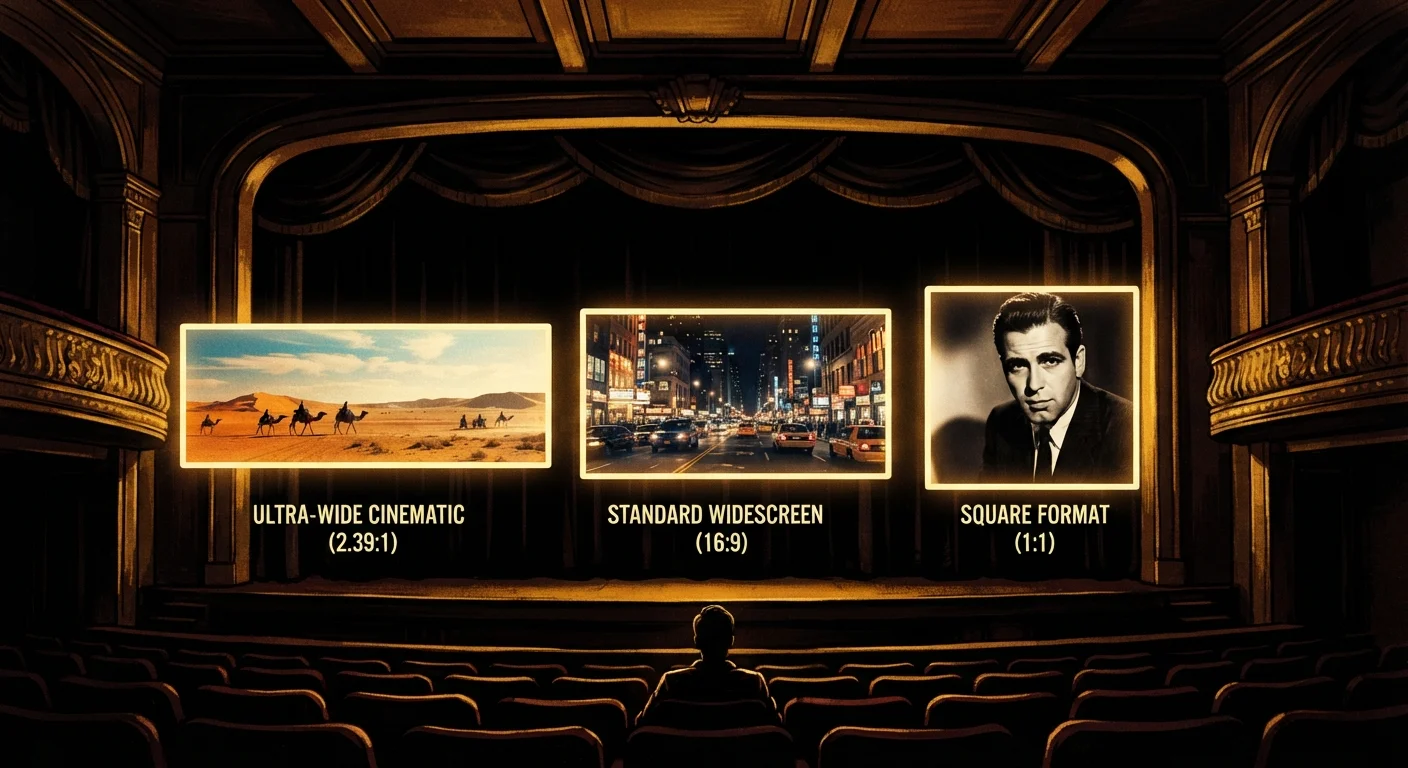
The most common aspect ratios you'll encounter include:
- 4:3 - The classic TV standard used through most of the 20th century. Nearly square, it filled the boxy screens of the CRT era.
- 16:9 - The current universal widescreen standard for HDTVs, streaming, and most online video. Roughly twice as wide as it is tall.
- 2.39:1 (or 2.40:1) - The ultra-wide theatrical format often called CinemaScope or anamorphic widescreen. Associated with grand, sweeping cinema.
- 1.85:1 - A slightly narrower theatrical standard, common in Hollywood for decades and still widely used today.
- 1.43:1 / 1.90:1 - IMAX formats, which are notably taller than standard widescreen and fill more of the giant IMAX screen.
Understanding these numbers is the first step toward seeing why films look and feel the way they do - and why the same movie might appear differently depending on where you watch it. For a broader look at how display specs interact, screen resolution terminology is worth understanding alongside aspect ratio.
16:9
Dominant aspect ratio for global TV and streaming
The 16:9 standard was formally adopted by HDTV specifications and has been the default for consumer displays and online video platforms since the mid-2000s.
2.39:1
Most common ultra-wide theatrical format
The anamorphic widescreen ratio of approximately 2.39:1 has been the prevailing standard for wide-release theatrical films since the 1970s, according to cinematography industry references.
4:3
Legacy TV standard used for decades
The 4:3 ratio defined American television from the medium's earliest broadcasts through the late 1990s, when widescreen sets and HD broadcasting began to reshape the industry.
Aspect Ratio as a Storytelling Tool
Screen shape isn't just a technical constraint - it's an expressive choice. Cinematographers and directors select aspect ratios in pre-production because the frame's proportions directly influence what the audience feels.
A wider frame - think 2.39:1 - naturally emphasizes horizontal space. This makes it ideal for Westerns, war films, and road movies where the landscape itself is a character. The wide, open frame can make characters look small against their environment, amplifying themes of isolation or grandeur.
A tighter, more vertical ratio does the opposite. Films like The Lighthouse (shot in a nearly square 1.19:1) use constricted framing to create a sense of claustrophobia and psychological pressure. The walls of the frame feel like they're closing in - because they literally are.
Mid-range ratios like 1.85:1 split the difference, offering cinematic width while keeping enough vertical space for comfortable framing of standing figures. It's one reason this format has remained a Hollywood workhorse for decades.
“The frame is not a neutral container. Its proportions carry meaning before a single actor appears or a word of dialogue is spoken. Choosing a ratio is one of the first and most fundamental creative decisions in any visual production.”
— Roger Deakins, Academy Award-winning cinematographer, known for his work on Blade Runner 2049 and 1917
For viewers curious about the full picture of how a film's visual identity is built, the role of the cinematographer covers how these frame-level decisions connect to lighting, lens choice, and camera movement.
What Black Bars Are Really Telling You
Few things confuse home viewers more than letterboxing (black bars on top and bottom) or pillarboxing (black bars on the sides). These aren't errors - they're the display doing the right thing.
When a film shot in 2.39:1 plays on a 16:9 TV, the display has two options: crop the sides of the image to fill the screen, or preserve the full frame and add neutral bars to fill the unused space. Letterboxing preserves the director's intended composition. Cropping discards it.
Keep the Original Frame Intact
If your TV offers a zoom or stretch mode that eliminates black bars, resist using it for films. Stretching distorts faces and proportions, while zooming crops out portions of the image the director deliberately composed. Letterboxing preserves the cinematic intent - it's the viewing experience the filmmakers designed.
Pillarboxing works the same way in reverse. Watching an old 4:3 sitcom on a widescreen TV results in black bars on the sides because the content is narrower than the display. Some channels stretch or zoom old footage to fill the screen, but that distorts the original image - a trade-off worth knowing about.
Display technology has its own set of variables that interact with aspect ratio. If you're evaluating a new screen, how projectors and large-screen TVs compare gets into how display type affects the overall viewing experience.
Why This Matters for What You Watch
Aspect ratio might seem like behind-the-scenes trivia, but it shapes every minute of your viewing experience - often without you consciously noticing. That feeling of cinematic sweep in a big-budget epic? Partly the ultra-wide frame. The intimacy of a character drama? Sometimes the result of a deliberately compressed ratio that keeps the focus tightly on faces.
Streaming platforms have introduced another wrinkle: not all content is mastered or delivered at its original theatrical ratio. Some films are reformatted for 16:9 delivery, which can mean cropping or adding extra picture information depending on how the original was shot. Paying attention to the shape of the image on your screen is a quick way to tell whether you're seeing the full intended frame.
Aspect ratio is one of several craft decisions that work in tandem to shape a film's emotional texture - much like how a film score guides what the audience feels in any given scene. The next time black bars appear on your screen, consider them an invitation rather than an inconvenience - you're seeing the film the way its makers intended.
Aspect Ratio and Screen Resolution Are Separate
It's easy to conflate aspect ratio with resolution, but they describe different things. Resolution refers to the total number of pixels - 1080p, 4K, and so on - while aspect ratio describes the shape of those pixels' arrangement. A 4K image can exist in 16:9, 2.39:1, or any other ratio. Refresh rate is yet another separate variable that affects motion smoothness rather than shape or sharpness.