

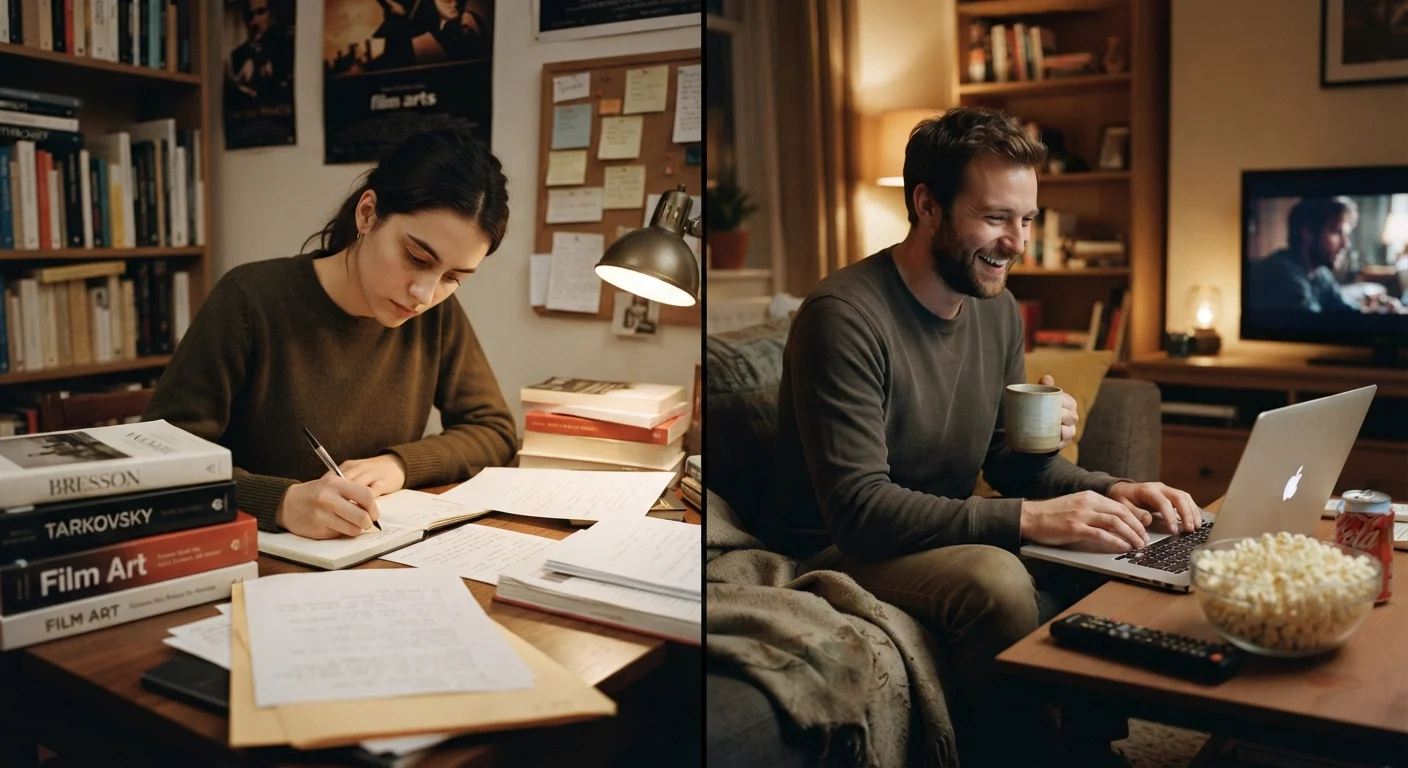
Key Takeaways
- Film critics analyze movies within broader cultural, historical, and artistic frameworks.
- Movie reviewers focus on audience experience, entertainment value, and practical recommendations.
- Both roles are valuable but serve meaningfully different reader needs.
- Criticism typically appears in academic or prestige publications; reviews appear in mainstream outlets.
- Understanding the difference helps you choose which voice to trust for your own viewing decisions.
Option A
Film Critic
The scholarly, context-driven voice of cinema analysis.
Best for: Readers who want to understand a film's cultural significance, historical placement, and artistic craft.
Option B
Movie Reviewer
The accessible, audience-focused guide to what's worth watching.
Best for: Everyday viewers looking for a quick, honest take on whether a film is worth their time and money.
If you want to understand why a film matters beyond the screen
Film Critic
Critics situate films within history, genre, and culture - offering the kind of depth that enriches your understanding long after the credits roll.
If you just want to know whether a film is worth watching this weekend
Movie Reviewer
Reviewers cut to the point, weighing entertainment value and audience experience so you can make a quick, confident decision.
If you're studying filmmaking or cinema as an art form
Film Critic
Critical writing engages with technique, theory, and craft in ways that actively develop your cinematic literacy.
If you want opinions that reflect mainstream audience tastes
Movie Reviewer
Reviewers typically write for general audiences and frame their assessments around broadly shared expectations and preferences.
Two Roles, One Subject
Both film critics and movie reviewers write about cinema - but that shared subject is about where the similarities end. The distinction matters more than most people realize, especially in an era when a three-sentence social media post and a 3,000-word essay in a literary journal can both get labeled a "review."
At its core, the difference comes down to purpose and audience. A movie reviewer is primarily trying to help you decide whether to watch something. A film critic is trying to explain what that something means - to cinema, to culture, to the moment in which it was made. One is a consumer guide; the other is a conversation about art.
That's not a value judgment. Both roles are genuinely useful. But conflating them leads to frustration - like expecting a weather forecast to explain climate science, or vice versa.
What Makes a Film Critic
Film criticism operates in the tradition of literary and cultural criticism. A critic brings theoretical frameworks, historical knowledge, and aesthetic vocabulary to bear on a film. They might trace how a director's latest work connects to Italian neorealism, or examine how a blockbuster encodes specific cultural anxieties. The goal isn't to tell you whether to buy a ticket - it's to deepen collective understanding of cinema as an art form.
Critics typically publish in outlets where depth is the expectation: long-form magazines, academic journals, prestige cultural publications. Their pieces are often written after multiple viewings, with reference to prior scholarship and the filmmaker's full body of work. If you've ever read a piece that made you see a film you already watched in a completely new light, you've encountered genuine criticism.
| Criterion | Film Critic | Movie Reviewer |
|---|---|---|
| Primary Goal | Analyze cultural and artistic meaning | Guide viewing decisions |
| Typical Audience | Cinephiles, scholars, enthusiasts | General moviegoing public |
| Publication Type | Literary magazines, academic outlets | Newspapers, entertainment sites |
| Viewings Before Writing | Often multiple | Typically one screening |
| Use of Film Theory | Central to the analysis | Rarely referenced |
| Length | Long-form, essay-style | Concise, deadline-driven |
| Success Metric | Insight and intellectual contribution | Practical usefulness to reader |
This kind of writing builds what scholars sometimes call cinematic literacy - the ability to read a film the way you'd read a novel, noticing craft, subtext, and meaning. For a deeper look at how intentional filmmaking choices shape what you feel, see our piece on how film scores are composed and why they shape what you feel.
What Makes a Movie Reviewer
Movie reviewers serve a different, equally legitimate function: they help ordinary audiences navigate an overwhelming release schedule. A reviewer watches a film and answers the essential question - is this worth my time? - through the lens of a thoughtful everyday viewer rather than a scholar.
Reviews typically run in newspapers, general entertainment sites, and broadcast media. They're written on deadline, often after a single screening, and they prioritize clarity over complexity. A good reviewer communicates clearly about performances, pacing, tone, and entertainment value without requiring the reader to have any prior knowledge of film theory.
~350
Wide-release films in US theaters annually
The Motion Picture Association has consistently reported several hundred wide and limited releases each year in the US market, underscoring the scale of what reviewers help audiences navigate.
63%
Americans who check reviews before watching
A Morning Consult survey found that a strong majority of US adults consult some form of review or rating before deciding to watch a new film or TV show.
The best reviewers develop a distinct voice and a reliable sense of taste that audiences come to trust - not because they're scholars, but because they're honest, consistent, and attuned to what makes movies work for real people. It's worth noting that aggregate review scores, while useful, come with their own limitations - our piece on common rating misconceptions explores why numbers alone don't tell the whole story.
Why the Distinction Matters for Viewers
Understanding who you're reading changes how you should use what they write. If a film critic pans a blockbuster for relying on genre conventions, that's a meaningful insight - but it doesn't necessarily mean you won't enjoy it on a Friday night. Conversely, if a reviewer gives a slow, meditative art film a lukewarm rating because the pacing felt difficult, a critic's deeper analysis might reveal exactly why that pacing is the point.
Neither voice should be dismissed. But knowing which one you're reading helps you calibrate expectations and make smarter choices about whose opinion to seek out for which purpose. If you want to go deeper after watching a film, the questions to ask yourself after watching a film can bridge the gap between casual viewing and genuine critical thinking.
The best cinematic experiences often begin with a reviewer pointing you toward something worth seeing - and end with a critic helping you understand why it stayed with you.