

Key Takeaways
- American music festivals trace their roots to Newport Folk Festival in 1959 and Woodstock in 1969.
- Festivals range from intimate single-stage gatherings to massive multi-day, multi-genre events.
- Headliner booking is a complex negotiation process driven by artist momentum, audience demographics, and economics.
- Preparation - knowing the site layout, hydration, and set schedules - dramatically improves the experience.
- Festival culture has become a meaningful driver of music discovery and community identity in the US.
A Brief History of American Music Festivals
The American music festival didn't appear out of thin air - it evolved from a rich tradition of communal outdoor performance. The Newport Folk Festival, launched in 1959 in Rhode Island, is widely credited as the modern template: curated talent, ticketed admission, and a sense of cultural mission. When Bob Dylan plugged in an electric guitar there in 1965, it became one of the most talked-about moments in music history.
Woodstock in August 1969 changed the scale entirely. Roughly 400,000 people descended on a farm in upstate New York for what became a generational touchstone - proof that music could organize a culture. The decades that followed saw the festival format mature and diversify. Lollapalooza launched in 1991 as a touring alternative-rock roadshow before becoming a fixed Chicago event. Coachella debuted in 1999 in the California desert, eventually reshaping the entire festival economy. Bonnaroo brought a jam-band spirit to rural Tennessee starting in 2002.
Today, the US hosts hundreds of festivals annually, spanning country (Stagecoach), hip-hop (Rolling Loud), electronic music (EDC), jazz (New Orleans Jazz Fest), and genre-blurring mega-events. Each one carries forward the original promise: a gathering built around sound. For context on the venues that shaped music between those big festival moments, see our look at landmark American music venues.
How Festival Formats Work
Not all festivals are built alike. Understanding the basic formats helps set expectations before you ever buy a ticket.
32M+
Annual US festival attendees
Industry estimates suggest over 32 million people attend music festivals in the United States each year across hundreds of events.
$1.8B
US festival industry revenue
The US music festival market has been valued in the billions of dollars, reflecting ticket sales, sponsorships, and on-site spending.
1959
Year Newport Folk Festival launched
Newport Folk Festival in Rhode Island is widely recognized as a foundational moment for the modern American music festival format.
- Single-genre festivals organize everything around one sound - think bluegrass, gospel, or EDM. The audience is self-selecting, and the programming runs deep rather than wide.
- Multi-genre festivals like Coachella or Lollapalooza spread acts across several stages simultaneously, letting attendees build their own schedule from pop, rock, hip-hop, and indie offerings.
- Day festivals are contained to one calendar day, often in urban parks. They require less logistical planning from the attendee but offer a narrower lineup.
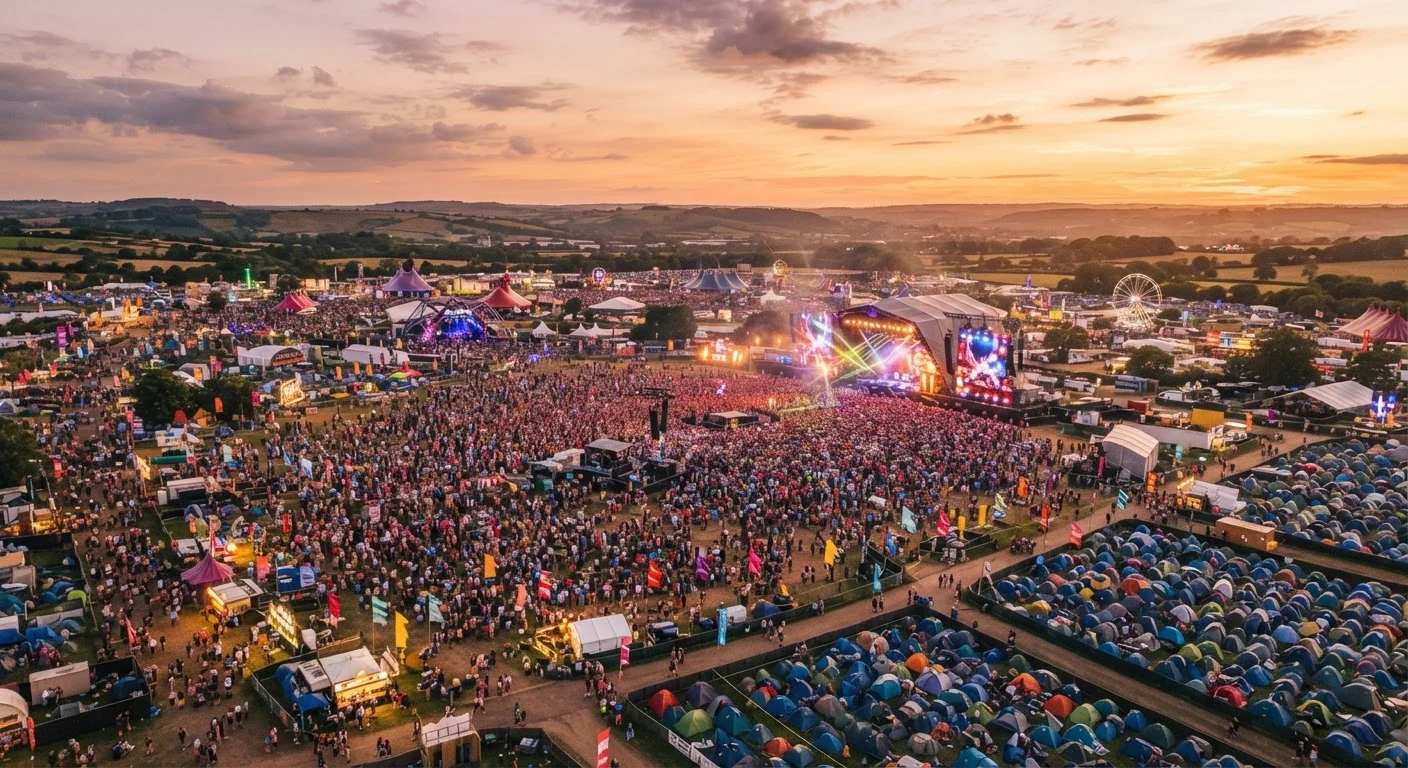
- Multi-day camping festivals are the full immersive experience - Bonnaroo, Burning Man, Electric Forest. Attendees set up campsites, live on the grounds, and create a temporary city around the music.
The physical layout matters too. Most large festivals use a tiered stage system: a main stage for headliners, secondary stages for mid-bill acts, and smaller "discovery" stages for emerging artists. Understanding that map is essential for navigating a busy weekend. Compare the festival environment to an entirely different live music setting in this piece on festival culture versus club culture.
The Lineup: How Artists Get Booked
A festival lineup is part art, part economics, and part negotiation. Promoters and talent buyers work months - sometimes over a year - in advance to lock in artists. The process typically starts at the top.
Pay close attention to exclusivity clauses when an artist announces multiple festival appearances close together - those windows reveal a lot about how the booking business really works.
Exclusivity agreements shape festival geography and timing in ways that directly affect which artists can play which markets, making them a key structural feature of the industry.
When building your festival schedule, anchor your day around one or two must-see acts and leave room for discovery - the unplanned moments on smaller stages are often what people remember most.
Festival veterans consistently report that spontaneous encounters with unfamiliar artists rank among their strongest memories, underscoring the discovery function that smaller stages serve.
Headliners are usually established acts with proven draw: artists who can sell out arenas on their own. Their fees can run into seven figures for major festivals, and their contract often includes exclusivity clauses that prevent them from performing at competing events within a certain radius or time window.
Mid-tier acts fill the crucial second and third billing slots. These are often artists on a genuine upward trajectory - a recent album release, a viral moment, or a Grammy nomination can accelerate a booking. For festival organizers, these slots represent both reduced cost and genuine programming excitement.
Emerging artists on discovery stages may receive small fees or even perform in exchange for exposure. For many independent musicians, a slot at Coachella or SXSW is a genuine career inflection point.
Genre balance, demographic reach, and regional appeal all factor into final lineup decisions. A well-constructed lineup is its own kind of curatorial statement about what music matters right now - and what audience a festival is speaking to.
Logistics, Tickets, and What to Expect On-Site
The practical side of festival attendance is where many first-timers underestimate the challenge. Tickets for major events typically go on sale months in advance, often through a phased release: early bird, general on-sale, and payment-plan options. Demand for top-tier events can be fierce, and resale markets exist - though prices on those markets fluctuate widely.
Plan Before You Arrive
Download the festival app or offline map before you leave home - cell service on festival grounds can be unreliable with tens of thousands of users competing for bandwidth. Review the prohibited items list carefully, as policies vary significantly between events and violations can result in confiscation at the gate.
Once on-site, expect to navigate security screening (bag checks, prohibited item lists), cashless payment systems (many festivals use wristband-linked accounts), and variable cell service - large crowds tax mobile networks. Downloading set schedules, maps, and offline navigation tools before arrival is a practical move.
Camping festivals add another layer: gear selection, campsite check-in, and understanding which camping tiers (general, car camping, RV) are available. Shade, proximity to stages, and access to water fill-up stations are real quality-of-life variables.
Heat, dehydration, and noise exposure are genuine physical considerations. Festivals set in desert or summer environments require attention to hydration and sun protection. Hearing protection - earplugs designed for music - is widely recommended for multi-day exposure near speaker stacks. For a broader orientation to attending live events, our concert-going guide for first-timers covers the essentials.
Festival Culture and Why It Matters
Beyond the music, American festivals have become genuine cultural institutions. They function as spaces for community-building, fashion expression, social identity, and music discovery in ways that playlists and streaming algorithms haven't fully replicated. Discovering a new artist by wandering into a half-empty tent on a Tuesday afternoon at Bonnaroo is a distinctly human experience.
“Live music is one of the last truly communal experiences we have. At a festival, you're not just hearing a song - you're sharing it with thousands of strangers who all chose to be in the same place at the same time. That's a powerful thing.”
— Billboard, Music industry trade publication, reflecting widely held views among live event professionals
That communal dimension carries real weight. Research into live music attendance consistently points to the social bonding and mood-elevation effects of shared musical experience - the feeling of being part of something larger than a solo listening session. Festivals amplify that effect through sheer scale and duration.
At the same time, the festival experience involves real trade-offs: cost, environmental impact, accessibility challenges, and the gap between marketing imagery and on-the-ground reality. An honest look at those tensions is worth having - our breakdown of festival experience versus reality explores exactly that.
Festivals also serve as living snapshots of American musical culture. The lineup at any given Coachella or Lollapalooza reflects - and sometimes shapes - what sounds are breaking through at a particular cultural moment. For deeper context on how those sounds developed, our guide to formative albums that defined American genres connects the dots between recordings and movements. Whether you're a seasoned festivalgoer or planning your first, understanding how these events work makes the experience richer - and the music louder in all the right ways.