

Key Takeaways
- Surprise album drops bypass traditional promotional cycles, releasing music with minimal advance notice.
- The strategy gained cultural momentum in the early 2010s and has since become a recognized industry tactic.
- Social media and streaming platforms made instant global distribution possible overnight.
- The approach generates immediate viral buzz but carries commercial risks around chart performance.
- Surprise drops work best for established artists with large, dedicated fan bases.
Surprise Album Drop
A surprise album drop is when a recording artist releases a full album - or a significant body of new music - with little to no advance notice, bypassing the traditional weeks-long promotional cycle. Instead of teaser campaigns and scheduled release dates, fans wake up to find new music already available to stream or download. The approach flips conventional music marketing on its head.
In industry terms, this strategy eliminates the standard "pre-release window" used to build chart-eligible pre-saves and pre-orders, which can affect Billboard and streaming chart positioning differently than a traditional rollout.
How the Surprise Drop Changed Music Forever
For most of the 20th century, releasing an album was a slow, deliberate machine. Labels would schedule releases months out, print physical copies, distribute them to retailers, and run coordinated radio campaigns. The lead-up was half the product. Then the internet arrived, and that machinery began to crack.
By the early 2010s, digital distribution had made it technically possible to release music globally in a matter of hours. What was missing was a cultural moment bold enough to prove it could work - commercially, artistically, and socially. Beyoncé's self-titled visual album in December 2013 supplied exactly that. Dropped on iTunes with zero warning, it became an event precisely because nobody saw it coming. The internet collectively lost its mind, and the music industry took notes.
The surprise drop wasn't invented that night, but it was legitimized. Artists and labels realized that the shock of an unexpected release could generate more organic conversation than months of scheduled teasing. It turned a product launch into a cultural moment. For more on how music movements reshape industry norms, see how musical subcultures go mainstream.
“The album was a film. Everything had a purpose. The goal was to create a body of work that would live forever.”
— Beyoncé, Recording artist and producer, reflecting on the creative intent behind her 2013 self-titled visual album
Why It Works - And Why It Doesn't Always
The mechanics behind the surprise drop's appeal are rooted in human psychology as much as marketing savvy. Scarcity and unexpectedness trigger excitement. When fans feel like they're discovering something in real time - alongside everyone else - it creates a shared communal experience that a six-week rollout simply cannot replicate. Social media turns that energy into measurable, visible buzz within hours.
828K
Copies sold by Beyoncé's surprise album in 3 days
Beyoncé's self-titled 2013 surprise release sold approximately 828,000 copies in its first three days on iTunes, according to widely reported industry figures at the time.
1 in 3
Listeners who discover music via social media reaction
Research from the Recording Industry Association of America (RIAA) and various music consumption surveys has consistently found social media among the top discovery channels for new music releases.
But the strategy carries genuine risk. Traditional release cycles exist for a reason: they allow time to pitch tracks to editorial playlists on streaming services, secure press coverage, and build pre-save numbers that feed into first-week chart data. Without that runway, some albums land quietly even when the artist intended a splash. The approach tends to reward artists who already have massive, attentive fan bases - the kind who have streaming notifications turned on and check social media compulsively. For emerging artists still building an audience, a surprise drop can simply go unheard. This tension mirrors broader shifts in how digital content is consumed - much like the debate around streaming-exclusive film releases versus traditional theatrical windows.
For Emerging Artists Considering a Surprise Drop
Building a genuinely engaged fan community before attempting a surprise release dramatically improves the odds of it landing. Artists who interact consistently with listeners on social platforms - rather than only posting during release cycles - tend to generate faster organic amplification when they do drop something unexpected. The surprise element works best when fans already have a reason to pay attention.
The Social Media Engine Underneath It All
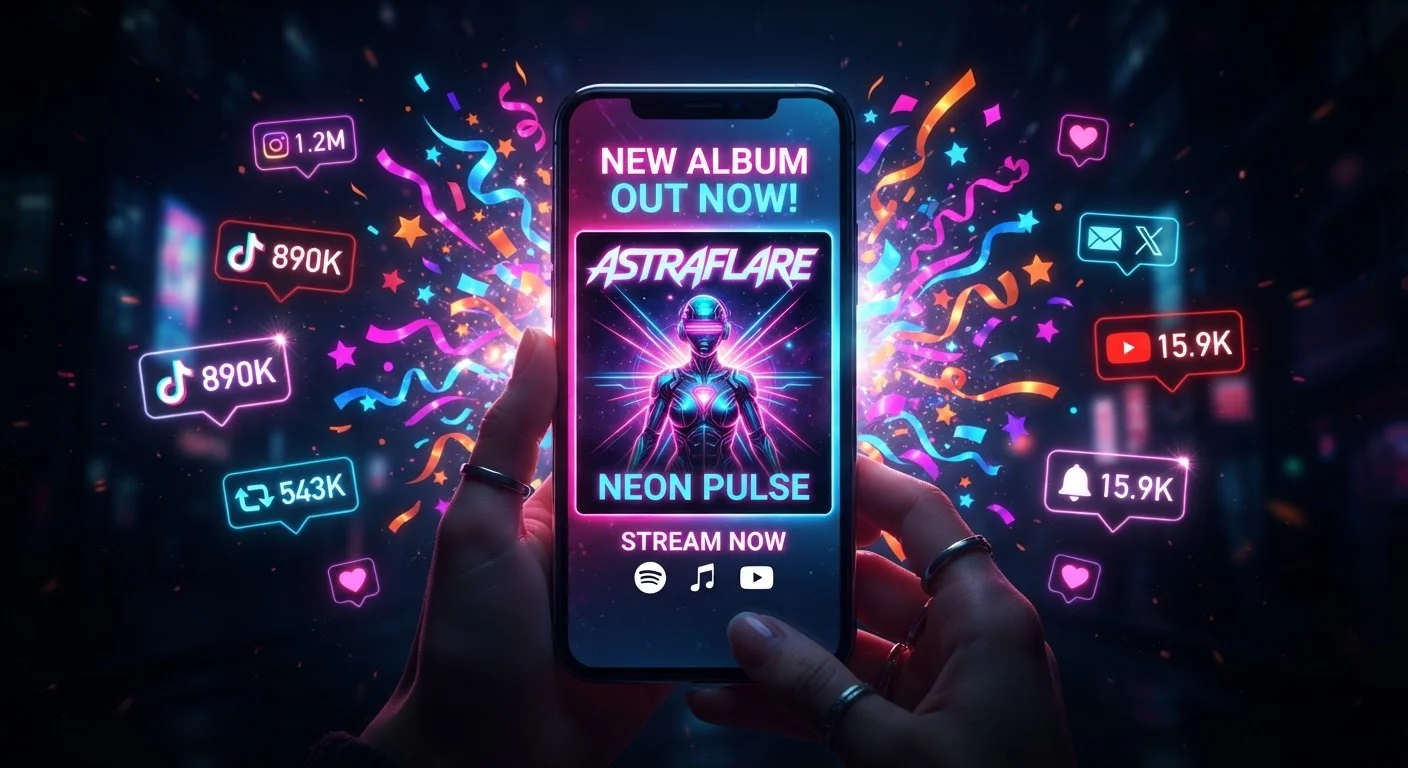
Surprise drops don't go viral on their own - they need a distribution layer capable of spreading the news instantly. That layer is social media, and its role in the surprise drop ecosystem cannot be overstated. When an artist posts a single image or caption at midnight with no context, fan communities on X (formerly Twitter), Reddit, and Instagram amplify it within minutes. Speculation, reaction videos, and review threads follow almost immediately.
This virality is the whole point. The confusion and excitement of "wait, is this real?" generates exactly the kind of organic engagement that paid advertising struggles to manufacture. In that sense, surprise drops are deeply intertwined with the anatomy of viral music moments - understanding one helps explain the other. Explore more about what fuels those explosions in the anatomy of a viral music moment.
Interestingly, some artists have found ways to hint at an upcoming surprise without actually announcing it - cryptic social posts, sudden website redesigns, or unexplained merchandise appearing online. This hybrid approach tries to capture the best of both worlds: building anticipation while preserving the illusion of surprise. Whether it fully delivers the same cultural electricity is a matter of debate among fans and industry observers alike. What's clear is that the surprise drop, in all its forms, has permanently expanded the playbook for how music reaches the world. The most lo-fi version of this spirit - releasing music on your own terms, outside institutional gatekeepers - connects to broader trends like bedroom pop's rise to mainstream prominence.
Surprise Drops and Playlist Pitching
Most major streaming platforms allow artists and their distributors to pitch tracks for editorial playlist consideration - but this process typically requires submissions one to four weeks before a public release. Artists executing a true surprise drop may need to negotiate playlist placement privately in advance, keeping those conversations confidential until the release goes live. This behind-the-scenes coordination means some surprise drops are less spontaneous than they appear to fans.