

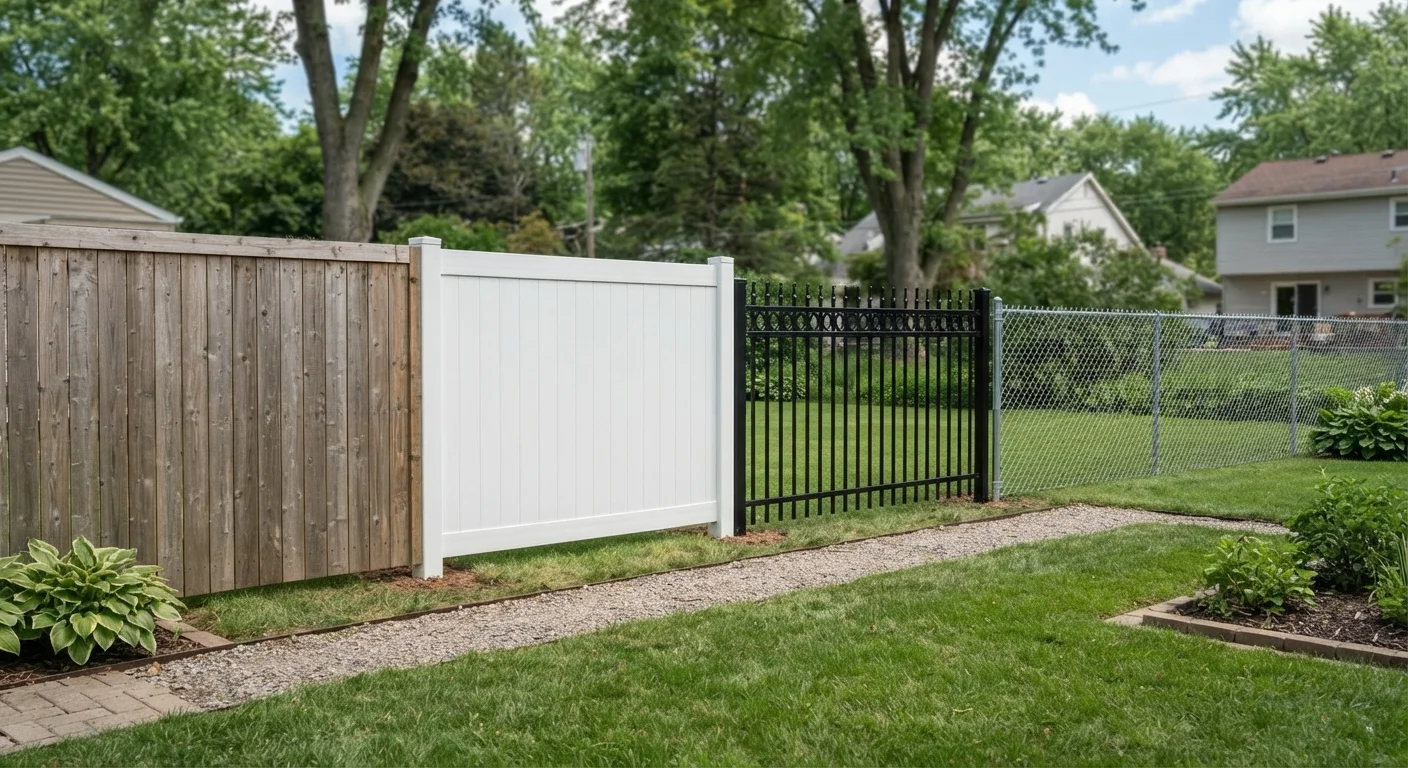
Key Takeaways
- Wood fencing offers a classic look but requires regular sealing or painting to prevent rot and weathering.
- Vinyl is low-maintenance and moisture-resistant, though it can become brittle in extreme cold.
- Aluminum suits decorative and boundary applications well but provides minimal privacy.
- Chain link is the most affordable option but offers little privacy and a utilitarian appearance.
Our Verdict
No single fence material wins across every category - the right choice depends on your priorities. Wood delivers natural beauty at a moderate cost but demands ongoing upkeep. Vinyl reduces maintenance significantly, while aluminum excels in decorative and low-care settings. Chain link remains the practical pick when budget and function outweigh aesthetics.
| Best for | Recommended |
|---|---|
| Homeowners prioritizing natural appearance and privacy | Wood |
| Those wanting low-maintenance, long-lasting privacy fencing | Vinyl |
| Properties needing decorative boundary definition with minimal upkeep | Aluminum |
| Budget-focused applications like pet containment or utility zones | Chain Link |
How These Four Materials Stack Up
When planning a residential fence, material choice shapes nearly every outcome - from curb appeal and privacy to how often you'll be sanding, painting, or calling a repair crew. The four most common options each occupy a distinct niche, and understanding those differences upfront saves headaches later.
If you've already thought through privacy fencing trade-offs like height limits and wind load, this comparison gives you the material-level detail to finalize your decision.
| Wood | Vinyl | Aluminum | Chain Link | |
|---|---|---|---|---|
| Typical Lifespan | 10-20+ years | 20-30 years | 30+ years | 15-20 years |
| Privacy Level | High (solid panels) | High (solid panels) | Low (open design) | Very low |
| Maintenance Required | High - seal/paint regularly | Low - rinse as needed | Low - touch-up paint | Low - inspect for rust |
| Relative Installed Cost | Moderate | Moderate-High | Moderate-High | Low |
| Cold Climate Performance | Moderate (moisture risk) | Fair (brittleness risk) | Good | Good |
| Humid/Coastal Performance | Poor without treatment | Excellent | Good | Fair (corrosion risk) |
| DIY Friendliness | Moderate | Moderate | Moderate | High |
Wood: Character and Commitment
Wood remains one of the most popular fence materials in the US, largely because it's versatile - boards can be shaped into privacy panels, picket styles, or split-rail designs. Cedar and redwood resist moisture and insects naturally; pressure-treated pine offers a lower entry cost. For a deeper look at how pressure-treated lumber performs over time compared to other outdoor materials, see our material breakdown of pressure-treated lumber vs. composite decking.
The trade-off is maintenance. Untreated wood absorbs moisture, warps, and rots - typically requiring sealing or painting every two to three years. Lifespan varies widely depending on species, climate, and care: well-maintained cedar fencing can last 20 years; neglected pine may show significant deterioration within a decade.
Extending Wood Fence Life
Apply a penetrating water repellent or stain-based sealer within the first year of installation and re-apply every two to three years. Keep soil and mulch from piling against fence posts - ground contact accelerates rot at the base faster than almost any other factor. Pre-treated posts rated for ground contact offer meaningfully better longevity than untreated lumber.
Vinyl: Low Labor, Higher Entry Cost
Vinyl (PVC) fencing requires no painting, doesn't rot, and won't attract insects. A quick rinse with a garden hose handles most cleaning. These properties make it popular in humid climates where wood struggles. Expected lifespan runs 20-30 years under normal conditions.
The downsides are worth noting. Vinyl costs more upfront than wood or chain link, and in very cold climates it can become brittle and crack under impact. Color options are more limited than wood, and repairs typically require replacing whole sections rather than individual boards. Privacy potential is high - solid panel designs are widely available.
Aluminum: Durable, Decorative, Open
Aluminum fencing is rust-resistant, lightweight, and holds powder-coat paint finishes well. It suits pool enclosures, front yard borders, and decorative property lines. Maintenance is minimal - occasional washing and touch-up painting on chips. Lifespan can exceed 30 years with basic care.
The primary limitation is privacy. Most aluminum designs are spaced-rail or spaced-picket, leaving significant open gaps. If containment or screening is your goal, aluminum is a poor fit. It also dents more easily than steel, though it won't corrode the way iron does. For homeowners building out their full outdoor living space, patio and porch flooring choices pair naturally with aluminum perimeter fencing.
Chain Link: Function Over Form
Chain link is galvanized steel woven into a diamond pattern - durable, secure, and among the least expensive fence options per linear foot. It's commonly used for dog runs, utility enclosures, sports courts, and property perimeters where aesthetics matter less than containment. Lifespan runs 15-20 years for galvanized versions; vinyl-coated chain link extends that range and adds color options.
Privacy is essentially zero with standard chain link, though privacy slats can be woven through the mesh for partial screening. The look reads as industrial in residential settings, which may affect neighborhood appearance standards or HOA rules. Always verify local ordinances and any homeowner association guidelines before installation - regulations on fence height, material, and placement vary significantly by municipality.
Check HOA Rules and Local Codes First
Many municipalities regulate fence height, material, and setback distances - and violations can require you to remove and rebuild at your own expense. Homeowner associations often layer additional restrictions on top of local ordinances. Before purchasing materials or hiring a contractor, contact your local building department and review any HOA covenants to confirm what's permitted on your specific property.