

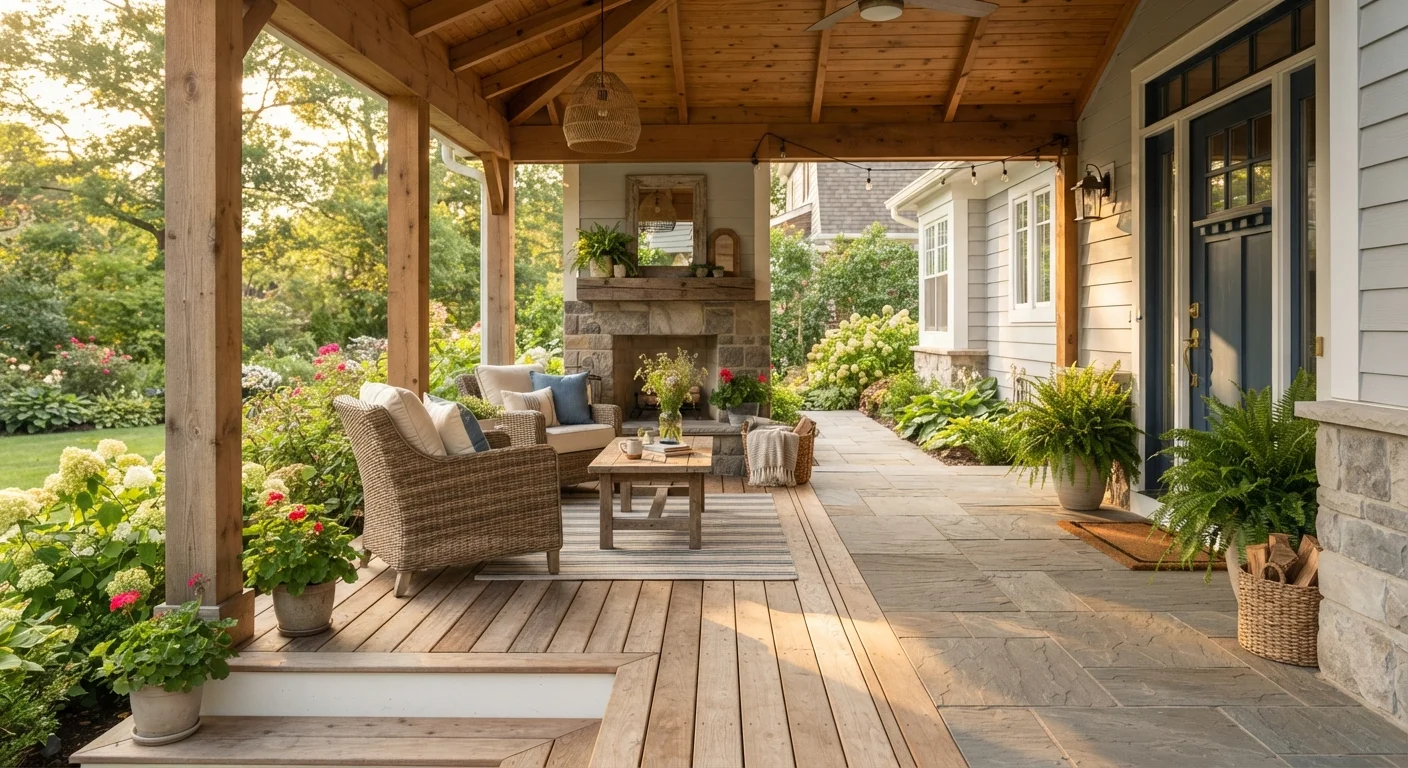
Key Takeaways
- Slip resistance is a critical safety factor for any outdoor flooring, especially in wet climates.
- Covered porches allow materials like wood and composite that may degrade faster with direct UV and rain exposure.
- Concrete is the most versatile base material and can be finished multiple ways to suit different aesthetics.
- Maintenance requirements vary widely - some materials need annual sealing while others are largely hands-off.
- Climate, drainage, and foot traffic should drive your material choice as much as appearance does.
Our Verdict
No single outdoor flooring material wins for every situation. Porcelain tile and concrete offer the broadest durability across climates, while composite and wood excel under covered structures where moisture and UV exposure are reduced. Natural stone delivers character but demands more upkeep. Matching the material to your specific exposure conditions, traffic patterns, and maintenance willingness is the surest path to a floor that performs well for years.
| Best for | Recommended |
|---|---|
| Open patios in rainy or freeze-thaw climates | Porcelain tile or stamped concrete |
| Covered porches seeking a warm, natural look | Composite decking or treated wood |
| Homeowners wanting minimal long-term maintenance | Composite or sealed concrete |
| High-end aesthetic with a natural material | Natural stone (with regular sealing) |
Why Outdoor Flooring Demands a Different Approach
Outdoor floors face stresses that indoor surfaces never encounter: freeze-thaw cycles, pooling rain, direct UV, foot traffic from muddy shoes, and often the weight of furniture or grills. A material that thrives inside a home may crack, warp, or become dangerously slippery outside.
Before settling on any surface, consider three factors: exposure level (fully open patio vs. covered porch), climate (humid, arid, or cold-winter), and slope and drainage. A covered porch shields materials from the worst of rain and sun, opening up options - like composite decking boards or interior-grade tile - that would underperform on a fully exposed slab. For broader planning context, see our guide on deck vs. patio decision-making.
The Five Main Material Categories Compared
Each flooring type comes with its own set of trade-offs across durability, safety, cost, and upkeep. Here's how they stack up:
| Porcelain Tile | Natural Stone | Concrete | Wood | Composite | |
|---|---|---|---|---|---|
| Durability | Very high | Moderate-high | Very high | Moderate | High |
| Slip Resistance (wet) | Good (textured) | Variable by type | Good (textured) | Moderate | Good |
| Maintenance Level | Low | High (sealing) | Low-moderate | High | Low |
| Freeze-Thaw Suitability | High (if rated) | Low-moderate | High | Moderate | High |
| Covered Porch Suitability | Excellent | Good | Excellent | Good | Excellent |
| Open Patio Suitability | Excellent | Moderate | Excellent | Fair | Good |
| Relative Cost | Moderate-high | High | Low-moderate | Moderate | Moderate-high |
A note on slip resistance: the coefficient of friction (COF) rating on tile packaging indicates how grippy a surface is. Outdoor use generally calls for a COF of 0.60 or higher when wet. Smooth polished stone or tile often falls short of this threshold, so texture or a brushed finish matters.
Porcelain Tile and Natural Stone
Porcelain tile is one of the most durable outdoor surfaces available. It resists moisture absorption, holds up through freeze-thaw cycles when rated for outdoor use, and requires only routine cleaning. Look for tiles labeled for exterior or frost-proof use; indoor porcelain can absorb enough water to crack in cold winters.
Natural stone - bluestone, travertine, slate, flagstone - brings organic beauty that's hard to replicate. The trade-off is variability: some stones are porous and must be sealed annually to prevent staining and water damage. Travertine, popular in warmer climates, can become slippery when wet and may not tolerate northern winters without heaving.
Test Tile Slip Resistance Before Buying
When shopping for outdoor tile, look for a wet COF (coefficient of friction) rating of 0.60 or above on the product label. If that information isn't listed, ask the supplier or check the manufacturer's spec sheet. A brushed, matte, or textured finish generally performs better underfoot than a polished surface, especially around water features or in rainy regions.
Concrete, Wood, and Composite
Concrete is the workhorse of outdoor flooring. A properly poured and reinforced slab can last decades with minimal intervention. Plain concrete can be finished as stamped (patterned to mimic stone or brick), exposed aggregate (textured and slip-resistant), or painted/stained. Sealing every two to three years helps protect against staining and surface erosion.
Wood on a covered porch can be beautiful and cost-effective, but it demands real maintenance: annual cleaning and resealing or staining, and prompt attention to any standing water or rot. Pressure-treated pine is the common entry point; hardwoods like ipe or teak are more durable but significantly more expensive. For a detailed material breakdown, our article on pressure-treated lumber vs. composite decking covers this comparison thoroughly.
Composite decking boards - made from a blend of wood fiber and plastic - are engineered specifically to resist rot, fading, and splintering. They're a strong fit for covered porches and partial-shade areas. Direct, prolonged UV exposure can cause some composites to fade or warp over time, so check manufacturer guidance for open-patio installations. Maintenance is typically limited to periodic washing.
For anyone weighing how their flooring choice fits into a larger yard plan, balancing hardscape and softscape elements can help frame those decisions.
Matching Material to Your Specific Situation
Once you've narrowed down materials, a few final factors can guide the final call:
- Freeze-thaw climates: Avoid porous stone and non-frost-rated tile. Concrete, composite, and frost-rated porcelain hold up best.
- High humidity or frequent rain: Prioritize slip-resistant finishes. Composite and textured concrete score well here.
- Covered porches: Wood and composite become more viable since direct rain and UV are reduced.
- Heavy foot traffic: Concrete and porcelain tile resist wear better than softer stones or wood over the long term.
- Budget constraints: Concrete is typically the most cost-accessible option, especially if a slab already exists and only a finish or overlay is needed.
Before starting any project, verify whether a permit is required in your municipality - some jurisdictions treat patio slabs or structural porch floors as permitted work. Your flooring upgrade checklist can help you organize the full decision before materials are purchased or contractors are contacted.
Don't Skip Permits or Professional Assessment
Structural porch floors, load-bearing changes, and large concrete pours may require building permits and inspections in your area. Installing flooring on an improperly graded or unstable base can lead to cracking, heaving, or drainage problems over time. When in doubt, consult a licensed contractor before beginning work - especially on older homes where the existing foundation or substructure may not be well-documented.