

Key Takeaways
- Local zoning codes and HOA rules determine the maximum height and placement of your fence before any other decision.
- Solid panels offer maximum privacy but create wind-load challenges that affect post depth and spacing.
- Material choice affects longevity, maintenance burden, and how well the fence handles your regional climate.
- Good neighbor communication before you build can prevent disputes and property-line mistakes.
- Permits are often required for fences above a certain height - verify requirements before you dig.
Start With What the Rules Allow
Before you sketch a fence line or price out materials, find out what your municipality and, if applicable, your homeowners association actually permit. Most municipalities cap residential fence heights - commonly 6 feet in backyards and 3 to 4 feet in front yards - but those numbers vary significantly by jurisdiction. Setback requirements may also push your fence several feet back from the property line.
Zoning and HOA rules frequently dictate permissible materials, color restrictions, and which side of the fence must face outward toward neighbors. Some areas require a permit for any fence above 3 feet; others only for structures above 6 feet. Calling your local planning or building department takes about ten minutes and can save you from tearing out a newly built fence.
Corner and Front-Yard Fences Have Different Rules
Corner lots are frequently subject to sight-triangle restrictions - a setback zone near intersections where fence height is limited to preserve driver sightlines. Front-yard fences often face lower height caps than backyard fences, sometimes as low as 3 feet. If your property is on a corner or you're considering fencing near the street, verify these specific rules with your municipality separately from general backyard regulations.
Height, Solid Coverage, and Wind Load
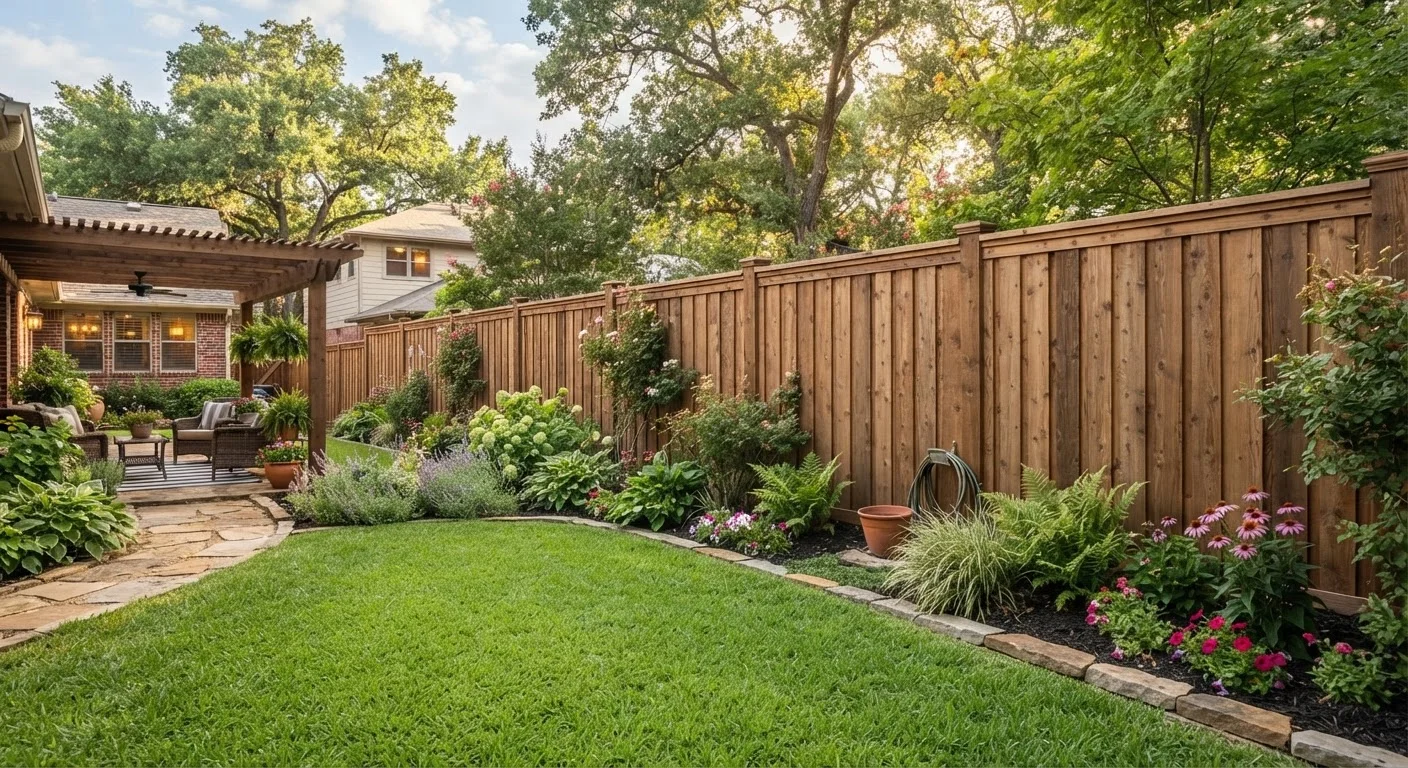
Height and opacity are the two levers that most directly control privacy. A 6-foot solid-panel fence will screen a seated or standing adult from view, which is why it's the default for backyard privacy. But solid panels catch wind rather than letting it pass through, and that force transfers directly to your posts.
As a general rule, the taller and more solid a fence, the deeper the posts need to be set and the closer the spacing between them. A common guideline is to bury posts at least one-third of the total post length in the ground - so a fence with 6-foot above-grade panels typically needs posts set 2 to 3 feet deep, depending on soil type and frost depth in your region. In clay-heavy or frost-prone soils, shallow posts will heave and lean within a few seasons.
If full-height solid panels feel like too much wind resistance, consider a fence with spaced pickets at the top, lattice insets, or alternating-board construction. These options reduce wind pressure while still providing meaningful screening from side-on sightlines.
1/3
Minimum post burial depth relative to total post length
A widely cited rule of thumb in fence installation guidance suggests burying at least one-third of total post length underground, with adjustments for soil type and frost conditions.
6 ft
Typical maximum backyard fence height in most US municipalities
While limits vary by jurisdiction, 6 feet is the most common maximum height allowed for residential backyard fencing without special variance approval.
Choosing a Material That Fits Your Climate and Use
Privacy fence materials each carry different trade-offs in terms of upfront effort, long-term maintenance, and climate resilience. A side-by-side material comparison can help you evaluate the specifics, but here are the core considerations:
- Wood - Pressure-treated pine, cedar, and redwood are common choices. Wood is workable and accepts stain or paint, but it requires periodic sealing or staining (typically every 2-3 years) to resist rot and moisture damage. In humid or wet climates, untreated wood fence bases can deteriorate faster.
- Vinyl (PVC) - Low-maintenance and resistant to rot and insects, but can become brittle in very cold climates and may yellow or warp with prolonged UV exposure. Less flexible for custom heights or styles.
- Composite - Made from wood fiber and plastic, composites offer better rot resistance than solid wood with more visual warmth than vinyl. Generally costs more upfront.
- Metal (aluminum or steel) - Not typically used for full-privacy fencing due to spacing in pickets, but can be paired with plantings or screens for a hybrid solution.
Verify your property lines with a survey before setting any posts.
Building over a property line - even by a few inches - can result in costly relocation or legal disputes with neighbors. A current survey removes guesswork and protects your investment.
Match post depth and concrete footing size to fence height and local frost depth.
Tall privacy fences generate significant wind load. Undersized footings or shallowly set posts shift, heave in freezing soil, and eventually fail - often within just a few winters in cold climates.
Choose materials based on your region's humidity, UV exposure, and freeze-thaw cycles.
A material well-suited to the Southwest may crack or warp in the upper Midwest. Selecting for your actual climate reduces maintenance frequency and extends fence lifespan.
Pull any required permits before construction begins.
Unpermitted fences can trigger forced removal, fines, or complications when selling your home. Many jurisdictions require permits for fences above a specific height threshold.
Account for wind load when selecting panel style and post spacing.
Fully solid panels in exposed locations act like a sail, concentrating force at post connections. Reducing solid surface area or tightening post spacing distributes load more safely.
Neighbor Relations and Property Lines
A fence on or near a shared property line affects your neighbor as much as you. Many boundary disputes stem from assumptions rather than verified survey data. Before you install, locate your official property survey or hire a licensed land surveyor to mark the boundary accurately. Building even a few inches over the line can require relocation at your expense.
Talking to your neighbor before breaking ground isn't just courtesy - it can open the door to shared cost arrangements for a fence that benefits both properties. If you share a fence line, your neighbor may have standing to request design changes, or may be legally required (in some states) to share maintenance costs for a boundary fence.
Installation Factors That Affect Long-Term Performance
Even the right material at the right height will underperform if installation fundamentals are skipped. Post depth and concrete footing size matter more than most homeowners expect, especially for tall privacy fences that act like sails in high-wind events.
For structural projects like retaining walls and tall fences, professional installation is often worth the cost - particularly if your yard has significant slope changes, which complicate racking (stepping fence panels along a grade) or require custom-cut panels. On flat ground with accessible soil, an experienced DIYer can handle standard privacy fence installation with the right tools and patience.
Allow for drainage at post bases to avoid standing water accelerating decay, and if your fence borders a garden area, consider how shade will affect plantings. Ground-level landscaping decisions like mulching near fence bases can also affect moisture levels around wood posts.
This article provides general educational information about residential fencing. Local building codes, permit requirements, and material performance vary significantly by location. Always verify requirements with your local building department and consult licensed professionals for projects involving structural, permit, or property-line considerations.