

Key Takeaways
- Most municipalities require permits and minimum clearance distances for fire pits - check local codes first.
- Combustible surfaces like wood decks are not appropriate bases for fire pits, even with mats.
- Wind direction, overhead structures, and neighboring property lines all influence safe siting.
- Having a water source or extinguisher within arm's reach is a basic safety requirement many homeowners skip.
- Permanent fire pit installations may require inspection and impact homeowner's insurance coverage.
Why Fire Pit Placement Deserves More Planning Than Most Homeowners Give It
A fire pit can genuinely extend your outdoor living season, creating a focal point for evenings that would otherwise be too cool or too dark to enjoy. But it's also one of the few backyard additions that can cause serious harm - to your home, your neighbors, and your family - if the basics are ignored. The good news is that the fundamentals of safe siting aren't complicated; they're just routinely skipped in the excitement of a new project.
When you're thinking through how your outdoor space fits together - patios, paths, seating zones, and plantings - the fire pit needs to be treated as an anchor element, not an afterthought. See our guide to balancing hardscape and softscape for how permanent features like a fire pit pad interact with the rest of your yard's design.
Check Local Codes Before You Build
Many US counties and municipalities prohibit open burning outright, or require permits for fire pits above a certain diameter. HOA rules may impose additional restrictions on fuel type, size, and hours of use. Violating these rules can result in fines or a required removal. Contact your local fire marshal's office or building department before purchasing materials.
The Mistakes That Put Homeowners at Risk
The errors below cover both setup decisions and ongoing use habits. Many fire-related incidents in residential yards trace back to one or more of these overlooked factors - not dramatic accidents, but small omissions made before the first fire was ever lit.
Placing the fire pit too close to the house, fence, or overhead structures.
Why it happens: Homeowners often prioritize convenience and aesthetics over clearance, positioning the pit near a wall or pergola for shelter.
Skipping a permit or ignoring local open-burning ordinances.
Why it happens: Many homeowners assume a backyard fire pit is a minor project that doesn't need official approval.
Setting the fire pit directly on grass, mulch, or a wood deck.
Why it happens: Convenience and the availability of existing outdoor surfaces make it tempting to skip building a proper base.
Ignoring prevailing wind direction when choosing the site.
Why it happens: Wind patterns aren't visible and are easy to underestimate until smoke is blowing directly into guests or toward the house.
Not having fire suppression tools immediately on hand.
Why it happens: Homeowners assume a small backyard fire is easy to control and that running inside for water is sufficient.
Using the fire pit during wind advisories, dry spells, or burn bans.
Why it happens: Homeowners may not actively track local conditions or assume a small, contained fire poses no risk.
Wood Decks Are Not a Safe Base
Even composite or pressure-treated decking can ignite from prolonged radiant heat - fire-resistant mats offer limited protection and are not a substitute for a non-combustible surface. If your outdoor space is primarily a wood or composite deck, a freestanding fire pit is not appropriate without a dedicated non-combustible pad. Consider a gas fire table designed and rated for deck use instead, and verify the manufacturer's clearance specifications.
If you're also planning a cooking or entertaining layout around the fire pit, clearance decisions interact closely with furniture placement and traffic flow. Our guide to outdoor entertaining layouts covers how to balance seating zones with safety buffers.
Practical Steps Before Your First Fire
Once you've confirmed your local permit requirements and chosen a compliant location, a few final steps will set you up for consistent, safe use:
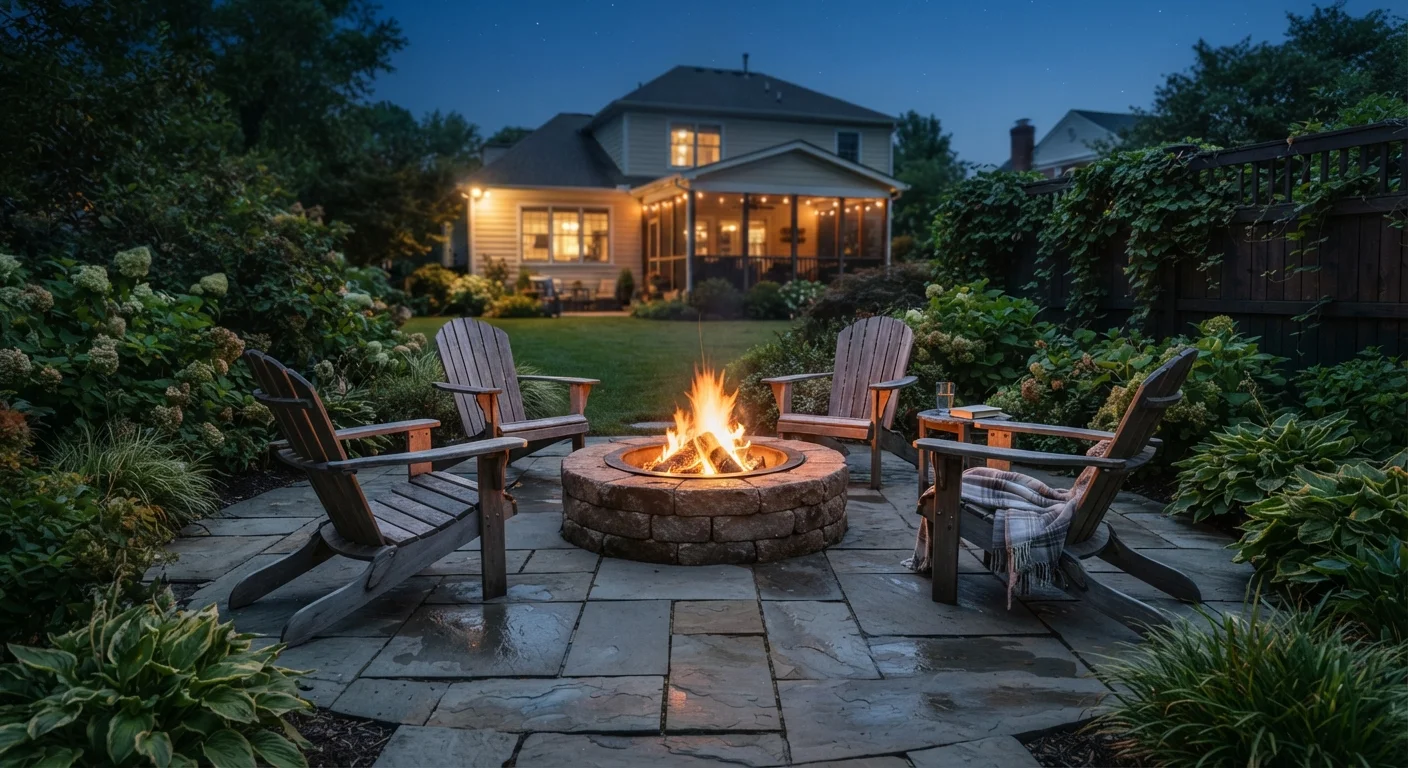
- Build or pour a proper pad. Give yourself a non-combustible base that extends well beyond the fire pit's edge. Concrete pavers, natural stone, or a packed gravel bed are all workable options depending on your yard's drainage and aesthetic.
- Plan your lighting. A well-lit path from the house to the fire pit area reduces trip hazards after dark. Our outdoor lighting layout guide covers placement principles that work alongside fire pit seating areas without creating glare.
- Notify your insurance provider. A permanent fire pit installation can affect your homeowner's policy. Checking in with your insurer before building - rather than after a claim - is always the practical move.
- Establish a consistent shutdown routine. Allow fires to burn down completely, then douse the remaining embers thoroughly with water. Stir the ash to expose any hidden hot spots before walking away.
~5,000
Annual ER visits from outdoor fire pit injuries
The U.S. Consumer Product Safety Commission has reported approximately 5,000 emergency room visits per year related to fire pit and fireplace injuries.
10 ft
Typical minimum clearance from structures
Many fire safety guidelines and local codes recommend at least 10 feet of clearance from any structure, fence, or overhead obstruction, though some jurisdictions require more.
Taking the time to site and set up a fire pit correctly doesn't diminish the enjoyment - it protects it. A fire pit that's properly placed and maintained is one you can use season after season without incident.