

Key Takeaways
- Hardscape includes non-living elements like patios, paths, retaining walls, and edging.
- Softscape covers all living components - plants, turf, ground covers, and garden beds.
- Both work best when planned together, not added sequentially as afterthoughts.
- Drainage and grading decisions affect both hardscape and softscape equally.
- The ratio of hard to soft surfaces shapes maintenance demands and yard functionality.
Option A
Hardscape
The structural backbone of outdoor living.
Best for: Creating defined, durable surfaces and structures for activity, circulation, and function.
Option B
Softscape
The living, growing layer that softens and sustains.
Best for: Adding beauty, ecological value, and seasonal character through plants, soil, and organic materials.
If your priority is a low-maintenance, activity-ready outdoor space
Hardscape
Paved or structured surfaces require minimal upkeep compared to turf and garden beds, and hold up well under heavy foot traffic.
If you want to improve biodiversity, manage stormwater naturally, or reduce heat buildup
Softscape
Plants and permeable ground covers absorb rainwater, support pollinators, and cool surfaces more effectively than hard materials.
If you're planning a full outdoor living area from scratch
Hardscape
Install structural elements like patios, walls, and drainage first - softscape is much easier to add around finished hardscape than to retrofit beneath it.
If curb appeal and seasonal visual interest are your main goals
Softscape
Layered planting beds, flowering perennials, and ground covers create dynamic, ever-changing visual appeal no paving can replicate.
For most homeowners designing a complete yard
Hardscape
Start with hardscape to lock in layout and drainage, then build softscape around it - this sequence prevents costly rework and creates a cohesive result.
What Each Term Actually Means
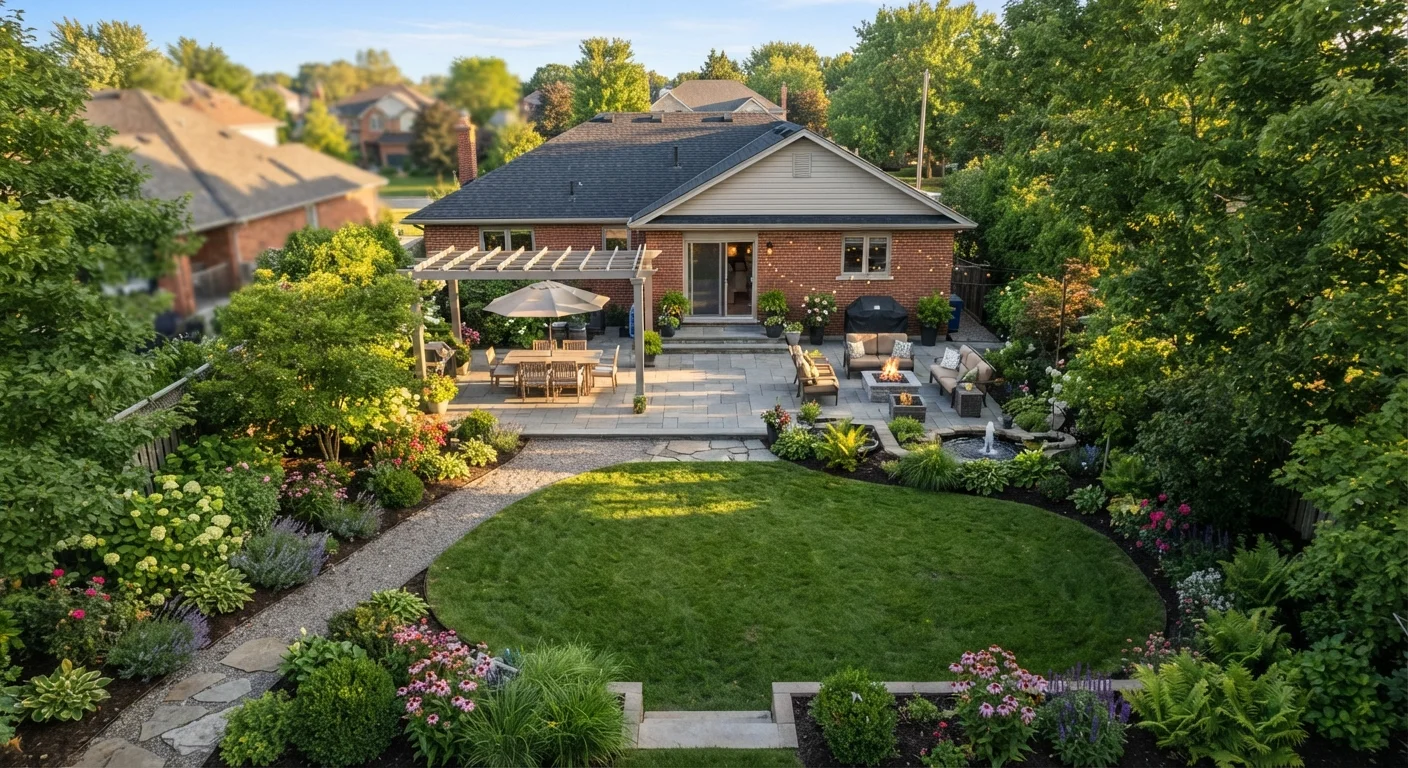
Landscape designers use two categories to describe every element in an outdoor space. Hardscape refers to all the non-living, constructed components: patios, walkways, driveways, retaining walls, edging, pergolas, fences, and outdoor kitchens. These elements define the physical structure of your yard - where people walk, sit, and gather.
Softscape covers everything living and organic: lawn grass, trees, shrubs, perennials, annuals, ground covers, mulch, and the soil itself. Softscape fills the spaces hardscape defines and brings seasonal color, texture, and ecological function to the yard.
Neither category is optional in a well-functioning outdoor space. Hardscape alone feels stark and industrial. Softscape alone, without any defined structure, quickly becomes difficult to manage and navigate. The goal is a thoughtful ratio of the two - guided by how you actually use your yard and what your site conditions allow. For a deeper look at planning that ratio, see our landscape design process guide.
| Criterion | Hardscape | Softscape |
|---|---|---|
| Examples | Patios, paths, walls, fences | Lawn, shrubs, trees, garden beds |
| Installation timing | First - sets structure and drainage | After hardscape is complete |
| Primary maintenance | Sealing, cleaning, repair | Watering, pruning, fertilizing |
| Environmental impact | Can increase runoff and heat | Absorbs water, cools surfaces |
| Visual character | Defined, structured, geometric | Organic, seasonal, textural |
| Upfront cost range | Generally higher per square foot | Lower initially; ongoing inputs |
| Longevity | Decades with proper installation | Variable; plants grow and change |
Planning Order: Why Hardscape Comes First
When starting a yard project from scratch - or significantly redesigning an existing one - experienced landscape designers almost universally install hardscape before softscape. There are practical reasons for this sequence.
Grading and drainage decisions must happen before any paving goes down, and those same drainage slopes affect where water flows through garden beds. Installing a patio after planting means heavy equipment will compact soil and likely destroy existing plantings. Setting paths before laying sod ensures clean edges without guesswork.
Retaining walls, in particular, need to go in early because they define the terraced levels that softscape eventually fills. Our guide to retaining walls explains what's involved in sizing and building them correctly. Similarly, grading and drainage work shapes how water moves across both your hardscape and planted areas - getting this right protects both investments.
~30-50%
Typical impervious surface limit per residential lot
Many US municipalities cap non-permeable coverage at roughly 30-50% of a lot's area to limit stormwater runoff, though limits vary widely by jurisdiction.
10-15°F
Temperature difference: paved vs. planted surfaces
Research from urban heat island studies consistently shows vegetated surfaces can be 10-15°F cooler than adjacent paved surfaces on warm days.
Balancing Hard and Soft: Ratios, Coverage, and Maintenance
There's no universal rule for how much of your yard should be hardscaped versus planted. Local climate, household use patterns, and lot size all shape the right balance. That said, a few practical considerations apply broadly:
- Impervious surface limits: Many municipalities restrict the percentage of a lot that can be covered by non-permeable hardscape to manage stormwater runoff. Check local zoning requirements before committing to large paved areas.
- Heat island effect: Dark, dense hardscape absorbs heat. Large expanses of paving can raise local surface temperatures noticeably. Strategically placed trees and shrubs help shade these areas.
- Maintenance trade-offs: More hardscape typically means less mowing and watering - but more sweeping, sealing, and pressure washing. More softscape means seasonal planting, pruning, and irrigation management.
For homeowners looking to reduce lawn area without losing visual interest, native plants and lawn alternatives offer a middle path - living coverage with lower maintenance demands than traditional turf.
Where Hardscape and Softscape Meet: The Details That Matter
The most visually successful outdoor spaces pay careful attention to the transitions between hard and soft elements. These are the details that determine whether a yard feels intentional or haphazard.
Edging - whether metal, stone, or concrete - holds the boundary between a paved surface and a garden bed, preventing softscape from encroaching onto walkways and hardscape from crumbling at its edges. Without it, both elements gradually blur together in ways that are harder to maintain.
Plant placement near structures matters too. Roots from large trees can eventually lift or crack paving if planted too close. As a general principle, keep large-caliper trees at least as far from any hardscape as their expected mature canopy spread.
Lighting ties both layers together after dark. Well-placed path and accent lights highlight hardscape lines while illuminating softscape textures. See our outdoor lighting layout guide for placement principles that serve both elements. If you're planning a full entertaining area, circulation and furniture zone planning shows how hardscape layout shapes the entire experience.
Permits May Apply to Hardscape Work
Significant hardscape projects - particularly retaining walls over a certain height, large impervious surface additions, or structures like pergolas - often require local building permits. Requirements vary by municipality. Always verify with your local planning or building department before breaking ground, and consult a licensed contractor for any work involving drainage alterations or structural elements.