

Key Takeaways
- Core aeration-not spike aeration-is the method most supported by turf research for relieving compaction.
- Aerating at the wrong time of year can stress grass rather than help it recover.
- Most lawns only need aeration once a year; high-traffic areas may benefit from twice-yearly treatment.
- Aeration works best when paired with overseeding or fertilization for faster lawn recovery.
- Sandy soils rarely need aeration; heavy clay soils benefit most from regular core aeration.
What Aeration Actually Does to Your Soil
Lawn aeration is the process of perforating the soil to allow air, water, and nutrients to reach grassroots more effectively. Over time-especially in yards with clay-heavy soil or heavy foot traffic-soil particles compress together, forming a dense layer that restricts root growth and reduces the movement of water and fertilizer. This condition is called soil compaction.
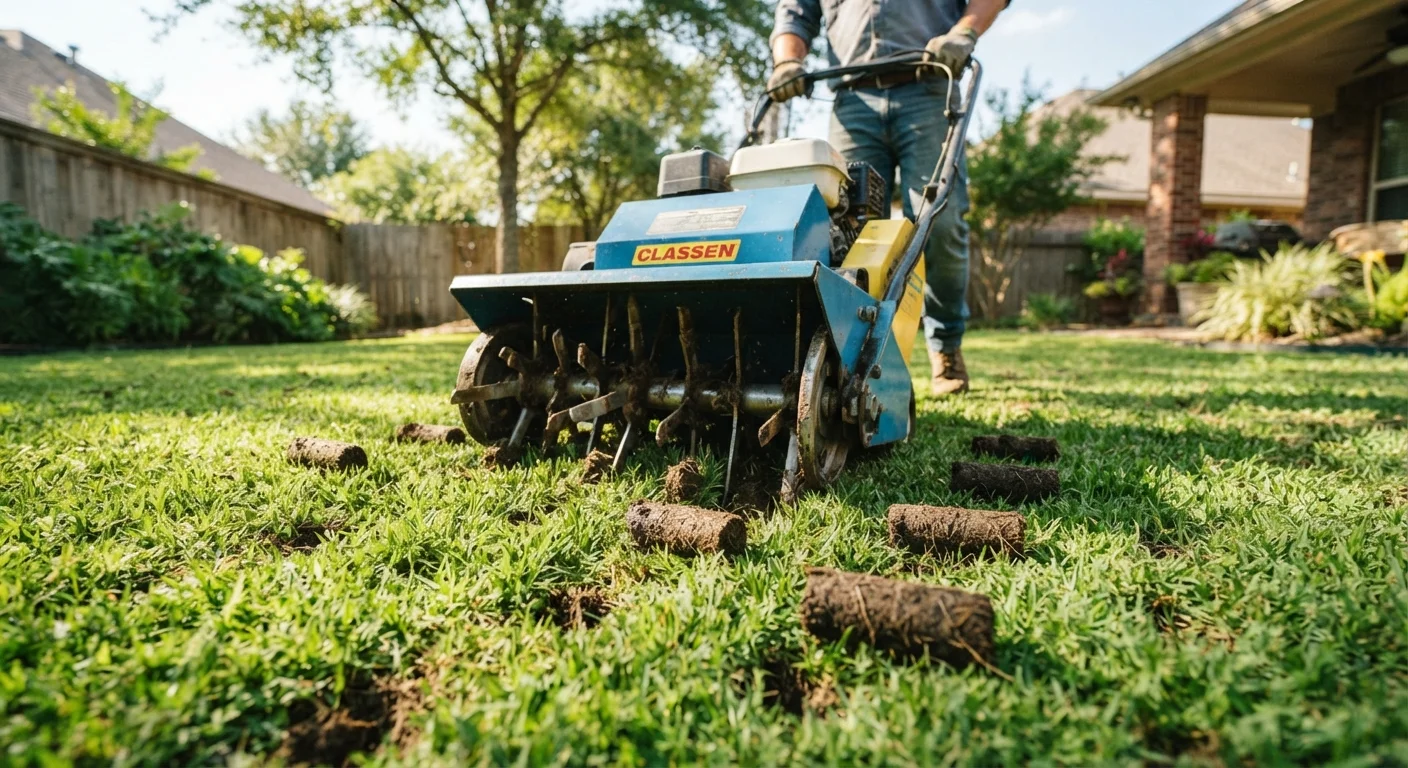
The most effective aeration method for compacted lawns is core aeration (also called plug aeration). A core aerator uses hollow tines to pull out small cylinders of soil, typically 2-3 inches deep and about half an inch in diameter. Those plugs are left on the surface to break down naturally, returning organic matter to the lawn.
The resulting channels give roots room to expand, improve drainage, and create better contact between soil, air, and moisture. If your lawn has persistent dead patches, compaction may be one contributing factor-see our guide on diagnosing lawn dead spots for a fuller picture.
Myth
Spike aeration is just as effective as core aeration-it's faster and easier, so it's the better option.
Fact
Spike aeration can actually worsen compaction by pushing soil particles sideways rather than removing them.
Solid spikes press soil to the sides as they penetrate, which can increase density around the hole rather than relieve it. Core aeration physically removes soil, creating genuine open channels. Turfgrass extension research consistently supports core aeration for compaction relief. Spike aerators may be useful for very shallow thatch, but they are not a substitute for core aeration in compacted lawns.
Myth
You should aerate every spring as part of your annual lawn care routine, regardless of your grass type.
Fact
Spring aeration is appropriate only for warm-season grasses; aerating cool-season grasses in spring can actually promote weed germination.
For cool-season turf, fall is the optimal window. Aerating in spring opens soil at a time when crabgrass and other weeds are germinating, and it does so just as the grass enters a period of heat stress. Fall aeration gives cool-season grass a long recovery window and does not coincide with peak weed germination cycles.
Myth
Aerating more frequently always leads to a healthier lawn-there's no such thing as too much aeration.
Fact
Over-aeration can disrupt root systems and stress turf, especially during heat or drought conditions.
Most residential lawns do well with one core aeration per year. High-traffic areas-such as sports fields or heavily used backyard zones-may tolerate twice-yearly aeration. Aerating more often than necessary disturbs soil structure without providing additional benefit and can weaken turf that's already under stress. If your lawn looks poor despite regular aeration, the issue may be soil pH, nutrients, or pests, not compaction. See our overview of soil pH and its effects on plant health for related context.
Myth
Aeration is only necessary for lawns that look obviously dead or damaged.
Fact
Compaction builds gradually and may not show visible symptoms until it's significantly limiting root function.
A simple screwdriver test can give early warning: push a screwdriver into moist soil by hand. If it doesn't penetrate at least 6 inches without significant effort, the soil is likely compacted. Lawns on clay-based soils in busy yards often benefit from preventive aeration before visible thinning or water-pooling problems appear. Addressing compaction early also makes fertilizers and amendments more effective-nutrients can't reach roots efficiently through densely packed soil.
Timing, Soil Type, and When to Skip It
Aeration timing depends almost entirely on your grass type. Cool-season grasses-such as Kentucky bluegrass, tall fescue, and ryegrass-recover best when aerated in early fall (late August through October), when temperatures cool and the grass is actively growing. Warm-season grasses-like Bermuda, Zoysia, and St. Augustine-benefit from late spring or early summer aeration, just as they enter peak growth.
Aerating during summer heat or winter dormancy stresses the turf and can cause more harm than good. Similarly, aerating right before a drought period without irrigation access is counterproductive.
Don't Aerate a Drought-Stressed or Dormant Lawn
Aerating when grass is dormant or heat-stressed leaves fresh soil channels exposed without active root recovery. This can increase moisture loss and invite weed establishment. Always aerate during or just before the grass's active growing season, and water thoroughly in the days following aeration to help the lawn close and recover.
Soil type matters, too. Clay soils compact readily and respond well to annual core aeration. Sandy soils have naturally large pore spaces and rarely need aeration at all. Loamy soils fall in between-aerate only if you see visible compaction symptoms like water pooling or thin growth. If you're unsure about your soil makeup, a basic soil test can reveal a lot; our article on lawn fertilization and soil testing explains how to interpret results.
One overlooked question is whether a lawn renovation makes more sense than repeated aeration. If your turf is seriously thinning, aeration followed by overseeding is a highly productive combination. Our guide to lawn overseeding preparation walks through the steps in detail.
2-3 in.
Ideal core aeration depth for most lawns
Turfgrass management guidelines from land-grant university extension programs generally recommend cores of this depth to effectively relieve compaction without disrupting root systems.
1×/year
Recommended aeration frequency for most home lawns
University cooperative extension programs consistently advise once-yearly core aeration for typical residential lawns with moderate traffic and clay-influenced soils.