

Key Takeaways
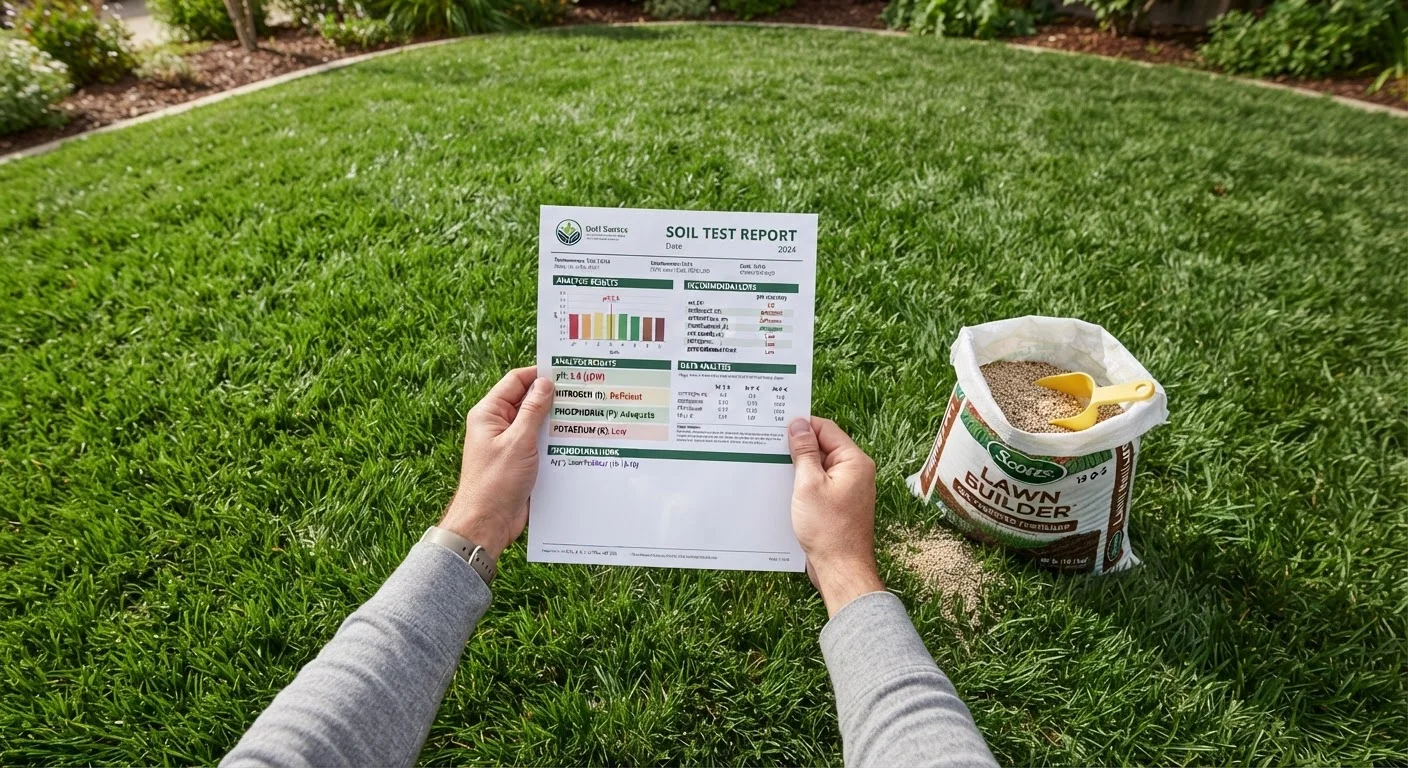
- Soil test results - not guesswork - should drive every fertilizer decision you make.
- Nitrogen, phosphorus, and potassium each serve different functions; over-applying one can harm the lawn.
- Timing fertilizer applications to your grass type's active growth period improves uptake and reduces waste.
- Slow-release fertilizers generally pose less risk of burning grass and nutrient runoff than fast-release formulas.
- Soil pH affects how well roots can absorb nutrients, so pH correction may be needed before fertilizing.
N-P-K Ratio
The N-P-K ratio is the three-number code printed on every fertilizer bag, representing the percentage by weight of nitrogen (N), phosphorus (P), and potassium (K) in the product. Each nutrient plays a distinct role in plant health: nitrogen drives leafy green growth, phosphorus supports root development, and potassium strengthens overall plant resilience. Reading this ratio correctly lets you choose a fertilizer that addresses what your lawn actually needs rather than what the packaging suggests.
The phosphorus and potassium figures on the label are expressed as oxide equivalents (P₂O₅ and K₂O), not elemental weights - a distinction that matters when interpreting soil test recommendations given in elemental terms.
Why Soil Testing Comes Before Fertilizing
Spreading fertilizer without knowing your soil's current nutrient levels is a bit like taking supplements without knowing what deficiencies you have - you might help, you might not, and you could make things worse. A soil test measures existing nitrogen, phosphorus, and potassium levels, plus soil pH, and translates those readings into specific amendment recommendations for your lawn's square footage.
Most state university cooperative extension services offer affordable soil testing. You collect a few small samples from different spots in your yard, mix them together, and mail or drop off the composite sample. Results typically arrive within one to two weeks and include plain-language guidance on what to add and how much.
If your lawn has unexplained bare or discolored patches, soil chemistry is often a contributing factor. See our guide to diagnosing dead lawn patches for a fuller picture of what the soil might be signaling. Soil pH is equally important - nutrients can be present but chemically locked up if pH is too high or too low. Our article on soil pH and how to adjust it explains when and how to correct pH before fertilizing.
Phosphorus Restrictions Are Growing
Several US states - including Minnesota, Wisconsin, and New York - have laws restricting or prohibiting phosphorus lawn fertilizers except when a soil test documents a deficiency or for new lawn establishment. Check your state's department of agriculture website to understand what's permitted in your area before purchasing a product.
What N, P, and K Each Do for Your Lawn
Understanding the role of each macronutrient helps you interpret both your soil test results and the product label in front of you.
- Nitrogen (N) is the growth engine. It drives chlorophyll production, giving grass its green color and fueling the leaf growth you see week to week. Nitrogen depletes quickly through mowing, watering, and microbial activity, which is why it's the nutrient most commonly reapplied.
- Phosphorus (P) supports root establishment and energy transfer within the plant. It's particularly important for newly seeded or sodded areas. Many established lawns in the US actually have adequate or even excessive phosphorus from years of fertilization, which is why some states restrict phosphorus fertilizers on mature turf.
- Potassium (K) strengthens cell walls, improves drought tolerance, and helps grass resist disease. Think of it as the resilience nutrient - it doesn't make the grass visibly greener, but it helps the plant handle stress.
40%
Nitrogen lost to runoff without proper timing
Research from university extension programs suggests that poorly timed or excessive nitrogen applications can result in significant nutrient loss through runoff and leaching, reducing effectiveness and increasing environmental impact.
6.0-7.0
Optimal soil pH range for most turfgrasses
Most cooperative extension soil science resources identify this pH window as the range where nitrogen, phosphorus, and potassium are most available to grass roots.
1 lb
Recommended nitrogen per 1,000 sq ft per application
Many turfgrass extension guidelines suggest applying no more than 1 pound of actual nitrogen per 1,000 square feet in a single application to reduce burn and runoff risk.
A fertilizer labeled 28-0-6, for example, contains 28% nitrogen, no added phosphorus, and 6% potassium - a common profile for established lawns that already have sufficient phosphorus.
How to Time Fertilizer Applications by Grass Type
Grass type determines when your lawn is actively growing and therefore when it can actually use the nutrients you apply.
Cool-Season Grasses
Varieties like Kentucky bluegrass, tall fescue, and perennial ryegrass grow most actively in fall and spring when soil temperatures are between roughly 50°F and 65°F. The most impactful application window for these grasses is early fall - roots are active, the grass is recovering from summer stress, and nutrients absorbed now fuel spring green-up. A lighter application in early spring is common, but avoid heavy nitrogen in late spring, which can push excessive top growth heading into summer heat.
Warm-Season Grasses
Bermudagrass, zoysiagrass, St. Augustine, and centipede grass thrive in summer heat and go dormant once temperatures drop. Begin fertilizing after the lawn fully greens up in late spring, and stop applications roughly six to eight weeks before the average first frost date in your region. Fertilizing too late in the season can stimulate tender new growth that gets damaged by early frost.
Check Soil Temperature, Not Just the Calendar
Calendar dates are a rough guide, but soil temperature is a more reliable trigger for fertilization timing. An inexpensive soil thermometer lets you confirm when the ground has warmed enough for warm-season grass to begin active growth, or cooled enough for cool-season grasses to benefit from a fall feeding. Most extension services publish local soil temperature data online as well.
If you're planning to overseed a cool-season lawn in fall, coordinate your fertilizer timing with the seeding schedule. Our article on lawn overseeding preparation and timing covers how to sequence these steps effectively.
Slow-Release vs. Fast-Release: What the Label Doesn't Always Explain
Fertilizers are also categorized by how quickly they release nutrients into the soil, and this affects both performance and risk.
Fast-release (water-soluble) fertilizers dissolve quickly and deliver nitrogen almost immediately. This can produce rapid greening but also raises the risk of burning grass if over-applied, and excess nutrients can leach into groundwater or run off into storm drains before the lawn can absorb them.
Slow-release (controlled-release) fertilizers - including sulfur-coated, polymer-coated, and organic-based products - break down over weeks or months. They're more forgiving for homeowners applying fertilizer by hand or push spreader, and they generally support steadier growth rather than a surge followed by a slump.
Some products combine both types, providing an immediate green-up alongside longer-term feeding. Look for terms like "slow-release," "controlled-release," or "stabilized nitrogen" on the label, along with the percentage of slow-release nitrogen listed in the guaranteed analysis section.
Aeration can meaningfully improve how well your lawn takes up fertilizer by loosening compacted soil and improving root access to nutrients. Learn more in our explainer on when and how lawn aeration works.