

Key Takeaways
- Native plants are adapted to local rainfall patterns, requiring significantly less irrigation than traditional turf grass.
- Groundcovers and lawn alternatives can reduce mowing frequency, lower water bills, and support local pollinators.
- Transitioning away from turf doesn't mean sacrificing curb appeal-plant selection and edging define a polished look.
- Partial lawn replacement is a practical starting point; you don't need to remove all grass at once.
- Local cooperative extension services can identify which native species thrive in your specific region and soil type.
Why Homeowners Are Rethinking the Traditional Lawn
The classic American lawn - uniformly green, edge-to-edge turf - demands a surprising amount of resources. Depending on your climate, a standard lawn can require one to two inches of water per week during the growing season. In drier regions, that adds up quickly on a water bill and strains local water supplies during drought conditions.
Beyond water use, conventional turf often calls for fertilizers, pesticides, and regular mowing - all of which carry costs in time, money, and environmental impact. More homeowners are asking a practical question: what if the lawn worked with the local climate instead of against it?
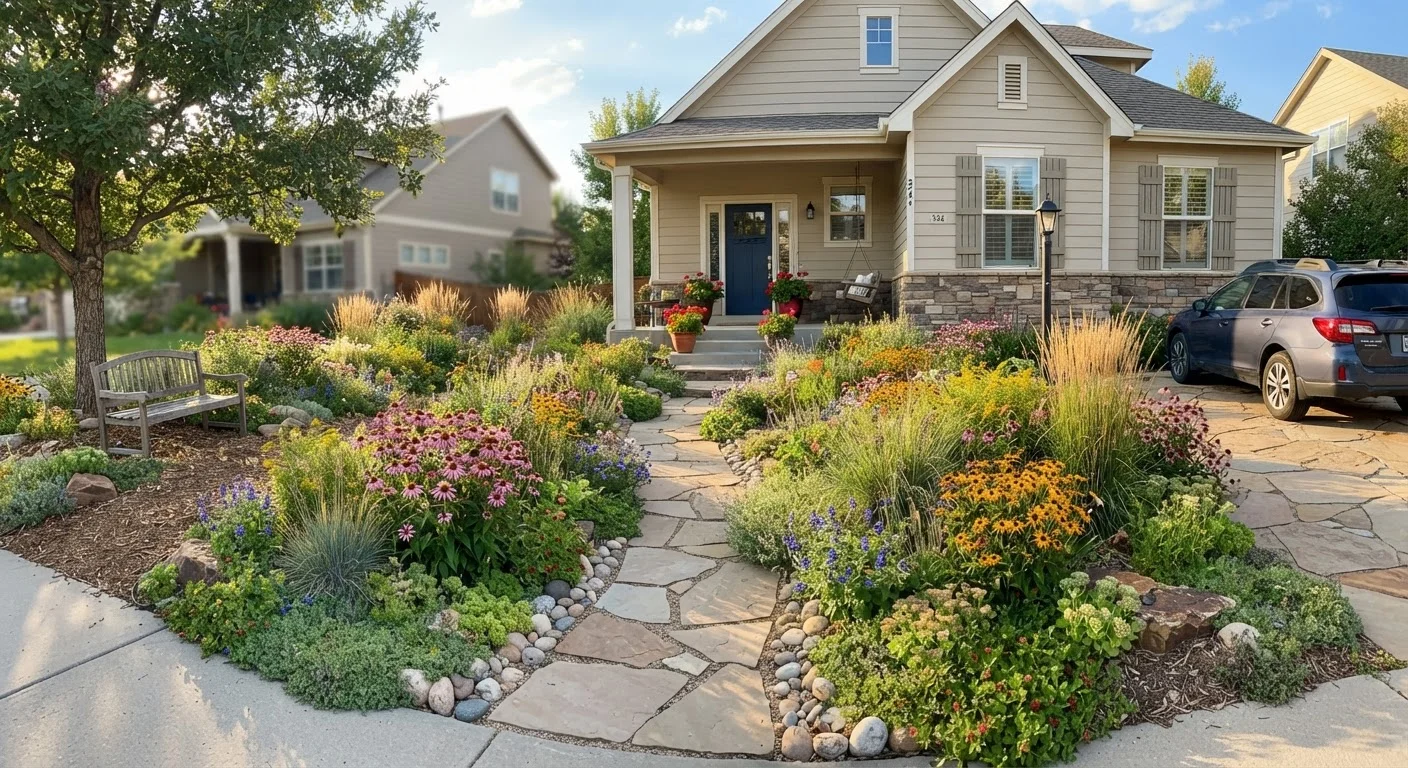
That's where native plants and lawn alternatives enter the picture. This isn't about abandoning curb appeal - it's about redefining what a well-maintained yard looks like. A thoughtfully designed low-water landscape can be just as striking as manicured turf, and considerably easier to maintain over time. For a broader view of how plants and hardscape fit together, see our guide on balancing hardscape and softscape in your yard.
Choose plants native to your specific region
Native plants are species that evolved in your local ecosystem over thousands of years. Because they're adapted to your region's rainfall patterns, soil composition, and temperature swings, they generally require far less supplemental watering once established. A coneflower in the Midwest or a blue wild indigo in the Southeast is built to survive on what nature provides.
The key word is regional. A plant native to the Pacific Northwest may struggle in the Mid-Atlantic. Your state's cooperative extension service - typically affiliated with a land-grant university - is one of the most reliable resources for identifying which species suit your specific county, soil type, and sun exposure. Native plant societies and local botanical gardens often publish regionally specific plant lists as well.
Native plants adapted to your region need far less water once established than imported ornamentals.
Replace high-water turf zones with groundcovers
Groundcovers are low-growing plants that spread to fill an area, often outcompeting weeds and reducing the need for mowing. Options like creeping thyme, buffalo clover, and native sedges can replace turf in areas where foot traffic is light to moderate. Many are drought-tolerant once established and provide texture and color that keeps a yard looking intentional rather than neglected.
Matching groundcover to site conditions is critical. Shaded areas under trees may suit native wild ginger or Pennsylvania sedge, while sunny, dry slopes might call for creeping phlox or sedum. Our detailed guide on ground cover plants as lawn alternatives walks through which species perform well across different US climates and site challenges.
Groundcovers fill in quickly, reduce mowing needs, and handle drought far better than standard turf.
Incorporate ornamental grasses and prairie-style plantings
Ornamental grasses - particularly native species like little bluestem, switchgrass, and prairie dropseed - offer dramatic seasonal interest with minimal irrigation requirements. They move beautifully in the wind, provide winter structure after other plants have died back, and support birds and insects that rely on seed heads through cold months.
Prairie-style planting clusters these grasses with native perennials like black-eyed Susans, coneflowers, and native asters to create layered, naturalistic beds. This approach mimics how plants grow in the wild, which means each species supports the others - reducing pest pressure, improving soil health, and cutting the need for supplemental feeding or watering.
Native ornamental grasses deliver structure and seasonal beauty with almost no irrigation once rooted.
Use edging to maintain a polished, intentional appearance
One of the most common concerns about transitioning away from turf is that the yard will look unkempt. Clean, well-defined edges between planting beds and any remaining lawn or hardscape do more than almost anything else to signal that a yard is intentionally designed - not simply overgrown.
Steel, aluminum, or stone edging creates a crisp visual boundary that lets naturalistic plantings look purposeful. Regular edge maintenance along pathways and driveways reinforces the same effect. Our article on edging techniques for garden beds covers both manual and mechanical methods that keep borders sharp through the growing season without excessive labor.
Crisp edging transforms a naturalistic planting from looking wild to looking deliberately designed.
Consider permeable hardscape for high-traffic areas
In spots where ground covers won't hold up to consistent foot traffic - such as paths to the door, side yards used for storage, or entertaining areas - permeable hardscape materials offer a water-conscious alternative to solid pavement. Gravel, decomposed granite, permeable pavers, and stepping stone arrangements allow rainwater to filter into the ground rather than run off.
This matters for two reasons: it reduces stormwater runoff that can carry pollutants into waterways, and it recharges groundwater that native plantings can draw on between rain events. Integrating permeable surfaces thoughtfully with your plant selections creates a cohesive, functional outdoor space. For a broader planning framework, see our article on landscaping as a functional home upgrade.
Permeable hardscape manages foot traffic and stormwater while complementing low-water planting designs.
Group plants by water needs to simplify irrigation
Even in a low-water landscape, some irrigation may be needed - particularly during establishment, which can take one to three growing seasons depending on the plant and climate. Grouping plants with similar water needs into the same zones, a practice sometimes called hydrozoning, makes any supplemental watering far more efficient.
Drought-tolerant natives can go in one zone with infrequent deep watering; any remaining turf or more moisture-demanding plants occupy a separate zone. This prevents the common problem of overwatering native species while trying to keep other plants alive. Understanding how residential irrigation systems are structured can help you make these adjustments confidently - see our guide on irrigation zones and seasonal adjustments for a practical overview.
Hydrozoning - grouping plants by water need - prevents overwatering and makes any irrigation far more efficient.
Making the Transition Work for Your Yard
Shifting from a conventional lawn to a lower-water landscape is best approached gradually. Start by identifying the areas of your yard that consume the most water or require the most maintenance - often sunny, sloped, or heavily trafficked sections. Replacing those zones first lets you test plant choices and develop confidence before committing to a full redesign.
Start Small to Build Confidence
If a full yard conversion feels overwhelming, begin with one defined area - a front parkway strip, a dry corner, or a shaded bed under a tree. Establish your native or low-water plants, observe how they perform through a full growing season, and expand from there. Incremental change reduces risk and lets you learn what works in your specific conditions before committing to larger sections of the yard.
For areas where you retain some grass, pairing turf with a well-calibrated irrigation approach helps prevent overwatering. Our article on irrigation system zones and controllers explains how to fine-tune timing and coverage. And once your new plantings are in place, applying mulch correctly around them will conserve soil moisture and suppress weeds - one of the most practical steps you can take in a low-water garden.
If you're not ready to give up turf entirely, that's a reasonable position. Even partial replacement - converting a front strip, a shaded side yard, or a dry slope - delivers real water savings and biodiversity benefits without requiring a complete overhaul. For homeowners who prefer to keep and improve existing grass, lawn overseeding offers a different path toward a healthier, denser turf with less replanting effort.