

Key Takeaways
- Dividing your yard into zones lets each area receive water tailored to its specific plant type and sun exposure.
- A controller automates watering schedules and is the primary tool for preventing overwatering.
- Seasonal adjustments-not a single set-it-and-forget-it schedule-are the key to efficient water use.
- Smart controllers adjust run times automatically based on local weather data.
- Winterizing your system before the first freeze protects pipes and valves from costly damage.
Irrigation System Zones
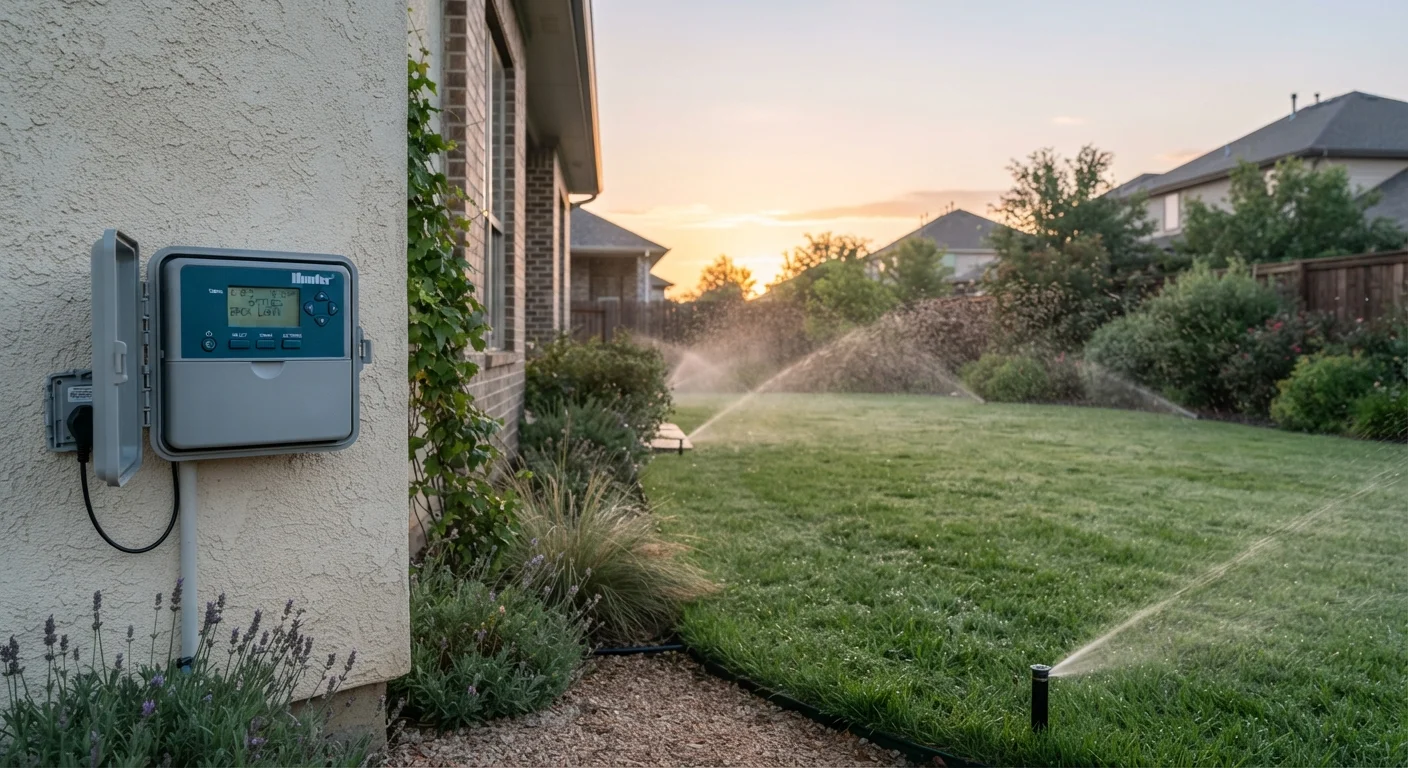
An irrigation zone is a group of sprinkler heads or drip emitters controlled by a single valve, allowing different areas of your yard to receive different amounts of water on their own schedules. Zones are created because grass, shrubs, and garden beds have different watering needs. A controller (sometimes called a timer) acts as the brain, opening and closing each valve on a programmed schedule.
Each zone is typically limited by the water pressure and flow rate available at the valve; oversizing a zone by adding too many heads can reduce pressure and result in uneven coverage.
How Zones Work and Why They Matter
Think of your irrigation system as a set of separate watering circuits, each independently controlled. One zone might cover the front lawn, another the side-yard shrubs, and a third a vegetable garden. Because each circuit runs on its own valve, you can schedule the lawn to receive longer, less frequent deep soaks while the garden gets shorter, more frequent cycles.
This separation matters because mixing plant types on a single zone leads to overwatering some plants and underwatering others. Turf grass, for example, generally needs more water per session than established perennial beds. Without zones, you're stuck compromising-and that compromise usually results in waste or plant stress.
When a licensed irrigation installer designs a system, they account for water pressure, flow rate, sprinkler head spacing, and plant type to group heads logically. If you're evaluating an existing system, walking each zone while it runs is the fastest way to spot coverage gaps, misaligned heads, or broken emitters. For a broader framework on outdoor planning, see the landscape design process guide.
Reading and Programming Your Controller
The controller is where homeowners have the most direct control. Standard controllers let you set start times, run durations, and watering days for each zone independently. Most have three core program inputs: which days to water, what time to start, and how long each zone runs.
A common mistake is programming the controller once at installation and never revisiting it. A schedule built for July will overwater in October and underwater during a heat dome in August. Controllers should be treated as living documents-updated as seasons shift.
Update Your Schedule With the Seasons
Set a reminder to review your controller program at least four times a year-once each season. Even a few minutes of adjustment in spring and fall can prevent weeks of overwatering. If your controller has a seasonal adjustment or water budget feature, that single setting can handle most of the change without reprogramming each zone individually.
Modern smart controllers add a layer of automation by pulling data from weather services or using onsite rain and soil moisture sensors. When it rains enough to satisfy the weekly water budget, a smart controller skips the next scheduled run automatically. This kind of system can meaningfully reduce outdoor water use without any manual intervention.
Seasonal Adjustments: The Most Overlooked Maintenance Step
Seasonal adjustment-sometimes called the "seasonal percent" or "water budget" setting-lets you dial your entire program up or down by a percentage without rewriting every zone's run time. In spring, you might set the system to 60% of peak summer output. By July, you're at 100%. Come September, you dial back again.
Understanding the Seasonal Adjustment Setting
Most controllers express this as a percentage of the baseline program. If Zone 1 is set to run 15 minutes at 100%, a 70% seasonal adjustment runs it for about 10.5 minutes. Check your controller's manual for how this setting is labeled-common terms include "seasonal adjust," "water budget," or "global adjust."
Most controllers express this as a percentage of the baseline program. If Zone 1 is set to run 15 minutes at 100%, a 70% seasonal adjustment runs it for about 10.5 minutes. Check your controller's manual for how this setting is labeled-common terms include "seasonal adjust," "water budget," or "global adjust."
Beyond the in-season adjustments, two transitions deserve particular attention: spring startup and fall winterization. In spring, inspect each zone for damage before the first run, check head alignment, and confirm the backflow preventer (a safety device that stops irrigation water from mixing with your drinking supply) is functioning. In fall, knowing your first frost date tells you when to shut the system down and begin winterization. For a full seasonal maintenance framework, the seasonal home repair checklist covers irrigation alongside your other annual tasks.
~50%
Share of residential water used outdoors
According to the U.S. Environmental Protection Agency, roughly half of residential water use goes to landscape irrigation, much of which is lost to overwatering and evaporation.
Up to 50%
Water savings from weather-based controllers
The EPA's WaterSense program estimates that weather-based irrigation controllers can reduce outdoor water use by up to 50% compared to clock-based timers in some conditions.
Matching Your System to Your Landscape's Actual Needs
The most water-efficient irrigation setup isn't necessarily the most sophisticated-it's the one most accurately matched to what your plants actually need. Grouping plants with similar water requirements in the same zone is called hydrozoning, and it's one of the most effective principles in irrigation design.
If you're moving toward lower-water landscaping, your irrigation zones may need to be reconfigured. Replacing thirsty turf with native plants or groundcovers often means converting spray zones to drip irrigation, which delivers water directly to root zones and loses far less to evaporation. For ideas on reducing your overall water footprint, native plants and lawn alternatives offers a practical starting point.
Your goal is a system that runs as little as necessary while keeping plants healthy-not one that runs on a fixed schedule regardless of what the sky is doing. Checking soil moisture by hand before a scheduled run, and skipping cycles after significant rainfall, costs nothing and saves both water and money over a season. Pair that habit with annual inspections and a seasonal adjustment routine, and your irrigation system becomes a tool for landscape stewardship rather than a source of waste.
This article provides general educational information about residential irrigation systems. For electrical, plumbing, or backflow-related work, consult a licensed irrigation professional and verify any local permitting or code requirements in your area.