

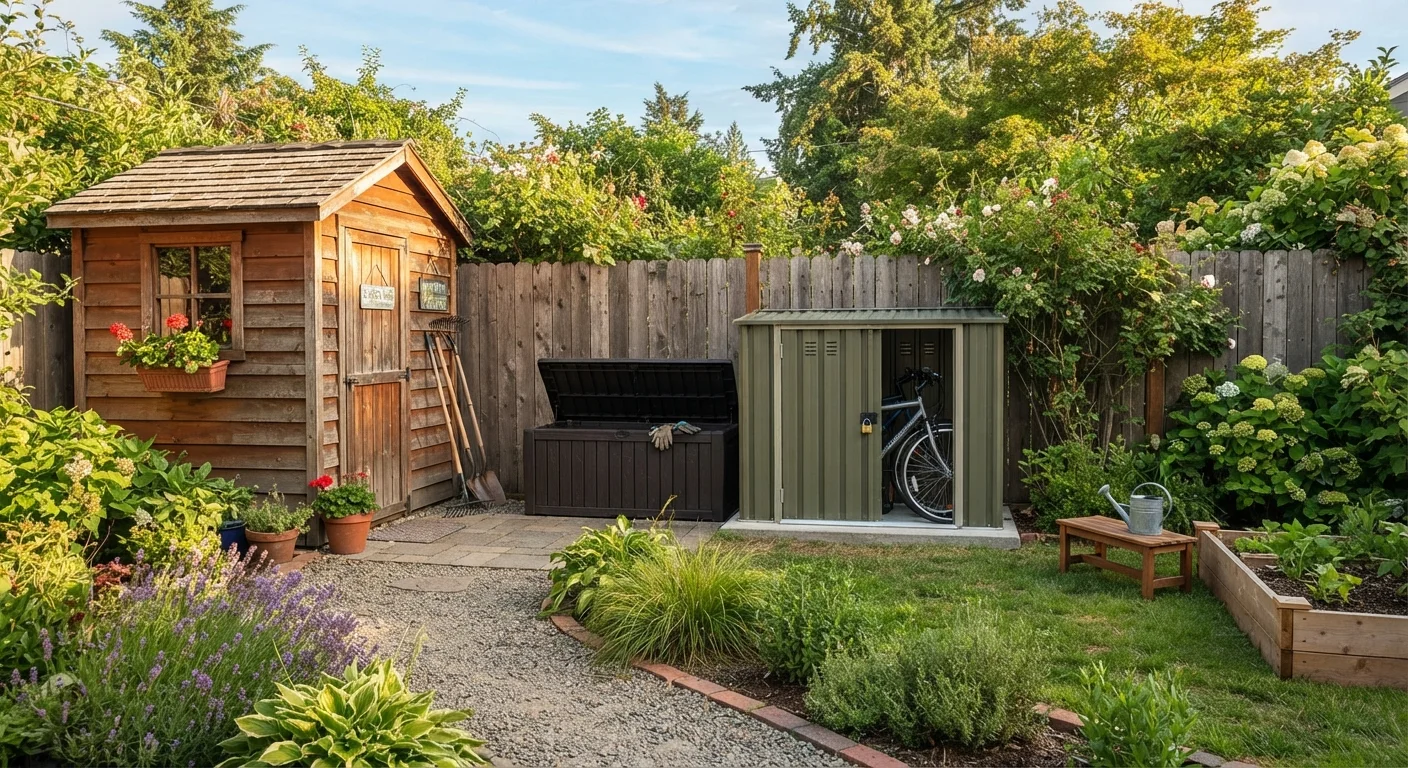
Key Takeaways
- Different outdoor storage structures suit different contents - there is no universal solution.
- Climate exposure, security needs, and item size should all drive your structure choice.
- Sheds over a certain size often trigger local permit requirements; always check before building.
- Deck boxes and horizontal storage units work well for lighter, frequently accessed items.
- Ventilation and moisture control matter as much as footprint when choosing a structure.
Why the Structure Should Follow the Contents
Most homeowners approach outdoor storage backwards: they pick a shed or box based on price or appearance, then figure out what to put in it. A more useful approach is to inventory what you actually need to store - and let those requirements drive the structure choice. The type of item, its size, how often you access it, its sensitivity to moisture or temperature, and whether it needs to be locked away all point toward different solutions.
Outdoor storage also doesn't exist in isolation. Where you place a structure affects traffic flow, sight lines, and how your yard functions overall. If you're thinking about integrating storage into a larger yard project, our guide to outdoor entertaining layouts addresses how zones and circulation work together. Similarly, privacy fencing can serve double duty as a screen for storage areas that aren't visually appealing.
Audit Your Items Before Choosing a Structure
Before shopping for any storage unit, make a written list of everything you plan to store - including dimensions for large items like mowers or kayaks. Group items by how often you access them and whether they need climate protection, ventilation, or a lock. This simple step prevents buying a structure that technically fits your yard but doesn't actually fit your stuff.
Garden Sheds for Tools, Equipment, and Overflow
A traditional garden shed is the most versatile outdoor storage option for homeowners who accumulate a wide range of items - lawn mowers, hand tools, potting supplies, and seasonal equipment. Because sheds are fully enclosed, they protect against rain, wind, and UV exposure better than open or semi-open alternatives.
The tradeoff is complexity. Sheds above certain square-footage thresholds - often 100-200 sq ft depending on your municipality - commonly require a building permit, a compliant foundation, and adherence to setback rules (how far the structure must sit from property lines). Before purchasing or building, review what shed installation actually involves, including anchoring and foundation requirements. Also check which outdoor structures typically require permits in your area.
Sheds over 100-200 sq ft often require permits - always verify local rules before building.
Deck Boxes for Cushions, Pool Accessories, and Light Gear
Deck boxes are compact, lidded containers - typically made of resin, wood composite, or UV-treated plastic - designed to sit on patios and decks without requiring any installation. They excel at storing cushions, throw blankets, flotation toys, and small garden tools that you reach for often.
Because they sit directly on a surface, they're subject to moisture accumulation on the bottom. Look for units with drainage holes or slightly raised bases. Most deck boxes don't lock securely, so they aren't well suited for anything valuable or hazardous. They also have limited capacity - plan around 50-150 gallons for a typical unit.
Deck boxes are ideal for cushions and pool gear but offer limited security and capacity.
Horizontal Storage Units for Bikes, Hoses, and Lawn Tools
Horizontal storage lockers - long, low units that sit close to the ground - fill the gap between deck boxes and full sheds. They're particularly well suited for items that are awkward to store upright: garden hoses, rakes, long-handled tools, and folded lawn chairs.
Many models are sized to fit a single adult bicycle lying on its side, though vertical bike sheds (upright, narrow units) can be more space-efficient depending on your yard layout. Horizontal units typically max out around 4-6 feet in length and are harder to access than a shed with a full-swing door, so they work best for items you retrieve occasionally rather than daily.
Horizontal lockers bridge the gap between a deck box and a shed for long, awkward items.
Outdoor Cabinets and Shelving for Chemicals and Supplies
Lockable outdoor cabinets - often made from galvanized steel or UV-resistant resin - are purpose-built for storing fertilizers, pesticides, pool chemicals, and other materials that need to be kept away from children and pets but accessed regularly by adults. A secure latch or padlock capability is a meaningful safety feature here.
Ventilation slots matter for chemical storage: trapped heat can accelerate degradation and, in some cases, create pressure in sealed containers. Choose a cabinet with louvered vents and place it out of direct afternoon sun when possible. Avoid storing flammable materials in any unventilated enclosed space - check manufacturer guidance and local fire codes.
Lockable cabinets with ventilation slots are the right fit for chemicals and hazardous supplies.
Lean-To Structures and Side-of-House Storage
A lean-to is a simple shed-like structure with a sloped single-pitch roof that attaches to an existing wall - typically the side of a house, garage, or fence. This design uses your existing structure as one wall, reducing material cost and footprint while still offering covered, semi-enclosed storage.
Lean-tos are well matched to firewood (which benefits from covered but ventilated storage), garden supplies, and seasonal items. They generally require fewer permits than freestanding sheds because they're considered an accessory to an existing structure, though this varies by jurisdiction. Always confirm with your local planning department. For context on how storage structures fit into overall yard design, see our guide on balancing hardscape and softscape in your outdoor space.
Lean-tos offer covered storage with less footprint and potentially fewer permit requirements.
Weatherproof Footlockers and Trunk-Style Containers for Wet Zones
For poolside, dock-adjacent, or coastal settings where everything gets wet, marine-grade or heavy-duty weatherproof footlockers provide storage that handles direct water contact. Unlike standard deck boxes, these are typically rated for humidity, saltwater spray, and UV exposure, with sealed gaskets rather than simple lids.
They work well for towels, life vests, water shoes, and other pool or marine gear. Because they're often heavier and more expensive than basic deck boxes, they're worth the investment only in genuinely wet or marine-exposure environments - not just for occasional rain.
Marine-grade containers are worth the extra cost only in genuinely wet or saltwater environments.
Making the Right Choice for Your Situation
No single structure does everything well. A deck box near the back door makes cushion retrieval convenient but won't protect a gas-powered mower. A full shed solves the capacity problem but introduces planning considerations most homeowners underestimate. The goal is aligning the structure's actual capabilities - volume, weatherproofing, security, ventilation - with the specific demands of what you're storing.
Permits and Codes Vary Widely by Locality
There is no single national standard for when an outdoor storage structure triggers a permit requirement. Rules differ by state, county, and municipality - and sometimes by HOA covenant as well. A structure that requires a permit in one jurisdiction may be exempt in the next town over. Always contact your local building or planning department before purchasing or installing a shed, lean-to, or any structure anchored to the ground.
If you're also thinking through indoor organization alongside outdoor storage, the same matching logic applies. Our article on closet organization systems walks through a similar tradeoffs framework for interior spaces. Start with what you have, define what you actually need, and let that drive the structure - not the other way around.