

Key Takeaways
- In-ground pools cost significantly more upfront but may add long-term property value.
- Above-ground pools are removable, faster to install, and far less expensive to purchase.
- Both pool types require ongoing chemical maintenance, safety fencing, and insurance consideration.
- Your yard's soil, slope, and drainage can influence which pool type is even feasible.
- Local permits and zoning rules apply to both types - check before committing to either.
Durable, long-lasting structure with decades of use
Properly maintained gunite or fiberglass in-ground pools can last 25-50 years, making them a genuinely long-term addition to the property.
Fully customizable shape, depth, and features
In-ground pools can be built to almost any shape or depth, and can incorporate features like sun shelves, attached spas, and integrated lighting.
Visually integrated into the landscape
When designed thoughtfully, an in-ground pool can blend seamlessly with surrounding patios, plantings, and hardscape rather than standing apart as a separate structure.
May support property value in certain markets
In warmer-climate regions where pools are common, a well-maintained in-ground pool can be a genuine selling feature - though this is market-dependent and not guaranteed.
Very high upfront installation cost
In-ground pools routinely cost $40,000-$80,000 or more when installation, decking, fencing, and permits are included - a significant financial commitment with no guaranteed return.
Requires permits and professional contractors
Excavation, structural work, plumbing, and electrical components all typically require licensed professionals and municipal permits, adding time and complexity to the project.
Permanent - removal is costly and disruptive
Filling in or demolishing an in-ground pool can cost thousands of dollars and may leave soil instability or code compliance issues that affect future use of the yard.
Higher insurance and liability exposure
In-ground pools are classified as an attractive nuisance in many jurisdictions, increasing homeowner liability and often raising insurance premiums substantially.
Our Verdict
In-ground pools offer a permanent, visually integrated backyard feature with potential resale appeal, but they demand a large upfront investment, permits, professional installation, and ongoing maintenance. Above-ground pools lower the financial and logistical barriers considerably, making them a practical starting point for many families - though they carry their own upkeep demands and aesthetic limitations. Neither option is universally superior; the right choice depends on your budget, property, long-term plans, and how heavily the pool will actually be used.
In-ground pools suit homeowners with established properties, long-term plans to stay, and a budget for professional installation; above-ground pools are better suited to renters-turned-owners, families testing pool ownership, or anyone prioritizing lower upfront cost and flexibility.
What Each Pool Type Actually Involves
Before comparing trade-offs, it helps to understand what you're actually signing up for with each option.
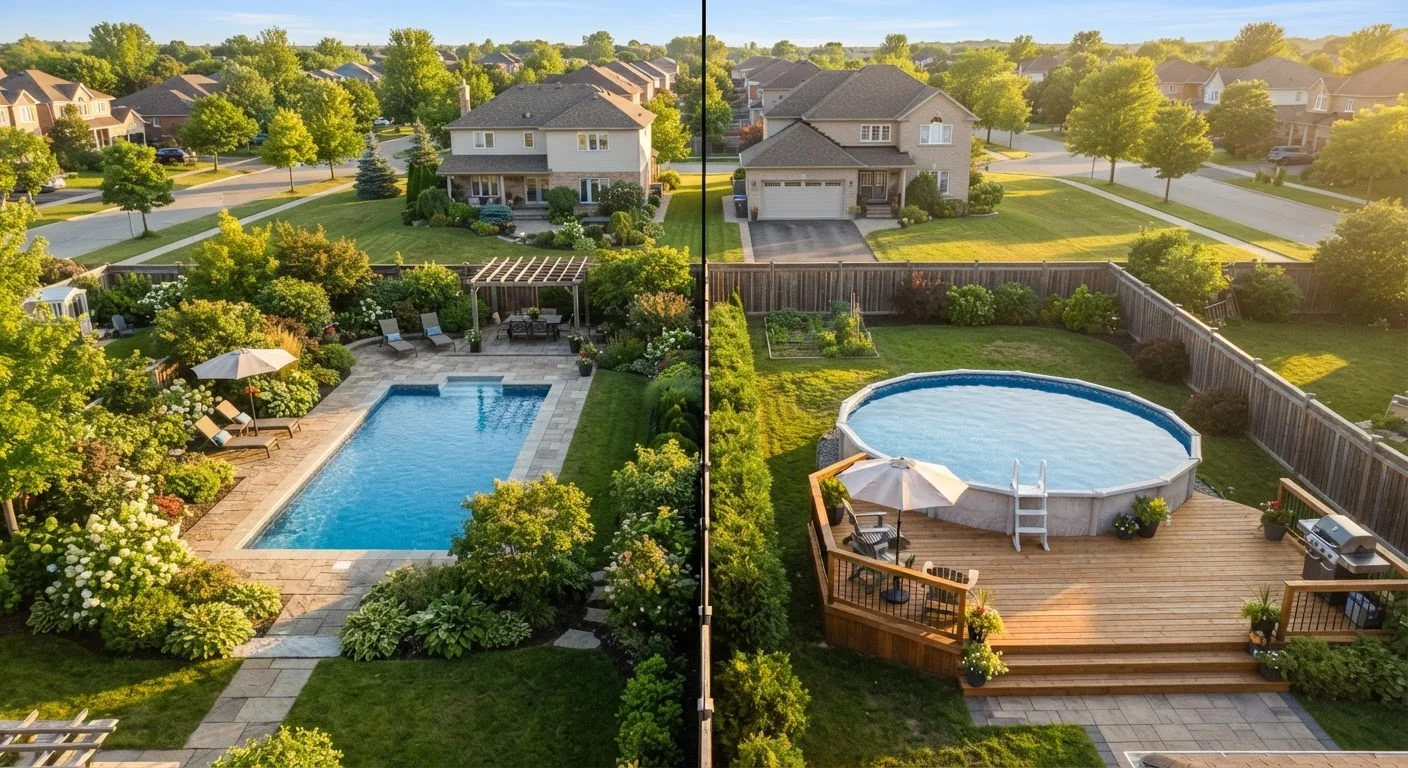
In-ground pools are permanent structures excavated into the ground and built from gunite (a sprayed concrete mix), fiberglass shells, or vinyl-lined steel walls. Installation typically takes several weeks to several months, involves heavy equipment, and requires permits in virtually every US jurisdiction. The pool becomes part of your property in a legal and structural sense.
Above-ground pools sit on top of the ground and are assembled from prefabricated wall panels, usually steel or resin, with a vinyl liner. They can be installed in a weekend with basic tools, don't require excavation, and are technically removable - though moving a large pool is no small task. They range from modest inflatable rings to substantial structures that can hold tens of thousands of gallons.
Planning either type alongside your broader yard layout is worth thinking through early. See how pools interact with patios, paths, and plantings in our guide to balancing hardscape and softscape.
In-Ground Pool Pros and Cons
In-ground pools carry a strong visual appeal and structural permanence that many homeowners find worth the investment - but that permanence comes with real obligations.
Durable, long-lasting structure with decades of use
Properly maintained gunite or fiberglass in-ground pools can last 25-50 years, making them a genuinely long-term addition to the property.
Fully customizable shape, depth, and features
In-ground pools can be built to almost any shape or depth, and can incorporate features like sun shelves, attached spas, and integrated lighting.
Visually integrated into the landscape
When designed thoughtfully, an in-ground pool can blend seamlessly with surrounding patios, plantings, and hardscape rather than standing apart as a separate structure.
May support property value in certain markets
In warmer-climate regions where pools are common, a well-maintained in-ground pool can be a genuine selling feature - though this is market-dependent and not guaranteed.
On the downside, in-ground pools demand a level of financial and logistical commitment that catches some buyers off guard.
Very high upfront installation cost
In-ground pools routinely cost $40,000-$80,000 or more when installation, decking, fencing, and permits are included - a significant financial commitment with no guaranteed return.
Requires permits and professional contractors
Excavation, structural work, plumbing, and electrical components all typically require licensed professionals and municipal permits, adding time and complexity to the project.
Permanent - removal is costly and disruptive
Filling in or demolishing an in-ground pool can cost thousands of dollars and may leave soil instability or code compliance issues that affect future use of the yard.
Higher insurance and liability exposure
In-ground pools are classified as an attractive nuisance in many jurisdictions, increasing homeowner liability and often raising insurance premiums substantially.
Cost, Safety, and Maintenance Realities
Across both pool types, three factors consistently shape the ownership experience: cost, safety, and ongoing maintenance.
$35K-$100K+
Typical in-ground pool installation range
Industry estimates commonly place basic in-ground pool projects in this range before landscaping, fencing, and features are added.
$1,500-$5,000
Typical above-ground pool purchase cost
Larger, semi-permanent above-ground pool structures with steel walls and full filtration systems generally fall in this range, excluding decking or installation labor.
~$1,200/yr
Estimated average annual pool maintenance cost
Ongoing chemical, filtration, and minor repair costs for a residential pool are commonly estimated in this range, though actual costs vary by region and pool size.
Cost: Above-ground pools typically run from a few hundred to a few thousand dollars for the pool itself. In-ground pools frequently start at $35,000-$50,000 for basic gunite or fiberglass and can climb well beyond $100,000 with features, decking, and landscaping. Neither estimate includes ongoing chemical, energy, and repair costs, which apply to both types year over year.
Safety: Both pool types pose drowning hazards, particularly for young children. Most states require fencing around any pool - in-ground or above-ground - that meets specific height and latch requirements. Verify your local code before installation. Homeowner's insurance premiums often increase when a pool is added, and some insurers require specific safety features as a condition of coverage.
Maintenance: Chemical balancing, filtration, and cleaning are non-negotiable for either type. Above-ground pools generally have smaller water volumes, which can make chemical management slightly simpler, but the vinyl liners are more vulnerable to puncture and UV degradation. In-ground pools involve more complex plumbing and may require professional servicing for certain repairs.
Permits Apply to Both Pool Types
Many homeowners assume above-ground pools skip the permit process, but that's not universally true. Numerous US municipalities require permits for above-ground pools above a certain water depth or volume - often 24 inches or more. Always check with your local building department before purchasing or installing any pool. Fencing requirements and setback rules (how far a pool must be from property lines or structures) typically apply regardless of pool type.
If your yard has drainage challenges, address those before adding any pool. Our article on diagnosing backyard drainage problems explains how to identify the source before you dig or install anything.
Yard Impact and Long-Term Considerations
A pool doesn't exist in isolation - it reshapes how your entire yard functions. An in-ground pool typically takes up a fixed footprint permanently, which affects how you can use surrounding space, where you can plant trees (roots and plumbing don't mix well), and how water drains across the property.
Above-ground pools leave more flexibility. If your needs change - kids grow up, you sell the house, or you simply want the space back - removal is possible. In-ground pools, once built, are expensive and disruptive to remove, and a filled-in pool can complicate future landscaping and resale.
On resale, the picture is mixed. A well-maintained in-ground pool may appeal to certain buyers and support home value in warmer climates, but it can also narrow your buyer pool (some families with young children actively avoid homes with pools). Above-ground pools are generally considered personal property rather than a home improvement, so they rarely factor into appraisals.
If a pool is part of a larger outdoor living project, it's worth thinking through how it fits alongside other structures. Our comparison of adding a deck vs. a patio can help you plan complementary surfaces around your pool area. For additional inspiration on water in the yard more broadly, the overview of backyard water features covers smaller-scale options that require less commitment.