

| Standard frost threshold | 32°F (0°C) (NOAA standard reference temperature) |
| Data source for averages | NOAA Climate Data Online; state cooperative extension services |
| Typical last frost range (continental US) | January (Deep South) to late May (northern states, high elevations) (USDA / extension service tables) |
| Typical first frost range (continental US) | Late August (mountain regions) to December (Gulf Coast) (USDA / extension service tables) |
| Safe concrete pour temperature | Above 40°F air temperature, with no freeze forecast during curing (American Concrete Institute general guidance) |
| Common seed-starting lead time | 6-8 weeks before last frost date (Standard seed packet convention) |
What Frost Dates Actually Mean
A frost date refers to the average calendar date when a location experiences its last freezing temperature in spring (last frost) or its first freezing temperature in fall (first frost). These aren't hard guarantees - they're statistical averages, typically based on decades of weather station data compiled by the National Oceanic and Atmospheric Administration (NOAA) and used by extension services across the country.
| Standard frost threshold | 32°F (0°C) (NOAA standard reference temperature) |
| Data source for averages | NOAA Climate Data Online; state cooperative extension services |
| Typical last frost range (continental US) | January (Deep South) to late May (northern states, high elevations) (USDA / extension service tables) |
| Typical first frost range (continental US) | Late August (mountain regions) to December (Gulf Coast) (USDA / extension service tables) |
| Safe concrete pour temperature | Above 40°F air temperature, with no freeze forecast during curing (American Concrete Institute general guidance) |
| Common seed-starting lead time | 6-8 weeks before last frost date (Standard seed packet convention) |
Most references use a 32°F (0°C) threshold, but gardeners and builders sometimes track 28°F thresholds for hardier crops or materials that tolerate light frost. The gap between your last spring frost and your first fall frost defines your growing season - and, just as practically, your usable outdoor working season.
Frost dates vary dramatically by region. In southern Florida, the last frost may occur in January or not at all, while parts of Montana may see frost well into May and again by September. Even within a single county, elevation changes, proximity to water, and urban heat effects can shift local frost dates by a week or more.
Finding Your Frost Dates
The most reliable starting point is your local cooperative extension service - every U.S. state has one, typically affiliated with a land-grant university. Extension offices publish frost date tables by zip code or county, often alongside USDA Plant Hardiness Zone maps. You can also look up historical averages through the NOAA Climate Data Online portal by entering the nearest weather station.
Last frost date
The average date in spring after which a location is statistically unlikely to experience another freezing temperature. Used to time planting of frost-sensitive crops and the start of outdoor construction.
First frost date
The average date in fall when a location typically experiences its first freezing temperature, signaling the end of the growing season and the need to winterize outdoor systems.
Hardiness zone
A USDA classification system dividing North America into zones based on average annual minimum winter temperatures. Often used alongside frost dates to determine which perennial plants can survive in a given area.
Frost probability
The statistical likelihood that frost will occur on or after a given date. A 10% probability date provides a safer buffer than a 50% probability date for cold-sensitive plantings.
Growing season
The span of days between the last spring frost and the first fall frost, representing the period when outdoor temperatures are reliably above freezing and most crops can be grown.
When reading frost date tables, pay attention to probability columns. A "50% probability" last frost date means there's still a 50% chance of frost after that date - meaningful risk for cold-sensitive transplants. Gardeners starting from seed indoors often count backward from a 10% or 30% probability date to build in a safety buffer.
For a broader planning context, see our year-round outdoor space planning guide which walks through seasonal task timing from winter prep through fall cleanup.
How Frost Dates Shape Planting Decisions
Most seed packets and transplant tags list planting instructions relative to frost dates - "start indoors 6-8 weeks before last frost" or "direct sow after all danger of frost has passed." These guidelines exist because frost can damage or kill tender plant tissue, and soil temperature below freezing inhibits germination.
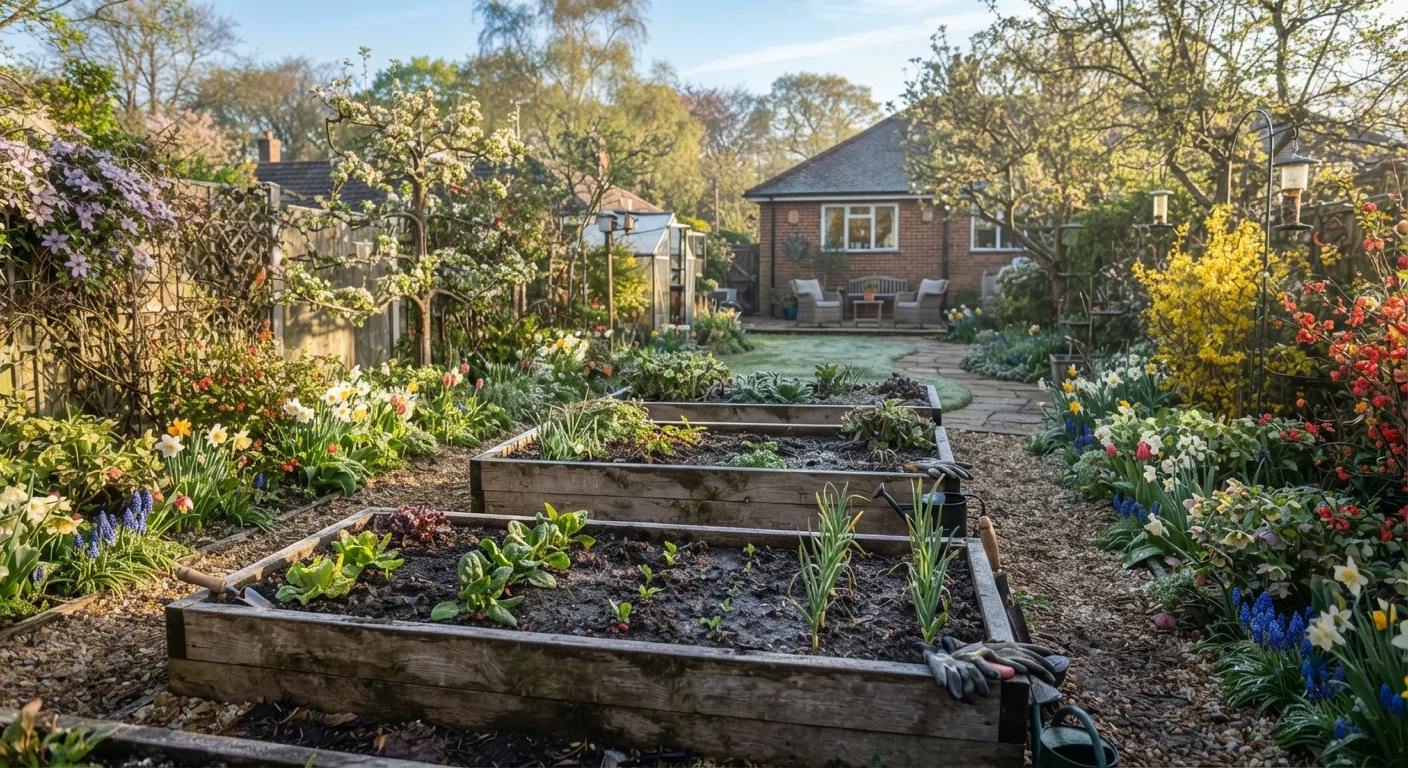
Broadly, cool-season crops like lettuce, spinach, and kale tolerate light frost and can go in before your last frost date. Warm-season crops like tomatoes, peppers, basil, and squash are frost-sensitive and should wait until nighttime temperatures are reliably above 50°F. Mulching around transplants after planting can moderate soil temperature swings and provide a buffer on unexpectedly cool nights.
~205 days
Average US growing season length
The average frost-free growing season across the continental United States, though it ranges from under 100 days in northern mountain regions to year-round in parts of the South.
40°F
Minimum safe temperature for concrete work
American Concrete Institute guidance suggests avoiding concrete placement when air temperatures drop below 40°F without cold-weather protective measures in place.
In fall, track your first frost date to plan harvest timing and decide when to move tender container plants indoors. Perennials often benefit from being cut back or mulched after the first hard frost rather than before it, as dying foliage provides some insulation to crown tissue.
Frost Dates and Hardscape or Construction Projects
Frost affects far more than gardens. Concrete, mortar, and other masonry materials should not be poured or set when ground temperatures are at or near freezing. Water in freshly poured concrete expands as it freezes, disrupting the curing process and weakening the final slab. Most guidelines recommend avoiding concrete work when air temperatures fall below 40°F, and many professionals pause outdoor masonry until consistent above-freezing conditions are established.
If you're planning a patio, walkway, or retaining wall, your last spring frost date marks roughly when ground conditions and temperatures become workable - and your first fall frost date signals when you should aim to finish curing masonry before cold sets in. When planning how patios, paths, and plantings fit together, our guide on hardscape and softscape planning explains how to sequence both sides of a project effectively.
Microclimates Can Shift Your Local Dates
Published frost dates reflect regional averages, but your specific yard may behave differently. Low-lying areas collect cold air and frost earlier than elevated spots. South-facing walls trap heat and can extend your effective season by a week or two. Urban neighborhoods tend to run warmer than surrounding rural areas due to heat retention from pavement and buildings. Factor these local conditions into your planning rather than relying solely on regional averages.
Irrigation systems also follow frost logic. Underground supply lines and above-ground drip components can crack if water freezes inside them. Winterizing a system - typically by blowing out lines with compressed air - should happen before your first hard freeze. See our overview of irrigation system seasonal adjustments for timing specifics.