

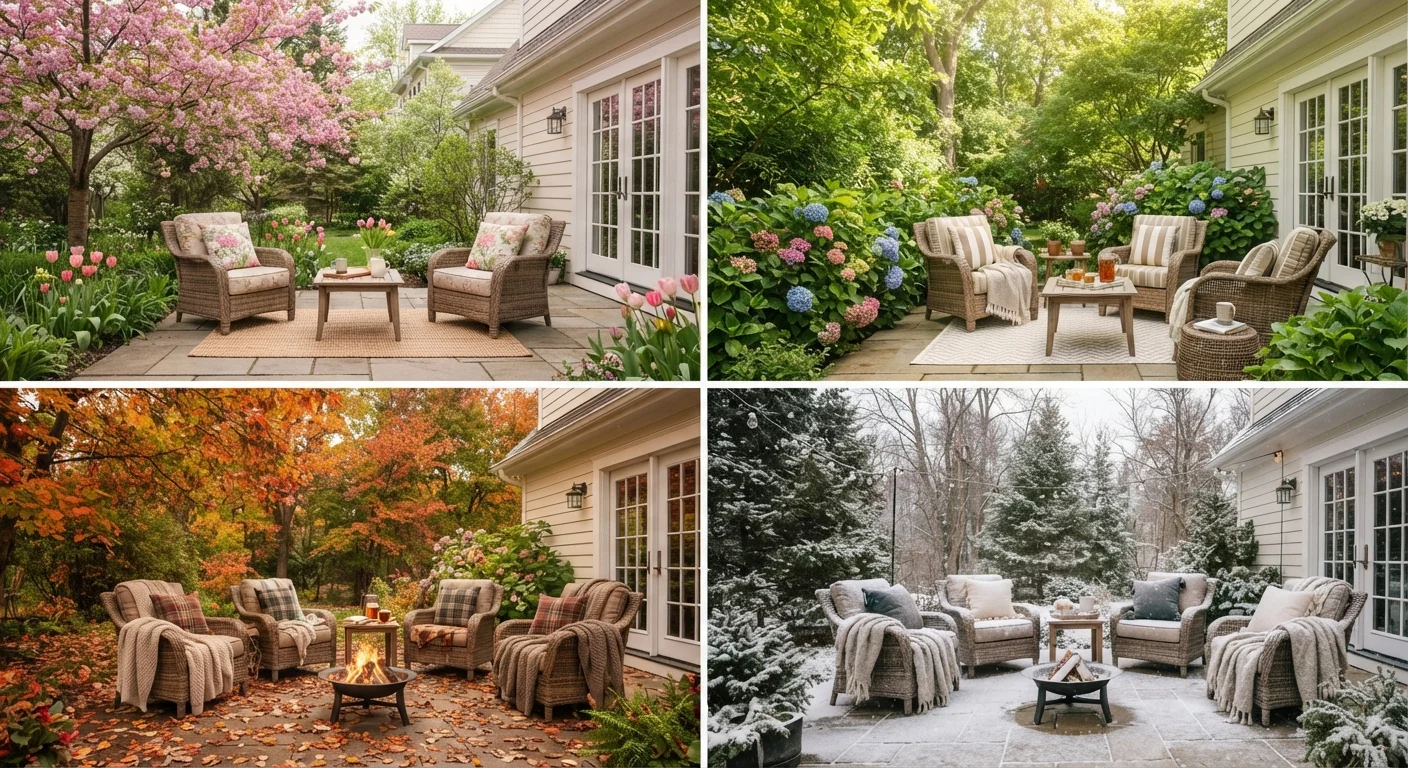
Key Takeaways
- Each season has distinct outdoor tasks that prevent costly damage and extend the life of your space.
- Spring and fall are the two most critical transition periods for outdoor maintenance.
- Consistent year-round attention reduces the need for major repairs or replacements.
- Planning ahead for seasonal shifts helps you get more use out of your outdoor living area.
- Some tasks-like structural and electrical checks-may require a licensed professional.
Summary
24 items · 45-90 minutes per seasonal review
Why Seasonal Planning Makes a Difference
Outdoor spaces take a beating from weather, UV exposure, temperature swings, and moisture year-round. Without a structured approach, small issues-a cracked paver, a loose deck board, peeling sealant-tend to compound into expensive problems. A season-by-season plan gives you a clear framework so nothing gets overlooked.
This checklist is designed for homeowners with a mix of hardscape (patios, paths, retaining walls) and softscape (lawns, garden beds, trees). Whether your outdoor space is modest or elaborate, the same seasonal logic applies. For a deeper look at balancing both elements, see our guide on hardscape vs. softscape planning.
Use this checklist as a living document - review it at the start of each season and check off items as you go. Pairing it with a seasonal home repair checklist ensures your outdoor work aligns with broader household maintenance.
Garden hose with adjustable nozzle
Used for seasonal cleaning of surfaces, furniture, and flushing irrigation lines.
Deck or concrete sealant
Applied to hardscape surfaces to prevent moisture infiltration and freeze-thaw cracking.
Outlet tester
Quickly checks whether outdoor GFCI outlets are functioning safely before seasonal use.
Leaf blower or rake
Clears debris from lawns, patios, and gutters during fall and after storms.
Waterproof furniture covers
Protects outdoor furniture and cushions during off-season storage or inclement weather.
Calcium chloride ice melt
Safer alternative to rock salt for controlling ice on concrete and near plantings.
Irrigation system blowout compressor (or rental)
Forces air through irrigation lines to remove water before winter freeze-up.
The Season-by-Season Checklist
Work through each group in order as the seasons arrive. Items marked must are non-negotiable for protecting your investment; should items are strongly recommended; and nice to have items improve comfort and longevity when time allows.
Spring: Open and Inspect
Summer: Maintain and Optimize
Fall: Protect and Prepare
Winter: Monitor and Plan
Permits and Codes Apply to Outdoor Work Too
Many outdoor improvements - including fences above a certain height, pergolas, retaining walls, and any gas or electrical additions - require permits in most US municipalities. Check with your local building department before starting any structural project. Unpermitted work can create complications when selling your home and may not be covered by homeowner's insurance.
If you're planning a larger upgrade - such as an outdoor kitchen or new entertainment zone - use the transition between seasons as your planning window. Our outdoor kitchen planning guide and outdoor entertaining layout principles are good starting points for scoping those projects.
For homeowners considering a full redesign, the landscape design process guide walks through how to assess your site methodically before committing to changes. Broader home upgrade ideas may also surface opportunities to improve how indoor and outdoor spaces connect.
Electrical and Gas Work Requires a Licensed Pro
Any task involving outdoor electrical wiring, GFCI circuit installation, or gas line connections to a grill or outdoor kitchen must be performed by a licensed electrician or plumber. Attempting these without proper credentials is dangerous and likely violates local code. Do not bypass this requirement as a cost-saving measure - the risks include fire, electrocution, and gas leaks.