

Key Takeaways
- Exterior paint contains UV inhibitors and mildewcides not found in most interior formulas.
- Interior paint uses harder resins that crack outdoors when temperatures fluctuate.
- Exterior paint releases VOCs that are unsafe at elevated levels in enclosed indoor spaces.
- Using the wrong paint type shortens the lifespan of the finish significantly.
- Always match the paint formula to the environment it will actually face.
Exterior vs. Interior Paint
Exterior paint and interior paint are chemically different products designed for the specific demands of their environments. Exterior paint is built to withstand UV radiation, moisture, mildew, and dramatic temperature changes. Interior paint prioritizes low odor, easy cleaning, and resistance to scuffs - conditions that would never punish an outdoor coating the same way. Using them interchangeably can lead to premature peeling, fading, or even health concerns indoors.
The key difference lies in the resin binders: exterior paints use softer, more flexible resins (often acrylic-based) that expand and contract with temperature swings, while interior paints use harder resins optimized for surface durability and washability.
What Makes Exterior Paint Different at a Chemical Level
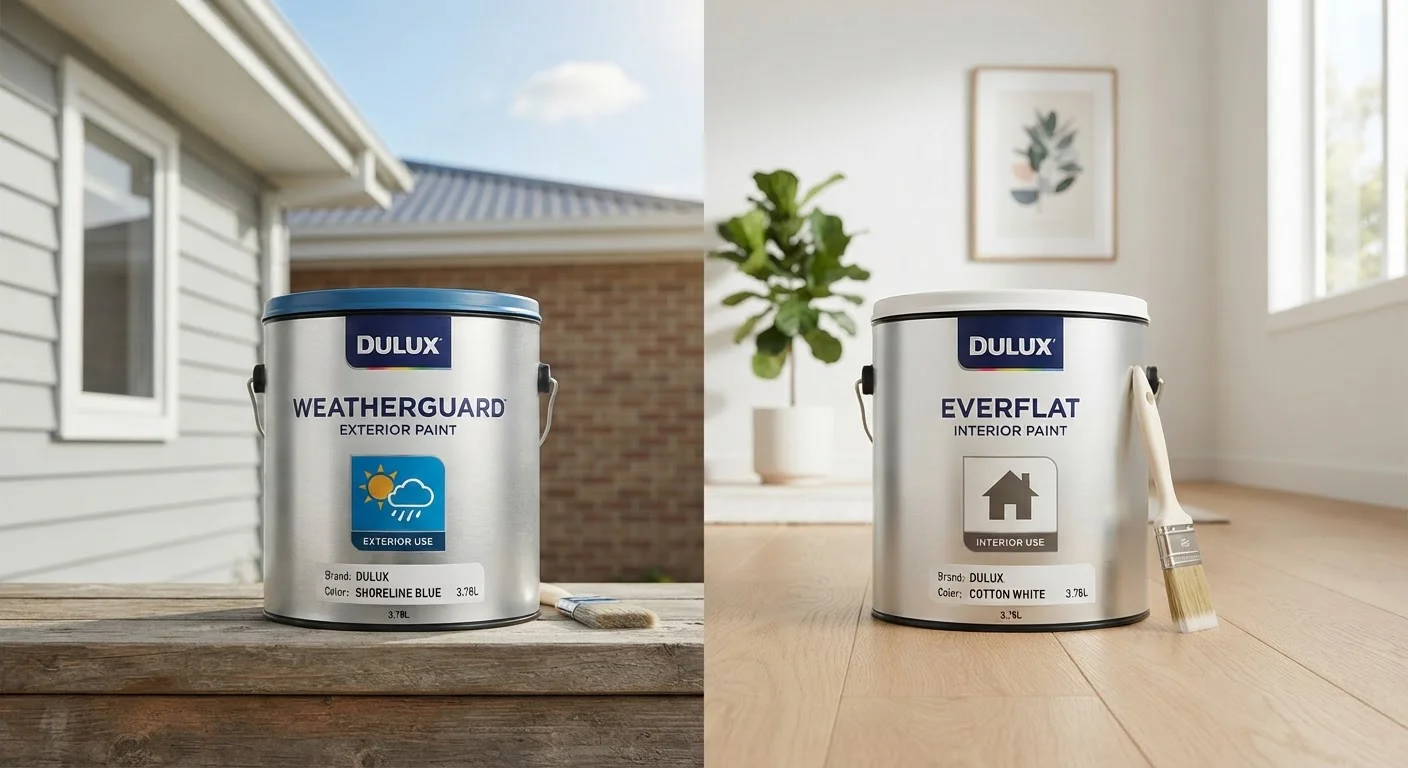
At a glance, a can of exterior paint and a can of interior paint look identical. But open the label and the differences become clear. Exterior paints are engineered around three core challenges: ultraviolet (UV) radiation from the sun, moisture from rain and humidity, and constant thermal movement as surfaces heat up and cool down.
To handle UV exposure, exterior formulas include UV absorbers and stabilizers that slow the breakdown of color pigments and binder resins. Without these, sunlight causes paint to chalk - a powdery surface degradation - and fade within months. Interior paints skip these additives because indoor UV exposure is minimal.
The binder resin is equally important. Exterior paints use softer, more flexible acrylic resins that can stretch slightly as wood siding swells in summer humidity and contracts in winter cold. Interior paints use harder resins optimized for scrubbability and resistance to household wear. Applied outdoors, those hard resins become brittle and crack, leading to the peeling and flaking you see on improperly painted exterior surfaces.
Mildewcides: Necessary Outdoors, Regulated Indoors
The mildewcides in exterior paint are registered pesticides under the Federal Insecticide, Fungicide, and Rodenticide Act (FIFRA). Their labels specify approved use environments - typically outdoor surfaces. Using exterior paint indoors may violate the product's EPA registration, in addition to the air quality concerns it raises.
Most exterior paints also include mildewcides - chemical agents that resist mold and mildew growth on the paint film itself. In damp climates especially, this is critical to the coating's longevity.
Why Exterior Paint Doesn't Belong Inside
The same additives that make exterior paint tough outdoors make it a poor - and potentially unsafe - choice indoors. Exterior formulations contain higher concentrations of volatile organic compounds (VOCs), mildewcides, and other biocides that are acceptable in open-air environments where they dissipate rapidly. In an enclosed room, those compounds accumulate and can irritate respiratory systems, eyes, and skin.
Indoor air quality regulations in the US have pushed interior paint manufacturers to significantly reduce VOC levels. Many interior paints now qualify as low-VOC or zero-VOC. Exterior paints are held to different standards because they're intended for use where ventilation is unlimited.
Check the Label Before You Open the Can
Paint labels specify approved surfaces, interior or exterior use, required ventilation, and VOC content. Spending two minutes reading the label before starting a project can prevent a costly repaint and potential health issues. When in doubt, ask a paint professional at a hardware store to confirm the product is right for your specific surface and location.
Beyond air quality, the softer resins in exterior paint mean it stays tacky longer in low-ventilation conditions, collects dust more readily, and doesn't stand up to the regular washing and scrubbing that interior walls receive.
If you're dealing with an interior surface that has moisture or stain issues, the solution isn't exterior paint - it's the right primer and finish designed for those specific conditions. See our guide to painting over water stains for the correct approach to stubborn indoor moisture problems.
Real-World Consequences of Using the Wrong Paint
Homeowners sometimes reach for whatever paint is available when doing a quick project - and the consequences show up within a single season. Interior paint applied to exterior siding or trim will peel as moisture penetrates behind the film. Because interior paint doesn't include adhesion-promoting additives for outdoor surfaces, it also tends to lift at edges and fail at seams first.
On the interior side, exterior paint's higher VOC content creates air quality problems that can persist for weeks as the paint cures. Some biocides present in exterior formulas are specifically restricted from indoor use.
If you're repairing peeling paint on outdoor trim, it's worth understanding not just which paint to use but also the prep steps that determine whether any new coat will hold. Our guide to fixing peeling exterior trim walks through the process without requiring a full repaint. And if you're thinking about paint as a broader home upgrade, understanding what paint can and can't transform helps set realistic expectations for any project.
Choosing the Right Paint for the Right Surface
The decision starts with a simple question: will this surface face direct sun, rain, or temperature extremes? If yes, use exterior paint. If the surface lives inside a conditioned, enclosed space, use interior paint. For surfaces in between - covered porches, garage interiors that open frequently, or sunrooms - check the paint label for specific use guidance.
Surface type also matters. Masonry, wood, metal, and composite materials each have primer and paint recommendations that maximize adhesion and longevity. Using a dedicated exterior primer under exterior topcoats is especially important on bare or repaired surfaces.
5-10 yrs
Typical exterior paint lifespan
Industry guidance from paint manufacturers generally cites 5 to 10 years for exterior paint, depending on climate, surface prep, and number of coats applied.
1 season
Interior paint durability outdoors
Painting professionals commonly observe that interior paint applied to exterior surfaces fails within a single weather season in most US climates.
250+ g/L
Typical exterior paint VOC limit (EPA)
The US EPA's architectural coatings rule sets VOC limits for exterior flat paint at up to 250 grams per liter, compared to lower limits for interior flat paint categories.
Just as using the wrong caulk in the wrong spot leads to failed seals - a principle covered in our explanation of caulk types - using the wrong paint in the wrong environment wastes time and money. Matching the product to the conditions it will actually face is the foundation of any durable paint job.
This article is for general informational purposes. Always follow manufacturer application instructions and local building code requirements for surface preparation and coating use.