

Key Takeaways
- Hairline cracks at corners and seams are usually cosmetic and caused by normal settling.
- Diagonal cracks running from door or window corners often signal framing stress or foundation movement.
- Stair-step cracks following drywall tape lines can indicate seasonal moisture cycling.
- Wide cracks (wider than about 1/4 inch) or cracks that grow over time warrant a professional structural inspection.
- Ceiling cracks running across the full length of a room are a more serious red flag than small isolated spots.
- Proper repair starts with understanding the cause - patching alone won't stop a crack from returning if the underlying issue persists.
Drywall Crack Diagnosis
Drywall cracks are breaks or separations in the gypsum panel surface that lines most interior walls and ceilings. They range from cosmetic surface blemishes caused by normal settling to warning signs of structural movement in the home's framing or foundation. Reading the size, shape, and location of a crack helps determine whether a simple patch will fix it or whether a professional evaluation is needed.
Drywall consists of a gypsum plaster core sandwiched between two layers of paper facing. Cracks often initiate at the seams between panels or at stress points around door and window openings, where structural loads concentrate.
Hairline Cracks: The Most Common and Least Urgent
Hairline cracks are the thin, shallow fractures that appear most often at ceiling-to-wall joints, along drywall seams, and at the corners of door and window frames. They're almost always a product of normal building movement - wood framing swells in humid summers and shrinks in dry winters, and drywall absorbs that stress at its weakest points.
These cracks are generally cosmetic. If you can't fit the edge of a dime into the gap, it's likely surface-level. A careful patch with joint compound, allowed to dry completely before sanding and repainting, handles most hairline cracks well. The key is applying thin coats rather than one thick fill, which shrinks and cracks itself as it dries.
One important caveat: monitor patched hairline cracks over a full seasonal cycle. If the crack reopens in the same place after every winter, the movement driving it may be more active than typical settling - worth investigating further.
Mark and Monitor Before You Patch
Before repairing any crack, draw a small pencil line at each end and note the date. Check it again in 30, 60, and 90 days. If the crack grows beyond your marks, that growth pattern is important diagnostic information - and tells you the underlying movement hasn't stopped. A crack that stays stable over a full season is far safer to patch permanently.
Diagonal Cracks: A Stress Signal Worth Watching
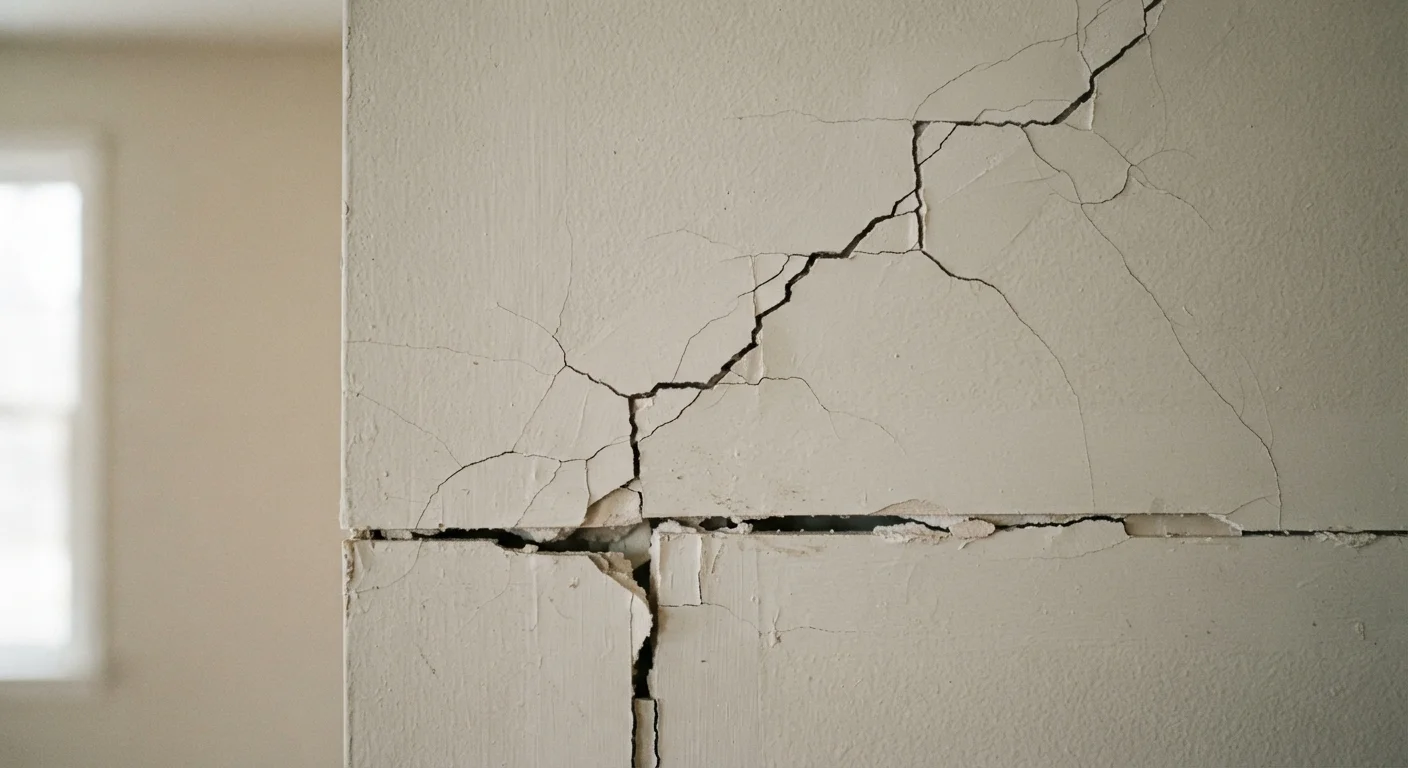
A diagonal crack running at roughly 45 degrees from the corner of a door or window frame is one of the most telling patterns in drywall diagnostics. These corners are natural stress concentrators - when the structure above or below shifts, the tension propagates diagonally through the panel because that's the path of least resistance.
Minor diagonal cracks that appear only once, stay narrow, and don't grow are often the result of a one-time settling event or minor framing shrinkage. However, cracks that widen over time, reopen after patching, or appear in multiple locations simultaneously can indicate more significant foundation movement or framing deflection.
If diagonal cracks are accompanied by doors or windows that no longer latch or open smoothly, or by visible gaps between wall trim and the wall itself, treat it as a structural red flag rather than a cosmetic issue. A licensed structural engineer or qualified contractor should evaluate the situation before you reach for the joint compound. For comparison, similar diagnostic thinking applies to exterior materials - see our guide on understanding what's behind stucco before patching.
Permits and Structural Work
In most U.S. jurisdictions, cosmetic drywall patching does not require a building permit. However, if a crack is caused by a structural issue that requires framing repair, foundation work, or other major structural intervention, permits and licensed contractors are typically required by local building codes. Always check with your local building department before undertaking any work that goes beyond surface repair.
Stair-Step and Tape-Line Cracks: Moisture and Movement
Stair-step cracks follow the horizontal and vertical seams of drywall panels in a zigzag pattern, mimicking the look of mortar-joint cracking in brick. In drywall, this pattern usually runs along taped seams where joint compound has dried out, lifted, or separated from the paper tape beneath it.
Tape failure often traces back to moisture - either a past leak that saturated the tape bond, high interior humidity cycling, or improper application during installation (not enough compound behind the tape, or tape applied over a dusty surface). Once the tape separates, the seam will keep cracking regardless of how many times you skim over it.
The proper fix is to cut out the failed tape section entirely, re-bed fresh tape in new joint compound, and feather out the repair over a wide area. Simply skim-coating over bubbled or separated tape produces a short-lived result. If moisture is the source, address the root cause - ventilation, a past leak - before repairing the surface. Similar principles apply to other wall finishes; our article on plaster vs. drywall repair differences explains why these materials fail and respond differently.
~1/4"
Crack width that signals structural review
Many home inspection guidelines treat cracks at or wider than 1/4 inch as a threshold warranting professional structural evaluation rather than DIY patching.
90%
Drywall cracks that are cosmetic
Building industry professionals commonly estimate that the vast majority of interior drywall cracks result from normal settling and moisture cycling, not structural failure.
2-3 coats
Recommended layers for crack repair
Professional drywall finishers typically apply multiple thin coats of joint compound rather than one thick application, which shrinks unevenly and can re-crack as it cures.
Wide Gaps and Ceiling Cracks: When to Call a Professional
A crack wider than roughly 1/4 inch, or one that has measurable depth - where you can see into a void rather than just a surface split - moves into territory that warrants professional input. Width alone isn't the only signal; sudden appearance after a storm, earthquake, or nearby heavy construction is equally important context.
Ceiling cracks deserve special attention. A short crack near a ceiling seam or light fixture is usually a settling artifact. A crack that runs the full length of a room, particularly along the centerline (near a load-bearing beam), or one that is accompanied by visible bowing or sagging, can point to overloaded roof framing, a compromised joist, or inadequate structural support. These situations are not DIY territory.
Similarly, if multiple cracks appear at the same time across different rooms or walls - especially if floors feel uneven or baseboards are separating from walls - the pattern suggests foundation movement rather than isolated cosmetic wear. A licensed structural engineer can assess whether the movement is historical (finished) or active (ongoing), which completely changes the repair approach. For exterior cracking questions that follow similar diagnostic logic, our concrete crack repair guide covers how crack type shapes the right fix.
This article is for general informational and educational purposes. It does not constitute professional structural, engineering, or contracting advice. Always consult a licensed professional for assessment of cracks that may indicate structural issues, and verify local building codes and permit requirements before undertaking repairs.