

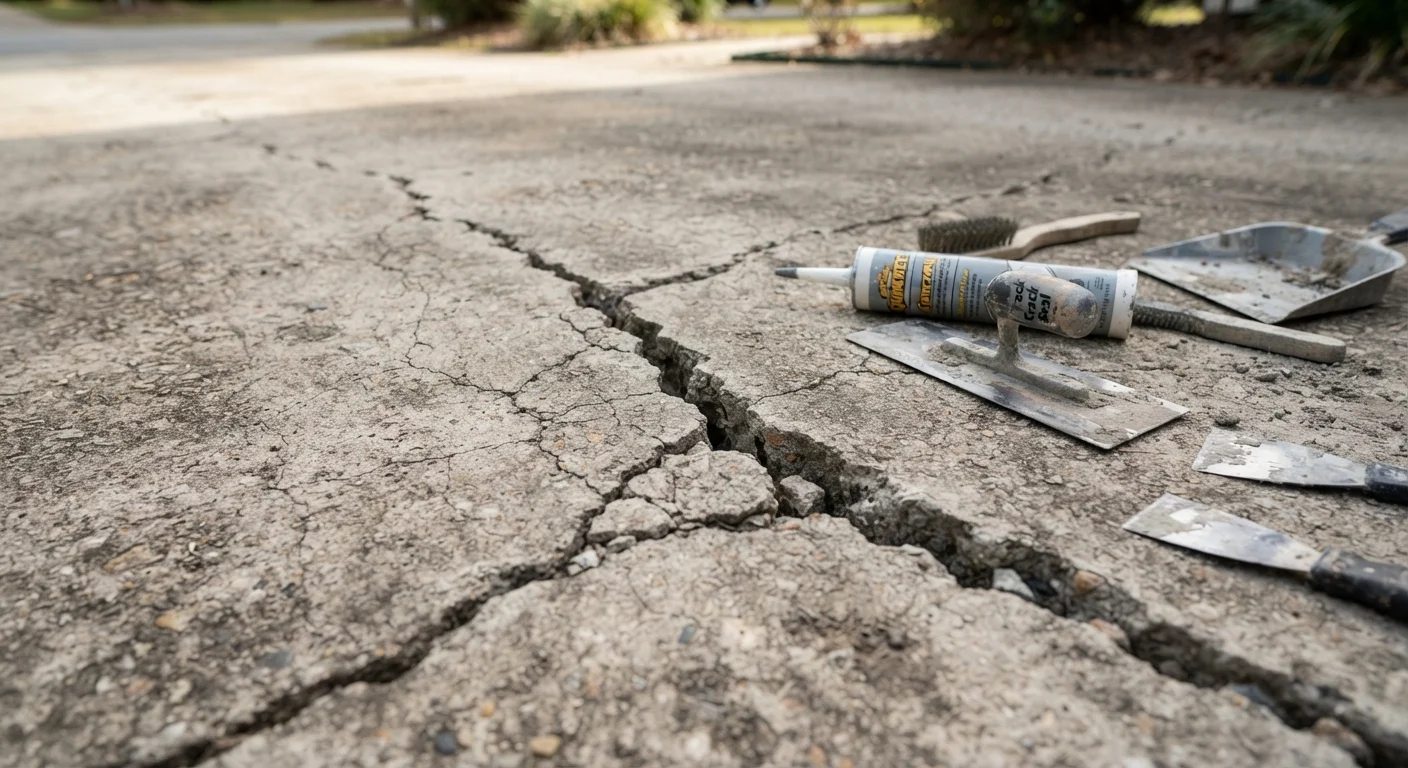
Why Crack Type Determines the Fix
Concrete is strong in compression but relatively weak in tension - meaning it cracks under stress, settlement, thermal movement, and moisture. The mistake most homeowners make is treating all cracks the same way. A hairline shrinkage crack in a patio slab and a widening gap in a foundation wall are fundamentally different problems that require fundamentally different solutions.
Before buying materials or mixing anything, assess three things: width, depth, and whether the crack is active (still moving) or dormant (stable). Active cracks need flexible fillers; dormant structural cracks often need rigid, bonding repairs. Getting this wrong means the repair fails quickly - or worse, conceals a problem that grows.
Just as different drywall cracks tell different stories, the shape and location of a concrete crack carries diagnostic meaning before you even open a tube of filler.
Hairline Cracks: Cosmetic but Worth Sealing
Hairline cracks - under 1/16 inch wide - are the most common type and almost always result from normal concrete shrinkage during curing or minor thermal expansion. They rarely threaten structural integrity, but they do allow water to penetrate, which accelerates spalling and freeze-thaw damage over time.
Recommended approach
- Clean the crack thoroughly with a wire brush or compressed air to remove dust and debris.
- Apply a liquid concrete crack filler or polyurethane sealant, working it into the crack with a putty knife or by letting it wick in.
- Allow full cure time before exposing the area to moisture or traffic.
For hairline cracks on driveways or walkways, a penetrating concrete sealer applied over the entire surface after repair helps prevent new cracks from forming at the same rate. This is analogous to how surface scuffs on hardwood need a different approach than deep gouges - the depth of damage changes everything.
Wider and Structural Cracks: Proceed Carefully
Cracks between 1/8 and 1/4 inch wide may still be repairable by a capable homeowner, but they require more than a liquid filler. A hydraulic cement or vinyl concrete patching compound, packed firmly into a cleaned and dampened crack, provides a more durable bond. For cracks with displacement - where one edge sits higher than the other - the underlying cause (often soil movement or poor drainage) needs addressing first, or the repair will fail repeatedly.
Cracks at or exceeding 1/4 inch, especially in foundation walls, basement floors, or load-bearing slabs, cross into territory that warrants professional evaluation. Epoxy injection is a common professional-grade method for dormant structural cracks - it bonds the concrete and restores tensile strength - but it requires specialized equipment and proper surface preparation to work correctly.
The diagnostic mindset here mirrors stucco repair thinking: what's happening beneath the surface matters as much as what's visible on top.
Spalling: Surface Deterioration That Needs Resurfacing
Spalling is not a crack in the traditional sense - it's the breakdown of the concrete surface into flakes, pits, or rough patches. Deicing salts, repeated freeze-thaw cycles, and water trapped beneath a sealer are common culprits. Once spalling begins, the exposed aggregate and weakened surface absorb even more moisture, accelerating the cycle.
Recommended approach
- Remove all loose, flaking material with a chisel and wire brush. The repair will only bond to sound concrete.
- For shallow surface damage (under 1/4 inch deep), a concrete resurfacing compound applied with a squeegee can restore a smooth, durable surface.
- For deeper spalling, apply a bonding agent before the patch material to significantly improve adhesion.
- Seal the repaired surface once cured to slow future moisture intrusion.
Resurfacing addresses symptoms; if deicing salt use caused the spalling, switching to sand or calcium magnesium acetate during winter will help preserve the repair long-term. Resurfacing products are not a substitute for full replacement when concrete has deteriorated through its full depth. For a parallel lesson in matching repair material to damage depth, see how wood repair products must match the severity of rot.
This article provides general educational information about concrete repair. Always consult a licensed contractor or structural engineer for cracks affecting foundations, load-bearing elements, or any situation involving water intrusion or significant displacement. Verify permit and inspection requirements with your local building department before undertaking structural repairs.