

Key Takeaways
- Most slow drains are caused by hair, soap scum, or grease buildup - not a broken pipe.
- A drain snake and a baking soda and vinegar flush handle the majority of clogs effectively.
- Chemical drain cleaners can corrode older pipes and are rarely necessary for routine clogs.
- Cleaning the drain stopper is often the quickest fix and is frequently overlooked.
- Preventive habits like using a drain strainer significantly reduce how often clogs form.
What you will need
Why Drains Slow Down - and Why It's Usually a Simple Fix
A slow drain almost always comes down to accumulation, not damage. In bathroom sinks and tubs, the main culprit is a mix of shed hair and soap scum that builds up just below the drain stopper or a few inches into the pipe. In kitchen sinks, grease and food particles are the more common offenders. Neither problem means your plumbing is failing - it means the drain needs to be physically cleared.
Understanding this is important because many homeowners reach for liquid chemical drain cleaners out of habit or convenience. While those products can temporarily restore flow, they don't remove the buildup - they dissolve it partially and push it further down the pipe, where it can reconstitute. More concerning, strong chemical cleaners are corrosive, especially in older homes with metal drain pipes. The manual approach is both more effective and more pipe-friendly.
For context, drainage problems inside the home are a completely different category from outdoor drainage challenges. If you're also noticing pooling water in your yard, that's a separate issue - see our article on diagnosing backyard drainage problems for guidance on that front.
Rubber or latex gloves
Protects hands when manually removing buildup from the drain or stopper.
Zip-it drain cleaning tool or drain snake
Reaches into the drain to pull out hair and debris clumps that cause blockages.
Baking soda and white vinegar
Creates a mild fizzing reaction that loosens soap scum and light grease buildup.
Boiling or very hot water
Flushes loosened grease and soap residue down the drain after treatment.
Flathead screwdriver
Removes certain drain stoppers or covers that are held in place by a screw.
Drain strainer or hair catcher
Prevents future clogs by catching debris before it enters the drain.
How to Clear the Drain Step by Step
What you will need
Remove and clean the drain stopper
Before reaching for any tools, start at the surface. Many bathroom sink slowdowns are caused entirely by a gunky stopper - not a deep clog. Pop out the stopper (most twist counterclockwise or lift straight up; some are held by a small screw underneath), and rinse off the accumulated soap scum and hair under warm water. Use an old toothbrush if needed to scrub the underside.
Pull out the hair and debris manually
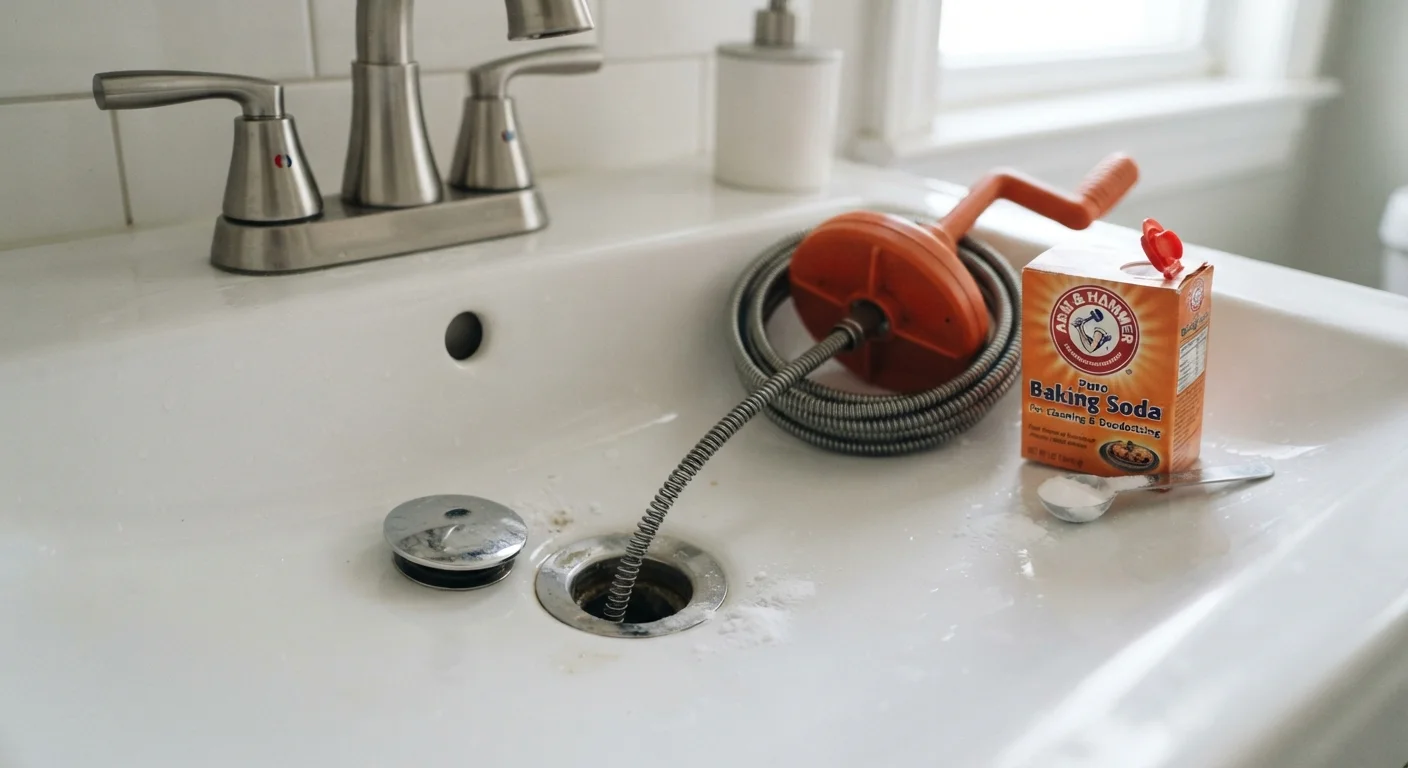
Put on your gloves. Insert a zip-it tool - a long, flexible plastic strip with barbed edges - into the drain opening and slowly pull it back up. You'll likely retrieve a clump of hair and soap buildup. Dispose of it in the trash, not back down the drain. Repeat two or three times until the tool comes back mostly clean.
If you don't have a zip-it tool, a straightened wire coat hanger with a small hook bent at the end can work as a substitute.
Flush with baking soda and vinegar
Pour about half a cup of baking soda directly into the drain opening, followed by half a cup of white vinegar. The mixture will fizz - this reaction helps loosen soap scum and light grease coating the pipe walls. Cover the drain opening with a stopper or a damp cloth for five to ten minutes to keep the reaction working inside the pipe rather than bubbling back up.
Flush with hot water
After the baking soda and vinegar have sat, flush the drain with the hottest tap water your pipes can handle - or carefully pour a kettle of just-boiled water down the drain if it's a metal pipe. Hot water melts and moves the loosened soap and grease residue down and out of the drain.
For PVC plastic pipes, use very hot tap water rather than boiling water, as extreme heat can soften PVC fittings over repeated use.
Test drainage and repeat if needed
Run the tap at full pressure for 30 seconds and observe the drain speed. If the water flows freely, you're done. If it's still sluggish, repeat the manual snaking step - a second pass often catches debris the first one missed. Persistent slowness after two or three attempts may indicate a partial blockage deeper in the p-trap or further along the drain line.
Prevention Is Easier Than Fixing
A simple mesh drain strainer placed over the opening catches hair and debris before they enter the pipe. Rinse it out weekly and you'll dramatically reduce how often slow drains become a project. For kitchen drains, avoid pouring cooking grease or coffee grounds down the sink - let grease solidify and discard it in the trash instead.
Avoid Liquid Chemical Drain Cleaners
Chemical drain cleaners that use sodium hydroxide or sulfuric acid are corrosive to older metal pipes and can damage PVC fittings with repeated use. They also create hazardous fumes in enclosed bathrooms. The manual and natural methods described here are safer for both your pipes and your household, and they address the actual physical cause of the clog rather than masking it temporarily.
Keeping Drains Clear Going Forward
Once your drain is flowing well, a little ongoing attention keeps it that way. The most effective habit is also the simplest: use a drain strainer in every sink and tub. These inexpensive mesh inserts sit over the opening and trap hair and debris before they travel into the pipe. Empty them after every shower or dishwashing session.
For kitchen sinks, run cold water while operating the garbage disposal, and let hot water flush the drain for 30 seconds after washing greasy pots. These habits prevent the gradual buildup that causes most recurring slow drains.
A slow drain can also be a sign that your bathroom needs a broader look. If you're evaluating an older bathroom for upgrades or layout changes, our guide on upgrading a small bathroom covers how to make smart decisions around fixtures and plumbing. And if your bathroom's toilet is also showing signs of trouble, fixing a running toilet walks through that repair with the same hands-on approach.
When to Call a Licensed Plumber
If multiple drains in your home are slow at the same time, or if you notice gurgling sounds from other fixtures when one drains, the problem is likely in the main drain line - beyond the reach of a drain snake. That kind of blockage, or any work involving drain pipe access beneath the floor or inside walls, should be handled by a licensed plumber.