

Key Takeaways
- Annual cleaning and resealing dramatically extends the life of wood deck boards.
- Most deck rot begins at fastener points, end cuts, and low-drainage areas - check these first.
- Catching soft spots early can mean a simple repair rather than full board replacement.
- Moisture trapped beneath debris is the leading cause of accelerated deck deterioration.
- Structural members like joists and ledger boards need inspection just as much as surface boards.
Why Wood Decks Fail Faster Than They Should
A wood deck that's properly maintained can last 15 to 25 years or more, depending on the species and climate. But many decks are replaced well before that because owners wait for visible damage before acting. By the time a board looks obviously rotten, the decay has typically been advancing for months - sometimes longer.
The mechanics are straightforward: wood expands and contracts with moisture changes, opening tiny cracks where water penetrates. Add UV exposure, foot traffic, and seasonal temperature swings, and unprotected wood breaks down faster than most homeowners expect. Understanding this helps you focus maintenance where it actually matters, rather than simply hosing down the deck each spring. For a broader look at how different materials hold up, see how long common decking materials actually last.
15-25 yrs
Expected lifespan of a well-maintained wood deck
The North American Deck and Railing Association notes that regular maintenance is the primary factor separating decks that reach full lifespan from those replaced early.
~40%
Of deck repairs traced to ledger board or joist moisture damage
Industry estimates suggest a significant share of structural deck repairs involve framing rather than surface boards, underscoring why sub-deck inspection matters.
The Best Practices That Prevent Board Rot
Consistent, targeted maintenance is what separates a deck that stays sound from one that demands expensive repairs. These practices work together - skipping one weakens the others.
Clear debris from between boards after every major weather event
Leaves, seed pods, and dirt pack between deck boards and hold moisture against the wood for extended periods. This trapped dampness is one of the most consistent accelerators of surface rot, particularly at the edges of boards where end grain is exposed.
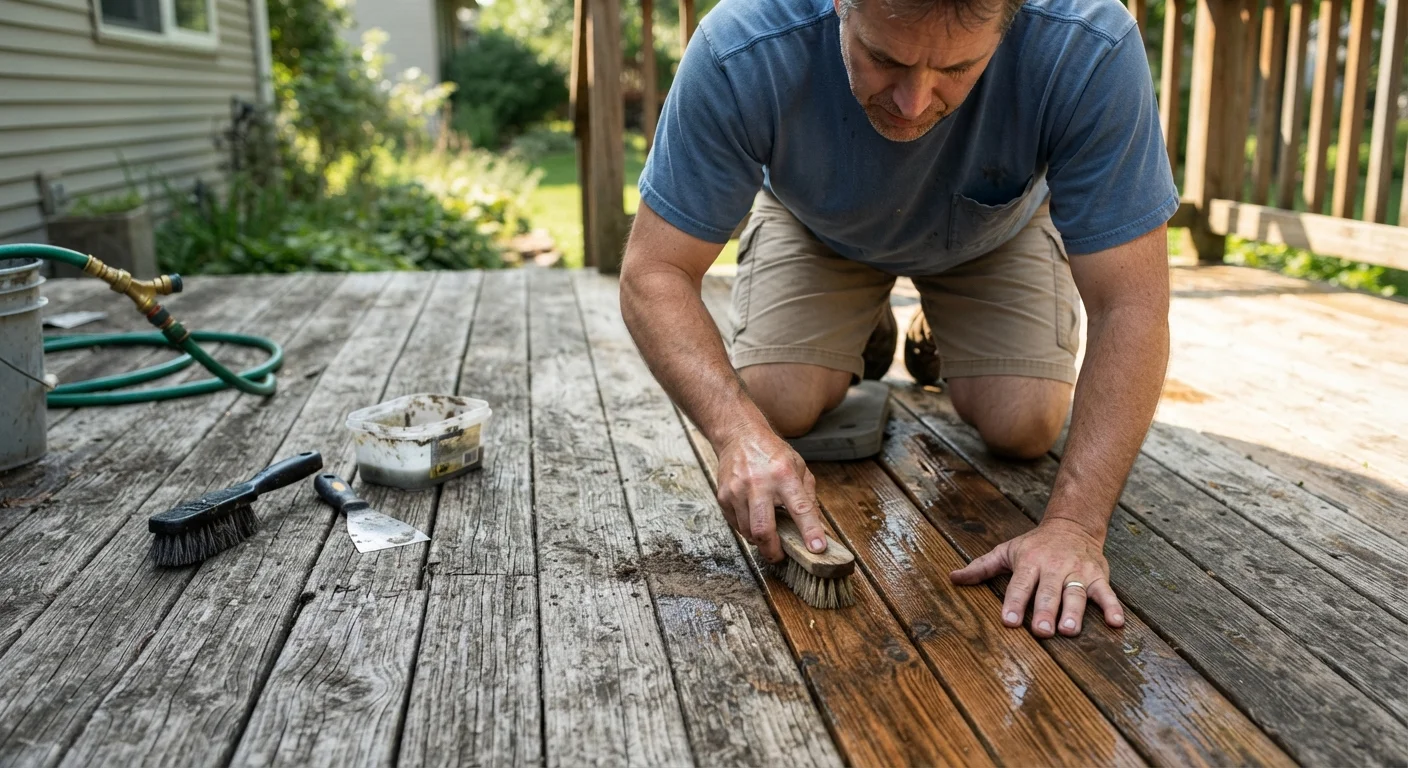
Clean the deck surface thoroughly at least once a year
Mold, mildew, and algae film break down wood surface fibers over time and create conditions where water absorption increases. An annual wash - using a deck cleaner appropriate for your wood species - removes these biological agents and prepares the surface for sealing.
Apply a water-repellent sealer or stain on the correct schedule for your wood type
Sealers create a barrier against moisture intrusion and UV degradation. Without regular reapplication, this barrier breaks down and wood is left unprotected. The right product and sequence matter as much as frequency. Weatherproofing a wood deck covers how to match products to your situation.
Inspect all fastener points, end cuts, and low-drainage spots during each annual check
Rot almost always begins at points where moisture concentrates: around screws and nails, at board ends where untreated cut wood is exposed, and in corners or areas where water pools. Probing these spots with a screwdriver or awl each year catches soft wood before it spreads.
Check joists, beams, and the ledger board annually, not just the surface boards
Surface boards are the most visible part of a deck but structural members - joists, beams, posts, and especially the ledger board - carry the load and are harder to replace. Rot in these members is a safety issue, not just a cosmetic one. Many deck collapses trace back to undetected ledger or joist decay.
Warning Signs That Demand Immediate Attention
Not every deck problem can wait for a scheduled maintenance weekend. Some signs indicate decay has moved past the surface and requires prompt action to prevent it from spreading to framing or the ledger board - the horizontal member that attaches the deck to your house.
- Springy or soft boards underfoot: Press firmly on boards with your foot. Any give beyond normal flex suggests rot has compromised the wood's interior structure.
- Discoloration around fasteners: Dark staining or raised wood around screws or nails signals moisture is collecting at these points, which accelerates decay.
- Gaps widening between boards: Some spacing is normal, but boards pulling apart unevenly may indicate shrinkage from drying rot or failed fasteners.
- Gray or black streaking on joists: Visible from below the deck, this coloration often indicates mold or early rot on your structural framing - a more serious concern than surface boards.
If you find rot that's already taken hold, common errors in exterior wood rot repair covers the mistakes that cause repairs to fail within a season.
When to Call a Professional
Surface board replacement is often a manageable DIY project. But if your inspection reveals soft or discolored joists, a failing ledger board connection, or any structural member with visible rot, stop and consult a licensed contractor before using the deck. Structural deck repairs may also require a permit depending on your municipality - check local requirements before starting work.
Quick Actions You Can Take This Weekend
You don't need to tackle everything at once. Starting with the highest-impact steps protects your deck while you build toward a full maintenance routine. For a season-by-season approach, the seasonal deck maintenance checklist is a reliable companion to these practices.
This article is for general informational purposes only. For work involving structural members, permits, or any repairs you're uncertain about, consult a qualified contractor and verify local building requirements before proceeding.