

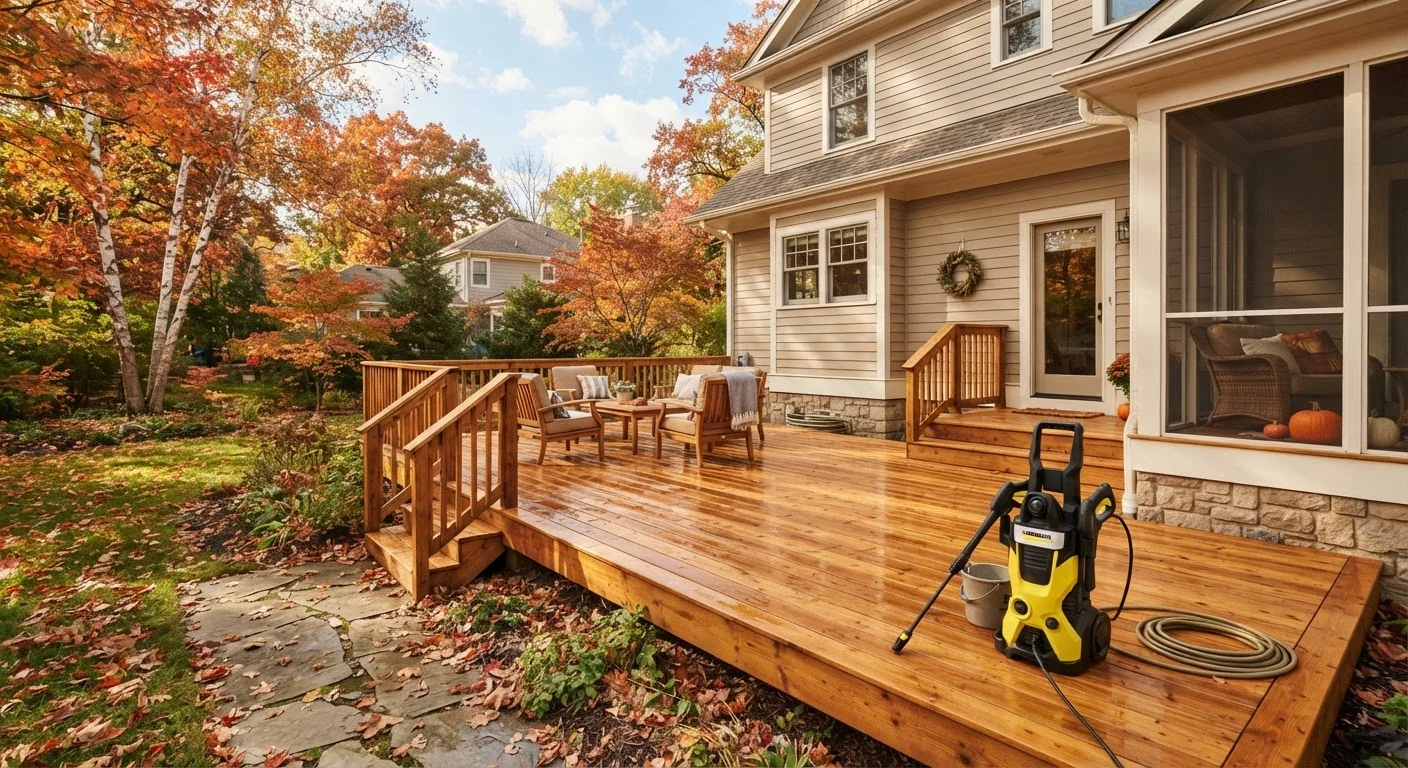
Key Takeaways
- Inspecting your deck twice a year - spring and fall - catches most structural problems early.
- Cleaning, sealing, and re-staining on a regular schedule prevents moisture damage and wood rot.
- Loose fasteners, soft boards, and wobbly railings are safety issues that require prompt attention.
- Permits or a licensed contractor may be required for structural repairs - always verify local codes.
- A consistent maintenance routine can meaningfully extend the life of a wood or composite deck.
Summary
24 items · 1-3 hours per seasonal pass
Why Seasonal Deck Maintenance Matters
Your deck endures freeze-thaw cycles, UV radiation, heavy rain, and foot traffic across every season. Without consistent attention, small issues - a slightly raised nail, a hairline crack in the sealant - can quietly develop into rotted boards, failing ledger connections, or compromised structural posts. The good news is that most deck deterioration is preventable with a predictable inspection and maintenance rhythm.
This checklist covers all four seasons so you can work through tasks at the right time of year, not just when a problem becomes obvious. For a broader view of how deck upkeep fits into your overall outdoor strategy, see the year-round outdoor space planning guide. If you're also considering a new build, the deck building basics article explains permitting and structural requirements worth knowing upfront.
Spring (Post-Winter Reset)
Summer (Peak-Use Monitoring)
Fall (Pre-Winter Preparation)
Winter (Minimal Intervention)
Tools and Supplies You'll Need
Before working through any seasonal pass, gather the right supplies. Having everything on hand prevents half-finished tasks and keeps the job moving efficiently.
Stiff-bristle push broom
Sweeping debris from the deck surface and between boards without damaging wood.
Flathead screwdriver
Probing wood around fasteners and joints to detect soft spots or rot.
Pressure washer (electric, low-PSI)
Deep-cleaning mold, mildew, and embedded grime from deck boards in spring.
Deck cleaner solution
Removing stains, mildew, and gray oxidation before resealing the surface.
Water-repellent sealer or deck stain
Protecting wood from moisture penetration and UV degradation after cleaning.
Deck gap tool or putty knife
Clearing compacted debris lodged between deck boards that retains moisture.
Cordless drill and deck screws
Tightening or replacing loose and raised fasteners found during inspection.
Plastic snow shovel
Removing snow in winter without scratching or gouging wood or composite surfaces.
For guidance on which sealers and stains actually work - and the order to apply them - the weatherproofing a wood deck guide walks through product selection and sequencing in detail.
What to Watch For During Every Inspection
Routine visual checks are your first line of defense. When walking your deck, move methodically: start at the ledger board where the deck attaches to your house, work outward to the posts and beams, then finish with surface boards and railings. Press a screwdriver tip firmly into wood near fasteners, post bases, and any discolored spots - soft or spongy wood signals rot that needs immediate attention.
Soft Wood Near Fasteners Is a Red Flag
If a screwdriver sinks easily into wood around a fastener or post base, you're likely looking at rot rather than surface weathering. Do not simply seal over it - deteriorated wood must be removed and replaced. Continuing to use a deck with rotted structural members poses a genuine safety risk. When in doubt, have a licensed contractor assess the extent of the damage before proceeding.
Railing integrity is particularly important. Apply lateral pressure to each railing section; any detectable wobble should be corrected before the deck is used again. The guide to maintaining wood decks explains which warning signs indicate a board can be dried out and sealed versus one that must be replaced entirely.
For structural repairs involving posts, beams, or the ledger connection, consult a licensed contractor. These elements carry load and in many jurisdictions require a permit for modification. Verify your local building code requirements before starting any structural work. You can fold deck inspection into your broader home upkeep routine using the seasonal home repair checklist.
Structural Repairs Require Permits in Most Areas
Replacing posts, beams, ledger boards, or footings is typically regulated by local building codes and generally requires a permit and inspection. Unpermitted structural work can create liability issues and complications when selling your home. Always contact your local building department to confirm what's required before beginning any structural repair or modification.