

| Pressure-treated pine lifespan | 15-25 years (With regular sealing and good drainage) |
| Cedar decking lifespan | 20-30 years (With sealing every 1-3 years) |
| Composite decking lifespan | 25-30+ years (Typical manufacturer warranty range) |
| PVC decking lifespan | 30-50 years (Based on published material durability data) |
| Redwood (heartwood) lifespan | 25-30 years (With consistent maintenance) |
| Most common lifespan reducer | Moisture intrusion (Affects all decking material types) |
Why Lifespan Estimates Vary So Much
When you ask how long a deck lasts, the honest answer is: it depends. Material type sets the ceiling, but climate, installation quality, and how consistently you maintain the surface determine where you land within that range. A pressure-treated pine deck in a dry inland climate can outlast the same deck built in a humid coastal environment by a decade or more.
The numbers below reflect generally accepted industry ranges based on material properties and documented performance patterns. Treat them as informed benchmarks, not guarantees.
| Pressure-treated pine lifespan | 15-25 years (With regular sealing and good drainage) |
| Cedar decking lifespan | 20-30 years (With sealing every 1-3 years) |
| Composite decking lifespan | 25-30+ years (Typical manufacturer warranty range) |
| PVC decking lifespan | 30-50 years (Based on published material durability data) |
| Redwood (heartwood) lifespan | 25-30 years (With consistent maintenance) |
| Most common lifespan reducer | Moisture intrusion (Affects all decking material types) |
Expected Lifespans by Material
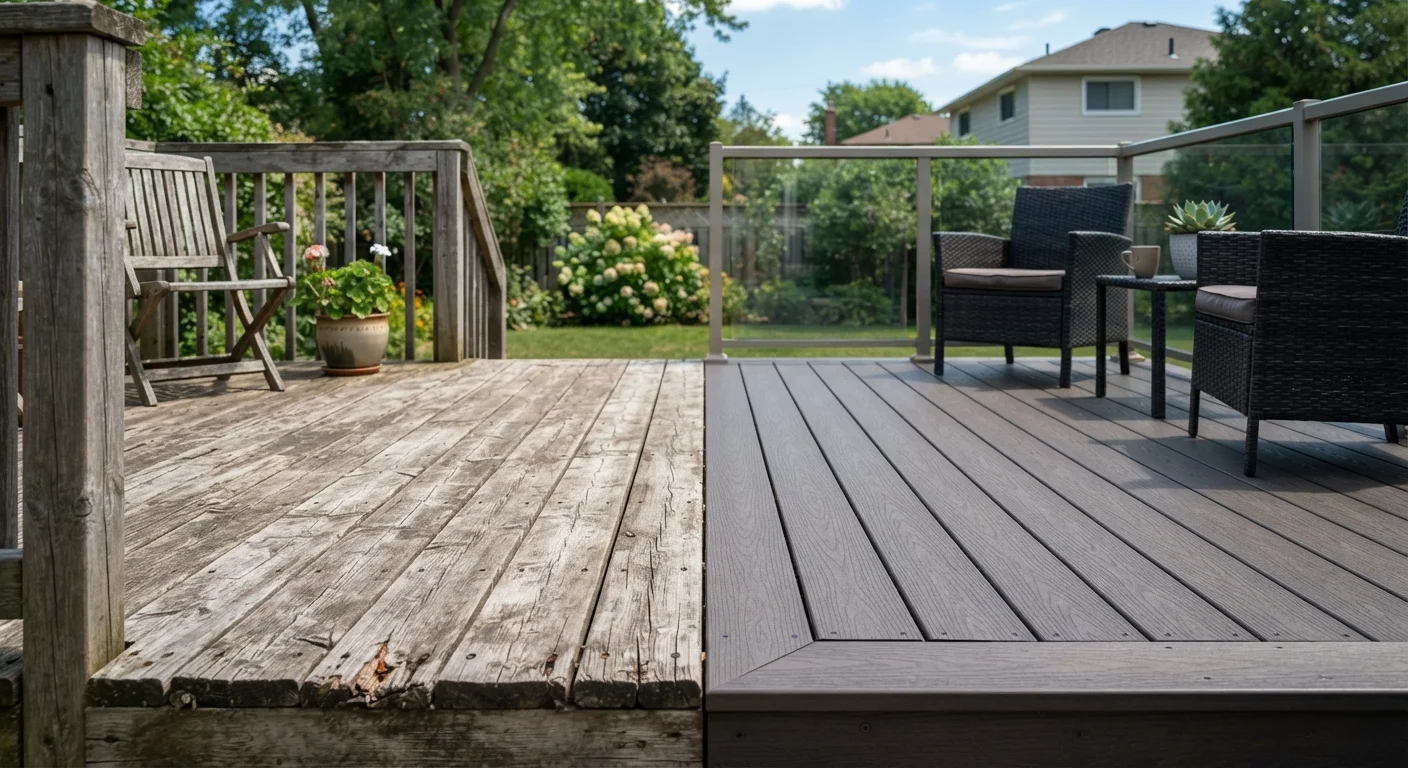
Pressure-treated pine is the most widely used decking lumber in the US. With proper sealing and periodic maintenance, it typically lasts 15 to 25 years. Ground-contact boards can rot faster if drainage is poor, so framing and board elevation matter. See our material breakdown guide for a deeper look at how it holds up against alternatives.
Cedar is naturally rot- and insect-resistant due to its aromatic oils. Unsealed, it grays and weathers gracefully but degrades in 10-15 years. With regular sealing every 1-3 years, cedar decks commonly reach 20-30 years of service life.
Redwood shares similar natural resistance to cedar and is prized for its dimensional stability. High-grade (heartwood) redwood can perform for 25-30 years under consistent care, though old-growth material is increasingly scarce and expensive.
Composite decking - engineered from wood fiber and recycled plastic - is designed to resist rot, splintering, and UV fading. Most manufacturers publish warranties of 25-30 years, and well-maintained installations commonly reach or exceed that range. It requires minimal maintenance but is not immune to mold in consistently shaded, damp conditions.
PVC decking (100% plastic, no wood fiber) has the longest projected lifespan of commonly available materials, often cited at 30-50 years. It won't rot or splinter, though it can expand and contract more noticeably with temperature swings than composite or wood options.
Heartwood
The dense, mature core wood of a tree. In species like redwood and cedar, heartwood contains natural oils that resist rot and insects, making it more durable than the outer sapwood layers.
Pressure-treated lumber
Wood that has been infused with chemical preservatives under pressure to resist rot, fungal decay, and insect damage. Commonly used for deck framing and surface boards.
Composite decking
A manufactured board made from a blend of wood fiber and recycled plastic. It is designed to resist moisture, splintering, and UV fading with less maintenance than natural wood.
Checking
Small surface cracks that develop along the grain of wood as it repeatedly absorbs and releases moisture. Checking is cosmetic at first but can worsen into deeper splits that let water penetrate.
Ledger board
A horizontal board bolted directly to the house structure where a deck is attached. It carries significant load and is particularly vulnerable to moisture damage and rot if not properly flashed and sealed.
What Actually Shortens a Deck's Life
The four primary lifespan killers are moisture intrusion, UV exposure, inadequate airflow beneath the deck, and deferred maintenance. Of these, moisture is the most destructive - it fuels wood rot and drives mold growth in composite materials.
- Poor drainage: Water pooling against ledger boards or posts accelerates rot regardless of material type.
- Shade and leaf debris: Constantly damp, shaded boards - especially under trees - degrade faster than boards in open sun.
- Fastener corrosion: Rusting hardware can split and lift boards from the inside, creating surface failure years ahead of the material's normal lifespan.
- Skipped sealing cycles: Unprotected wood soaks up water seasonally, causing cracking and checking that open pathways for rot.
A consistent maintenance schedule is your most cost-effective tool. Our seasonal deck maintenance checklist walks through what to inspect and treat at each time of year.
Permits and Structural Inspections Matter
If your deck is nearing the end of its expected lifespan or showing signs of structural damage - sagging, bouncing, or visible rot in posts and beams - have it evaluated by a licensed contractor before continuing to use it. Structural deck failures can cause serious injury. Many jurisdictions also require permits for deck replacement, not just new construction. Check with your local building department before beginning work.
Getting the Most From What You Have
Whether your deck is wood or composite, a few consistent habits extend its service life significantly:
- Seal or stain wood decks on schedule. Most wood decking benefits from a fresh coat of sealer every 1-3 years, depending on climate and sun exposure. The right order of operations for sealers and stains matters - applying products to dirty or damp wood wastes both the product and your time.
- Inspect fasteners and framing annually. Surface boards often outlast their framing. Check posts, joists, and ledger connections each season.
- Keep the surface clear. Leaves, planters, and furniture trapping moisture against decking are a slow but reliable source of damage.
- Address rot immediately. Soft or discolored boards don't self-correct. See our guide on maintaining wood decks to avoid board replacement to recognize early warning signs before they spread.
If you're still deciding on a material, consider how the deck fits into your broader outdoor plans. Our article on adding a deck versus a patio can help you weigh the full picture before committing to installation.
40%
Decks lost to preventable rot
Industry estimates suggest a large share of premature deck failures are linked to deferred maintenance and moisture mismanagement, not material defects.
1-3 years
Recommended wood sealing interval
Most wood decking professionals recommend resealing or restaining every one to three years depending on climate and UV exposure levels.
2x
Lifespan extension from proper sealing
Consistently sealed wood decks can last roughly twice as long as unsealed decks of the same material in comparable conditions, based on general material performance data.