

Key Takeaways
- Most sagging gutters fail at the hanger, not the gutter itself - replacement is rarely necessary.
- Identifying the cause before buying parts saves time and prevents repeat repairs.
- Gutter spikes are an outdated fastener; replacing them with screwed hangers produces a far more durable fix.
- Pitch matters: gutters should slope roughly a quarter-inch for every 10 feet toward the downspout.
- Visible cracks, heavy rust, or multiple failed sections may justify full replacement over a spot fix.
What you will need
Why Gutters Sag - and Why It's Usually Not the Gutter
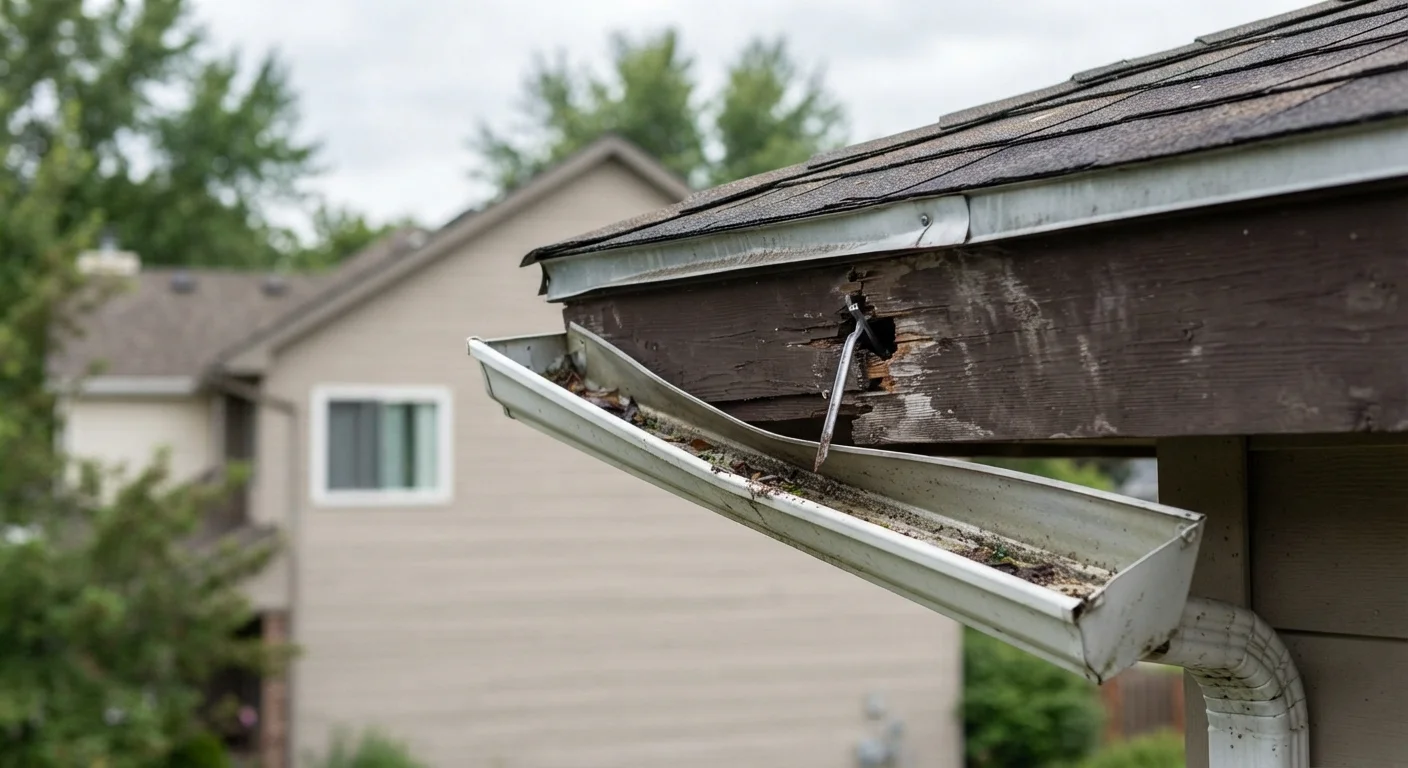
When a section of gutter droops visibly or pulls away from the fascia board (the horizontal board running along the roofline), the instinct is to assume the gutter itself has failed. In most cases, that assumption is wrong. Gutters are held in place by hangers - metal brackets fastened to the fascia - and it's almost always the hanger, or the wood behind it, that gives out first.
The most common culprit in older homes is the gutter spike: a long nail driven through the gutter face and into the fascia. Over years of expansion, contraction, and ice loading, these spikes work themselves loose and lose their grip. Once one or two let go, the unsupported gutter sags under the weight of water and debris, which makes the remaining fasteners work harder until they fail too.
A sagging gutter doesn't just look bad - it misdirects water, causes pooling at the foundation, and can damage the fascia over time. As explained in our guide on diagnosing backyard drainage problems, poor water direction from the roofline is a leading cause of yard and foundation issues. Fixing the hanger early is a straightforward repair that prevents a much more expensive problem later.
What you will need
What You'll Need Before You Start
This is a repair most homeowners with basic comfort on a ladder can handle in an afternoon. Gather everything below before climbing up - making multiple trips slows the job considerably.
Extension ladder
Provides safe access to the gutter line along the roofline.
Gutter hangers (hidden bracket style with screws)
Replaces failed spikes or worn-out hangers to re-secure the gutter to the fascia.
Drill with screwdriver bit
Drives gutter hanger screws into the fascia board quickly and securely.
Carpenter's level or string line
Checks and sets the correct pitch (slope) of the gutter before final fastening.
Hammer or nail puller
Removes old gutter spikes before installing new screw-type hangers.
Gutter sealant (silicone or gutter-specific)
Seals any small gaps or holes discovered during the repair.
Ladder Safety Is Non-Negotiable
Always set your ladder on firm, level ground and have a second person present to steady the base when working at eave height. Never lean beyond arm's reach - reposition the ladder instead. Working from a roof edge rather than a ladder is generally more dangerous for this task, not less.
Step-by-Step: Repairing the Sagging Section
Work methodically along the affected section rather than fixing only the most visible low point. A gutter that sags in one spot often has weakened hangers on either side as well.
Inspect the full run before touching anything
Before removing any hardware, walk the length of the gutter and note every hanger location. Mark loose or missing hangers with painter's tape or a pencil on the fascia below. Look for soft spots in the fascia, visible cracks in the gutter channel, and any sections where water staining suggests a persistent low point. A full picture of the problem prevents a partial fix.
Remove old spikes or failed hangers
Use a hammer or nail puller to extract old gutter spikes. They're typically 7 inches long and leave a visible hole through the gutter face. If you have strap-style hangers with stripped or pulled screws, remove those as well. Avoid bending the gutter channel during removal - grip close to the fastener and pull straight out.
Set the correct pitch with a level or string line
Gutters aren't meant to run perfectly flat - they need a slight downward slope toward the downspout to drain properly. A common guideline is approximately a quarter-inch of drop for every 10 feet of horizontal run, though verify what's appropriate for your specific setup. Use a string line stretched from the high end to the downspout end, or hold a level against the gutter bottom and adjust until you have a gentle, consistent slope. Mark the correct height on the fascia with a pencil line before installing new hangers.
Install new hidden-bracket hangers with screws
Hidden hangers (also called clip hangers or snap-in hangers) hook into the front and back lip of the gutter channel and are secured to the fascia with a long exterior screw - typically 1.5 to 2 inches - that bites into solid wood. Space new hangers every 24 to 36 inches along the run, or tighter in areas that see heavy snow or ice loads. Drive screws until snug but avoid over-torquing, which can distort the gutter profile.
Check alignment and test with water
Once all hangers are set, run water from a garden hose at the high end of the gutter and watch it travel toward the downspout. Water should move steadily without pooling anywhere along the run. Check all seams and end caps for drips while water is flowing. If you spot a minor leak at a joint, dry the area and apply gutter sealant from the inside once the surface is clean and dry.
Replace Spikes With Screws - Always
If your gutters are still fastened with original spikes, this repair is an ideal time to upgrade the entire run to screw-type hangers, not just the sagging section. Screws resist pull-out dramatically better than nails and won't loosen with seasonal movement. The material cost difference is minimal; the durability difference is substantial.
When Repair Isn't Enough: Knowing the Limit
Hanger replacement handles the vast majority of sagging gutter problems, but there are situations where a more extensive fix - or a full section replacement - is the more honest answer. Look for these signs during your inspection:
- Fascia rot: If the wood behind the gutter is soft or crumbling, screws won't hold regardless of hanger quality. The fascia must be repaired or replaced first, which may require a contractor.
- Gutter cracks or holes: If the metal or vinyl is cracked along the bottom or at seams, rehanging won't stop leaks. Small holes can sometimes be patched with gutter sealant, but widespread cracking warrants section replacement.
- Heavy rust-through on steel gutters: Surface rust can be treated, but rust that has eaten through the material means the gutter itself is structurally compromised.
- Multiple failed sections: If you find that more than half the hangers along a run have pulled free, the cost difference between repair and replacement narrows considerably.
Understanding when a targeted fix makes sense versus when to commit to a full replacement is a judgment call worth thinking through carefully. Our article on temporary vs. permanent repair approaches outlines a useful framework for that decision. Similarly, common factors that inflate simple repair costs explains why delaying a small fix often costs more in the long run.
Rotted Fascia Requires a Professional
If your fascia board is soft, crumbling, or shows signs of rot behind the gutter, no hanger system will hold reliably. Attaching new hardware to compromised wood creates a false sense of security and can allow the gutter to fall unexpectedly. Have a licensed contractor assess and replace the fascia before completing the gutter repair.