

Key Takeaways
- Exterior waterproofing addresses the source of water before it reaches the foundation wall.
- Interior systems manage water that has already entered, redirecting it away from living areas.
- The right approach depends on your water source, budget, and how disruptive you can tolerate the work being.
- Some homes need both systems working together for complete protection.
- Many waterproofing projects - especially exterior excavation - require licensed contractors and may need permits.
Our Verdict
Exterior waterproofing is the more thorough, long-term solution that stops water at its source, but it comes with significant cost and excavation. Interior waterproofing is less disruptive and more affordable, but it manages water rather than eliminating the root cause. For most homeowners, the severity and source of intrusion - not preference - should drive the decision.
| Best for | Recommended |
|---|---|
| Homes with active hydrostatic pressure and saturated soil around the foundation | Exterior waterproofing |
| Homeowners managing seepage or minor leaks on a limited budget | Interior waterproofing |
| Those planning a finished basement conversion | Combined approach (exterior + interior drainage) |
| Homes with isolated cracks but no widespread moisture issue | Targeted crack injection (interior) |
Understanding Where Basement Water Actually Comes From
Before choosing a waterproofing strategy, it helps to correctly identify the water source. Basement moisture generally enters in three ways: through cracks in the foundation wall or floor, through the wall-floor joint (called the cove joint), or by wicking through porous concrete - a process called hydrostatic pressure, where water-saturated soil pushes moisture through the wall itself.
A quick diagnostic: if water appears after heavy rain and tracks down the wall from a visible crack, that's likely surface runoff or inadequate grading. If water seems to seep uniformly through walls regardless of rainfall, hydrostatic pressure is a stronger suspect. Condensation - moisture forming on cool surfaces - is a different problem entirely, closer in nature to what's described in understanding condensation sources.
Getting the diagnosis right matters: applying an interior coating to a wall under active hydrostatic pressure, for example, will almost certainly fail.
Exterior Waterproofing: Stopping Water at the Source
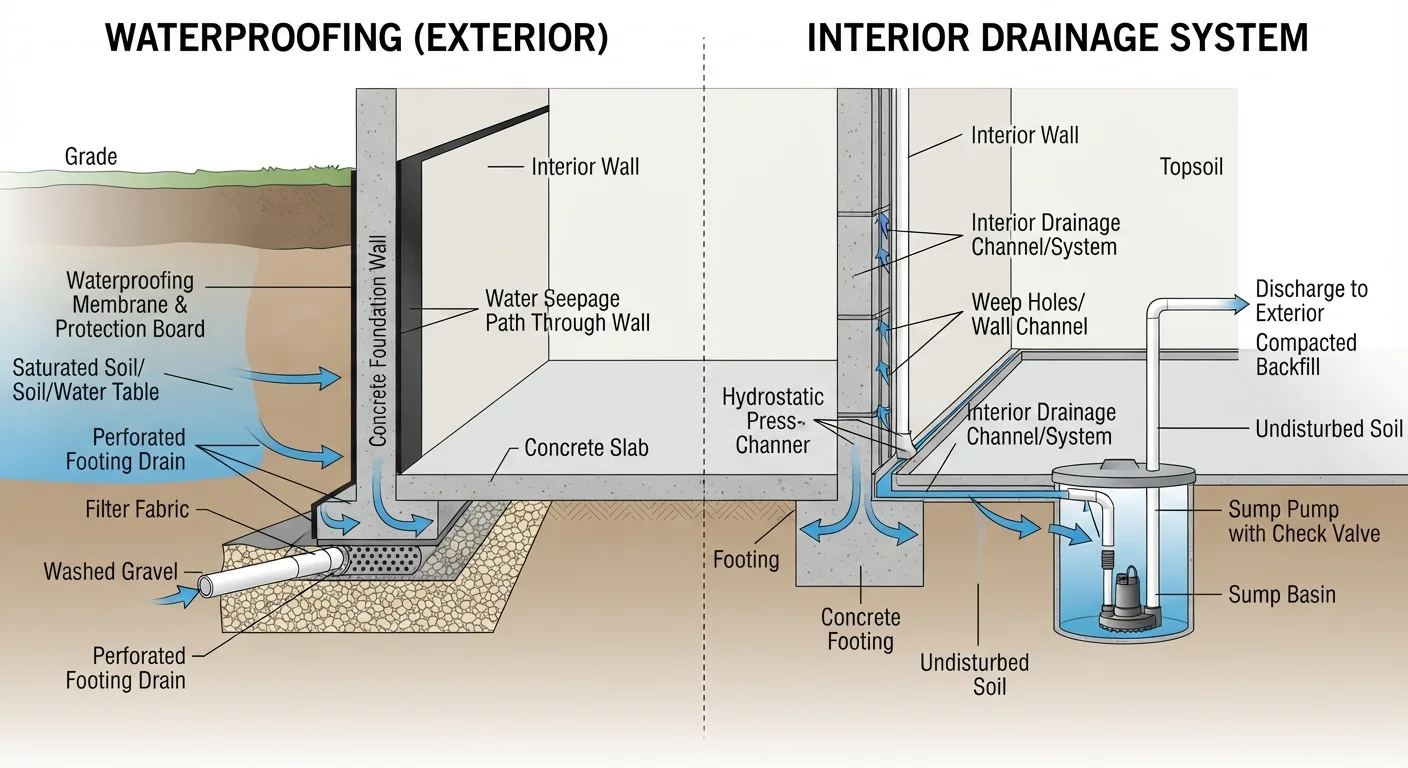
Exterior waterproofing means excavating the soil around the foundation down to the footing, then applying a waterproof membrane, drainage board, and perimeter drain tile (a pipe that routes water away before it builds against the wall). It is the most complete solution because it prevents water from ever contacting the foundation.
The advantages are significant: it addresses hydrostatic pressure directly, protects the structural integrity of the foundation wall, and can extend the life of the building envelope considerably. Done correctly, it also stops efflorescence (the white mineral deposits left when water moves through concrete) and reduces the risk of mold growth inside the wall cavity.
The trade-offs are equally significant. Excavation is expensive, disruptive, and typically requires a licensed waterproofing contractor. Landscaping, patios, decks, and driveways adjacent to the home may need to be removed and replaced. Depending on your municipality, a permit may be required - always verify local requirements before work begins.
Exterior Excavation Is Not a DIY Project
Digging alongside a foundation without proper shoring creates serious risk of soil collapse and foundation undermining. Improperly applied waterproofing membranes can trap moisture within the wall assembly, accelerating damage rather than preventing it. Always hire a licensed, insured contractor for exterior foundation waterproofing work, and verify that permits are pulled where required by local code.
Exterior waterproofing is rarely a DIY project. Foundation excavation carries serious risks including soil collapse, and improper membrane application can trap moisture rather than redirect it. Consult a licensed foundation specialist.
Interior Waterproofing: Managing Water That Has Already Entered
Interior waterproofing does not stop water from entering the wall - it intercepts water at the interior side and routes it to a sump pump or drain before it can flood the floor. The most common systems include perimeter drainage channels installed beneath the basement floor slab, sump pump basins, and wall drainage panels that direct wall seepage downward into the channel.
Interior systems are significantly less expensive than full exterior excavation, can usually be installed without exterior disruption, and are often completed in one to three days. For homeowners planning a basement conversion, interior drainage is frequently a required first step - as covered in more detail in planning a basement conversion.
Interior coatings and sealants - masonry waterproofing paints, hydraulic cement for crack filling, and crystalline sealers - are another interior option. These work well for minor seepage and porous concrete but cannot withstand significant hydrostatic pressure alone.
Start With an Honest Assessment of Severity
Before committing to either system, have a foundation specialist or structural engineer assess the extent of the moisture problem. A single contractor who sells one system type may not give you a fully objective recommendation. Getting two or more assessments from different specialists can give you a clearer picture of what your basement actually needs.
Comparing the Two Approaches
Neither approach is universally superior - the right fit depends on your specific conditions. The table below summarizes the key differences to help frame your conversation with a contractor or inspector.
| Exterior Waterproofing | Interior Waterproofing | |
|---|---|---|
| Water management approach | Stops water before it contacts the wall | Redirects water after it enters |
| Disruption level | High - full excavation required | Low to moderate - interior floor work |
| Typical relative cost | Higher - excavation and materials | Lower - no excavation needed |
| Best for | Hydrostatic pressure, structural protection | Seepage, minor leaks, budget constraints |
| Professional required | Yes - licensed contractor essential | Usually yes - sump systems need expertise |
| Addresses root cause | Yes | No - manages symptoms |
| Impact on landscaping | Significant - may require removal | None |
For small, isolated cracks, crack injection using epoxy or polyurethane foam is often sufficient on its own - a targeted interior repair rather than a full system. For persistent wall staining or water damage that has reached finishes, see guidance on addressing water stains correctly before repainting affected surfaces.
Grading, Gutters, and What Comes Before Either System
Many basement water problems are caused or worsened by factors outside the foundation entirely. Poor grading - soil that slopes toward the house rather than away - allows surface runoff to pool against the foundation. Clogged or undersized gutters overflow and dump water at the base of the wall. Downspouts that terminate too close to the foundation are another frequent culprit.
Correcting these issues first is not just practical - it is often necessary. A waterproofing contractor may require it before installation, and it can reduce the severity of the problem enough that a less invasive solution becomes viable. Exterior water management principles apply here in the same way they do for other building envelope issues; even roof flashing failures illustrate how often water problems trace back to poor drainage details rather than the obvious entry point.
This article is for general informational purposes only. Basement waterproofing work - particularly excavation and structural repairs - should be evaluated and performed by licensed professionals. Always verify local permit and code requirements before beginning any foundation work.