

Key Takeaways
- Inside-surface condensation is usually a home humidity problem, not a window defect.
- Between-pane condensation means the insulated glass unit's seal has failed.
- High indoor humidity can be addressed with ventilation, dehumidifiers, and habit changes.
- A failed IGU seal cannot be fixed - the glass unit typically needs replacement.
- Seal failure reduces a window's insulating value, increasing heat loss.
- Condensation location is your diagnostic starting point before spending any money.
Window Condensation
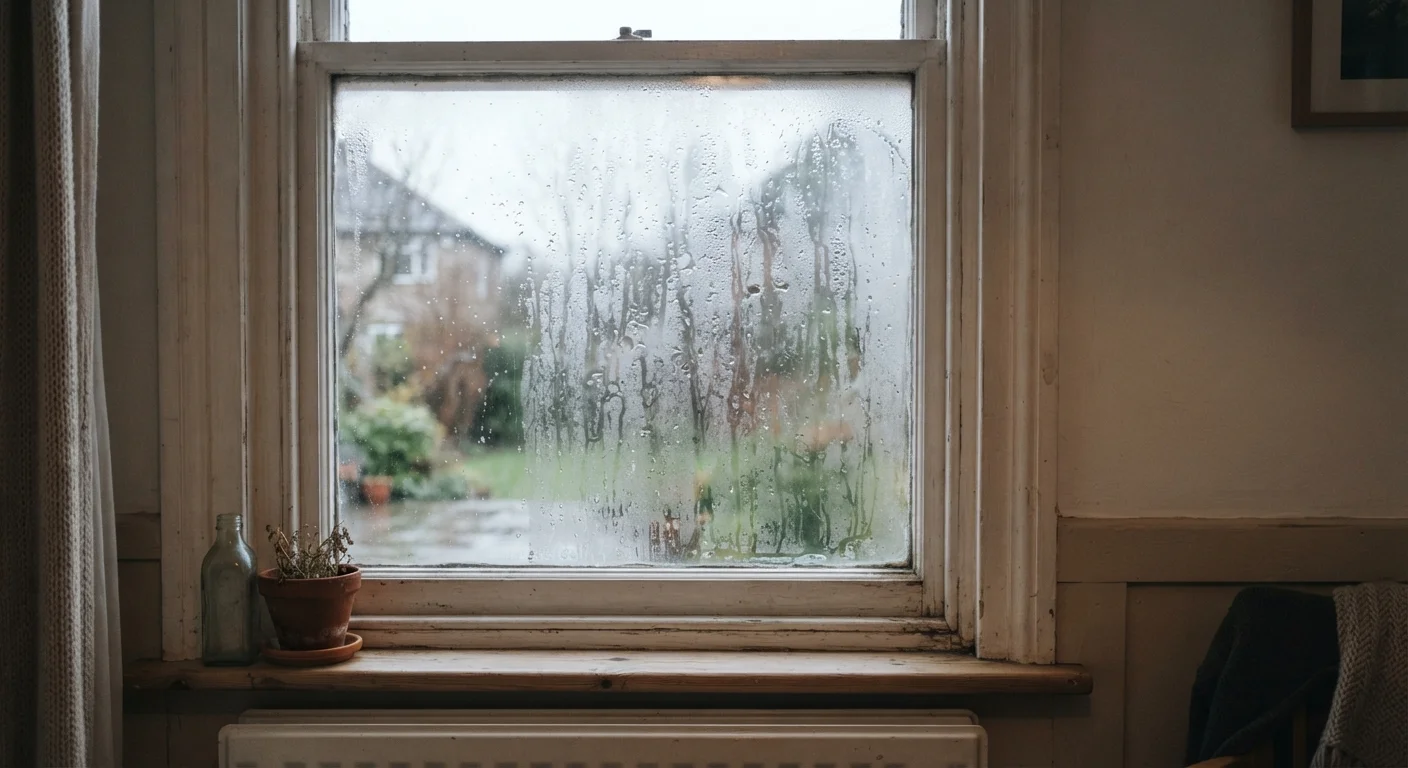
Window condensation is moisture that forms when warm, humid air contacts a cooler surface. Where it appears - on the inside glass surface, or trapped between two panes - signals two entirely different problems with different causes and solutions.
In insulated glass units (IGUs), the space between panes is sealed and filled with air or an inert gas like argon. Condensation between panes indicates the perimeter seal has failed, allowing humid outside air into that sealed cavity.
How to Read Where Condensation Appears
Condensation is simply water vapor turning to liquid when it hits a surface cold enough to trigger that change - a process called reaching the dew point. On windows, the location of that moisture is your fastest diagnostic clue.
Run your hand across the glass. If moisture wipes away, it's on the interior surface. If the glass feels dry but looks foggy or streaky inside the unit itself, the moisture is between the panes - and no amount of wiping will reach it. These are two separate problems that require completely different responses.
Single-Pane Windows Condense More Easily
Older single-pane windows have no insulating gap, so the glass surface reaches outdoor temperatures quickly. Condensation on these windows is common and expected in cold climates. Upgrading to insulated glass significantly raises the interior glass temperature, reducing condensation risk.
Inside-Surface Condensation: A Humidity Problem
When moisture forms on the room-facing side of your glass, your home's air is carrying more water vapor than the window surface can accommodate. This is common in winter, when cold outdoor temperatures chill the glass while indoor air - warmed and humidized by cooking, showers, breathing, and plants - contacts it.
Common sources of excess indoor humidity include:
- Long or frequent showers without exhaust fan use
- Cooking without ventilation
- Unvented gas appliances
- Houseplants in large numbers
- Wet basements or crawl spaces pushing moisture upward
Practical steps to reduce this type of condensation include running bathroom and kitchen exhaust fans consistently, using a dehumidifier in problem areas, and ensuring your home has adequate fresh-air ventilation. Weather-sealing gaps also helps, since infiltration of very cold outdoor air accelerates the chilling of glass surfaces. See our guide to caulking, weatherstripping, and foam sealants if you're addressing drafts at the same time.
Use a Hygrometer to Confirm the Problem
An inexpensive hygrometer placed in rooms with condensation problems gives you an objective humidity reading. If winter levels consistently exceed 50% relative humidity, that number - not the windows - is the issue to address first. Many hardware stores carry basic models for under $20.
Between-Pane Condensation: A Failed Seal
Modern double- and triple-pane windows use an insulated glass unit (IGU) - two or more glass panes bonded together with a sealed perimeter, enclosing a gap filled with air or inert gas. That sealed cavity is what gives the window its insulating value.
When the perimeter seal breaks down, outdoor humid air infiltrates the cavity. When temperatures fluctuate, that moisture condenses on the inner surfaces of the panes - surfaces you cannot reach. The result is a cloudy, streaked, or fogged appearance that does not respond to cleaning.
10-20 yrs
Typical IGU seal lifespan
Industry estimates suggest most insulated glass unit seals degrade within 10 to 20 years depending on climate exposure and installation quality.
30-50%
Recommended indoor winter humidity range
Building science guidelines generally recommend keeping relative humidity in this range during cold months to minimize window condensation and moisture damage.
Seal failure reduces the window's thermal performance because the gas fill escapes and the insulating gap is compromised. It won't cause immediate water damage inside your walls, but it does mean you're losing more heat through that glass than you should be. If you're weighing whether to repair or replace the unit, our article on repairing vs. replacing windows walks through the honest tradeoffs.
What to Do About Each Type
For inside-surface condensation: No window work is needed right away. Focus on lowering indoor humidity, improving ventilation, and checking for moisture sources in basements or crawl spaces. A simple hygrometer (a tool that measures relative humidity) can confirm whether your indoor levels are running too high - generally above 50% in winter months.
For between-pane condensation: The IGU needs to be replaced. In many cases the frame is still sound, and a window contractor can install a new glass unit without replacing the entire window. This is typically less expensive than full window replacement. To understand whether your situation warrants full replacement instead, our guide to evaluating window replacement costs can help you weigh the factors.
Before calling a contractor, note whether the window is still under a manufacturer warranty - IGU seal failures are sometimes covered within a set number of years after installation.