

| Best use for caulk | Fixed, stationary joints and seams |
| Best use for weatherstripping | Operable doors and windows (moving parts) |
| Best use for foam sealant | Large, irregular, or hard-to-reach voids |
| Caulk lifespan (typical) | 5-10 years depending on type and location |
| Foam types | Minimal-expanding and high-expansion |
| Weatherstripping materials | Foam tape, V-strip, rubber gasket, door sweep |
Why the Distinction Matters
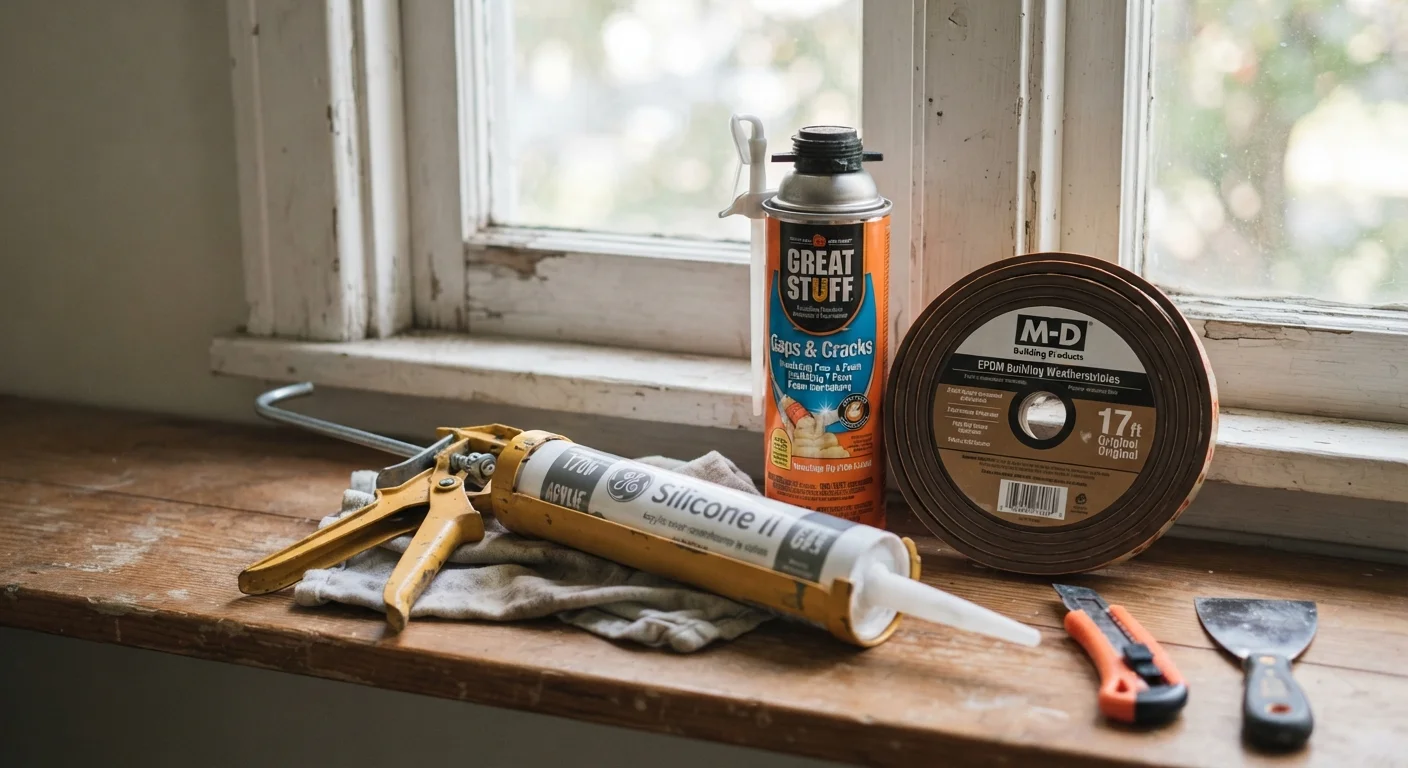
Walk into any hardware store and you'll find an entire aisle dedicated to sealing gaps in your home. Caulk tubes, adhesive-backed foam tape, and spray cans of expanding foam all promise to stop drafts and moisture - but they solve different problems. Using the wrong material in the wrong spot doesn't just waste money; it can lead to failed seals, trapped moisture, or joints that crack within a season.
The choice comes down to three factors: whether the gap is stationary or moving, how large it is, and where it sits in relation to moisture, heat, or foot traffic.
| Best use for caulk | Fixed, stationary joints and seams |
| Best use for weatherstripping | Operable doors and windows (moving parts) |
| Best use for foam sealant | Large, irregular, or hard-to-reach voids |
| Caulk lifespan (typical) | 5-10 years depending on type and location |
| Foam types | Minimal-expanding and high-expansion |
| Weatherstripping materials | Foam tape, V-strip, rubber gasket, door sweep |
Caulk: Best for Stationary Joints and Seams
Caulk is a flexible compound that cures into a semi-rigid bead. It's designed for fixed gaps - places where two surfaces meet and won't flex or shift repeatedly over time. Common applications include sealing around window and door frames where they meet interior drywall, along baseboards, around plumbing penetrations through walls, and at the joint between a tub surround and a wall.
Caulk is not ideal for moving parts. If a joint expands and contracts with temperature changes, or if two surfaces vibrate against each other, caulk will eventually crack and pull away. For related guidance on why that happens, see why caulk keeps cracking and peeling.
Not all caulks are the same product. Silicone caulk repels water but won't accept paint; latex-based caulk is paintable but less moisture-tolerant. Silicone caulk and paintable caulk serve different purposes - matching the type to the location matters. For tile work specifically, caulk and grout aren't interchangeable either; the choice between grout and caulk in tile joints depends on whether the joint needs to flex.
Air sealing
The process of closing gaps, cracks, and openings in a building envelope to reduce uncontrolled air movement. Effective air sealing can reduce energy loss and limit moisture intrusion.
Rim joist
The board that sits on top of the foundation sill plate and caps the ends of floor joists. It's a common source of air leakage in basements and crawl spaces.
Minimal-expanding foam
A spray foam formulated to expand gently as it cures, making it suitable for window and door frames where pressure could distort the framing.
V-strip (tension seal)
A folded piece of metal or plastic weatherstripping shaped like a V that springs open to fill gaps along the sides of doors and windows.
Weatherstripping: Built for Moving Parts
Weatherstripping is a compressible material - foam, rubber, vinyl, or metal - installed along the edges of operable doors and windows. Unlike caulk, it's engineered to be compressed and released thousands of times without losing its seal. When a door closes, the weatherstripping deforms to fill the gap; when the door opens, it springs back.
The correct type depends on which part of the door or window you're sealing. Foam tape works on low-friction surfaces like the top and sides of a door. V-strip (tension seal) works well on the sides of double-hung windows. Door sweeps address the bottom gap where a door meets the threshold. Installing rigid caulk in any of these locations would prevent the door or window from functioning properly.
Weatherstripping wears out. If your exterior doors let in visible light around their edges or you can feel a draft with the door fully latched, the existing material has likely compressed beyond its effective range and needs replacement.
Expanding Foam: For Large, Irregular Gaps
Spray foam sealant expands as it cures, making it well-suited for large or irregular voids that caulk can't fill and weatherstripping can't reach. Common uses include gaps around pipes entering through exterior walls, spaces between a window or door rough opening and its frame, and penetrations in a rim joist or sill plate.
Two main varieties exist: minimal-expanding foam and high-expansion foam. Around window and door frames, minimal-expanding foam is strongly preferred - high-expansion foam can generate enough force to bow frames out of square. Read the label before applying.
Foam is not a surface sealer. It doesn't bond well to wet surfaces, won't flex with movement, and should be covered or painted if exposed to UV light, since sunlight degrades cured foam. For below-grade applications involving moisture - such as basement rim joists - consider how foam fits into a broader moisture-management strategy. See sealing a basement against water intrusion for context on where air sealing ends and waterproofing begins.
When to Call a Professional
Sealing around gas lines, HVAC flues, recessed lighting in insulated ceilings, or any structural penetration typically requires more than standard sealants - and may be subject to local building codes. If you're unsure whether a gap involves a regulated system, consult a licensed contractor or building inspector before proceeding. Incorrect sealing near combustion appliances can create safety hazards.