

Key Takeaways
- A toilet flange must sit at or just slightly above the finished floor level to seal correctly.
- A flange set too low or too high causes wax ring failure, leading to leaks and toilet rocking.
- Most flange height problems can be corrected without replacing the entire drain assembly.
- Water damage from a failed flange seal can spread to subfloor and joists if left unaddressed.
- A licensed plumber should handle flange repairs that involve cutting into drain lines or structural subfloor damage.
Toilet Flange
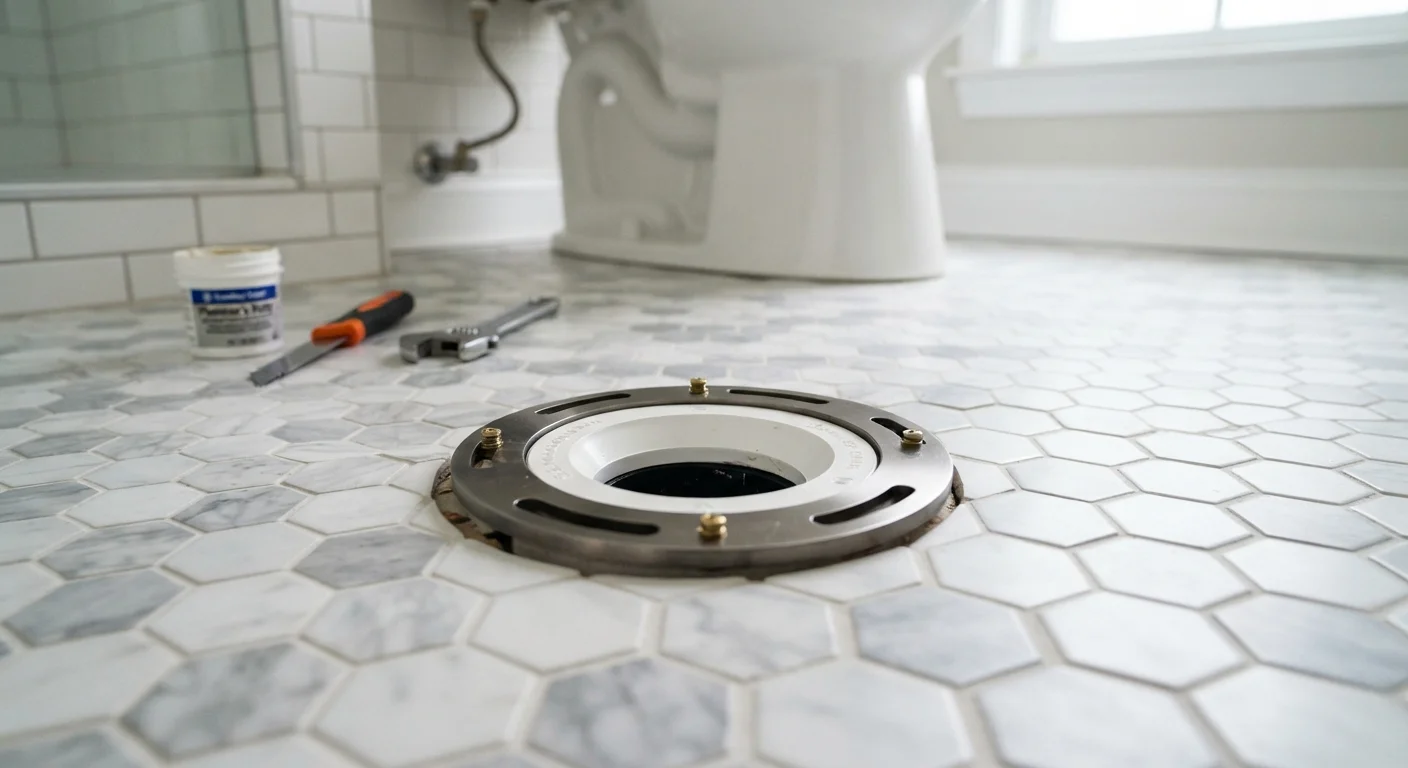
A toilet flange (also called a closet flange) is the fitting that connects your toilet to the drainpipe in the floor. It creates a watertight seal between the toilet's base and the sewer line below. The flange is also what physically anchors the toilet to the floor using bolts.
Flanges are typically made from PVC, ABS plastic, cast iron, or copper, and their top surface must sit at the correct height relative to the finished floor to ensure the wax ring compresses properly and seals without gaps.
Why Flange Height Is the Foundation of a Leak-Free Toilet
When a toilet rocks, smells, or shows water staining at its base, most homeowners assume the wax ring is simply worn out. Often, that's only half the story. The real culprit is the flange sitting at the wrong height - a condition that will defeat new wax rings repeatedly until the underlying geometry is corrected.
The wax ring is designed to compress between the toilet's horn (the outlet at the bottom) and the top of the flange. When the flange sits at the proper height - generally between 1/4 and 1/2 inch above the finished floor - that compression is even and complete. Drop the flange below floor level, and the wax can't bridge the gap. Raise it too far above the floor, and it may compress unevenly or tip the toilet slightly off level.
This is why flooring upgrades are one of the most common triggers for flange problems. Adding tile over an existing floor raises the finished surface, which can push a previously adequate flange below the new floor plane - even though nothing about the plumbing itself changed.
Flooring Upgrades Often Trigger Flange Issues
If you're planning a bathroom floor renovation, it's worth checking your flange height before and after laying new flooring. Even a 3/8-inch tile installation can push a marginal flange below the usable threshold. Addressing this during the renovation is far easier than removing a newly tiled floor to correct it afterward.
Common Causes of Flange Height Problems
Understanding why flanges end up at the wrong height helps you recognize the repair that's actually needed:
- New flooring installation: Adding ceramic tile, luxury vinyl plank, or hardwood over an old floor raises the surface level. A flange that was fine before the new floor may now sit too low.
- Original installation error: In some cases, the flange was never set at the correct height during initial construction - a problem that might not become obvious until the first wax ring fails.
- Cracked or broken flange collar: The flat ring portion of the flange can crack from age, corrosion, or overtightened bolts, causing the toilet to sit unevenly regardless of height.
- Subfloor rot: Water damage from a slow leak can soften the subfloor, causing the flange to sink over time. This situation typically requires professional assessment before any plumbing repair proceeds.
Knowing the root cause matters because it determines the fix. See our guide on temporary vs. permanent repairs to understand when a quick patch is appropriate and when a full correction is necessary.
How Flange Height Problems Are Typically Corrected
The repair approach depends on whether the flange is too low, too high, or structurally damaged.
Flange Too Low
The most common and accessible fix is a flange extender ring - a plastic spacer ring that stacks on top of the existing flange to bring its surface up to the correct height. Extender kits are available in varying thicknesses and can often be stacked. The toilet bolts thread through slots in the extender just as they would through the original flange.
If the flange is broken or the drain pipe connection is compromised, a repair ring may be used instead. This metal or plastic ring fastens over the existing damaged flange, providing a new bolt track and stable mounting surface without requiring the old flange to be removed entirely.
Flange Too High
A flange that protrudes too far above the floor is less common but can occur when a bathroom floor is refinished downward or when the original installation used the wrong pipe height. In some cases the subfloor can be recessed slightly around the flange; in others, a thicker wax ring or a wax-free gasket system may compensate for minor differences. Significant misalignment generally requires a plumber to cut and reset the drain pipe at the correct depth.
Check the Flange Before You Set the Toilet
Any time you remove a toilet - for flooring work, a wax ring replacement, or any other reason - use that opportunity to inspect the flange carefully. Look for cracks in the collar, corroded bolt slots, and verify its height relative to the floor surface. Correcting a problem at this stage is far easier than diagnosing a slow leak months later.
For issues that go beyond the toilet flange - such as a running toilet or fill valve problem - those are typically separate repairs that don't involve the flange at all.
When to Call a Licensed Plumber
Some flange repairs are well within reach for a confident DIYer. Adding an extender ring, replacing a wax ring on a stable flange, or swapping in a repair collar are relatively straightforward tasks. But other situations call for a licensed plumber:
- The flange is broken below the finished floor and requires cutting into the drain line.
- The subfloor around the toilet shows soft spots, discoloration, or active rot - signs that moisture damage has spread beyond the flange itself.
- The drain pipe is misaligned, corroded, or requires resetting at a different depth.
- Your local code requires a permit or inspection for the type of repair involved.
When in doubt, having a plumber inspect the flange before committing to a repair approach can save significant cost and damage. What looks like a simple wax ring replacement can occasionally reveal a deeper structural problem that a surface fix won't solve.
Proper drainage is just one dimension of a well-maintained home. Issues like roof flashing failures remind us that water intrusion - whether from above or below - demands prompt attention to prevent cascading damage to structure and finishes.
30%
Of subfloor damage linked to bathroom leaks
Industry estimates suggest a significant share of subfloor rot near toilets originates from slow wax ring failures, often traced back to improper flange height rather than wax ring age.
1/4"-1/2"
Ideal flange height above finished floor
This is the standard clearance range recommended by plumbing professionals to ensure proper wax ring compression and a watertight seal.