

Key Takeaways
- R-value measures thermal resistance - higher numbers mean better insulation performance.
- Different areas of your home (attic, walls, floors) require different target R-values based on your climate zone.
- Damaged, wet, or compressed insulation loses effective R-value even if it looks intact.
- Topping off existing insulation is often sufficient; full replacement is only necessary when insulation is contaminated or structurally compromised.
- The U.S. Department of Energy publishes recommended R-values by climate zone - check those before planning any project.
R-Value
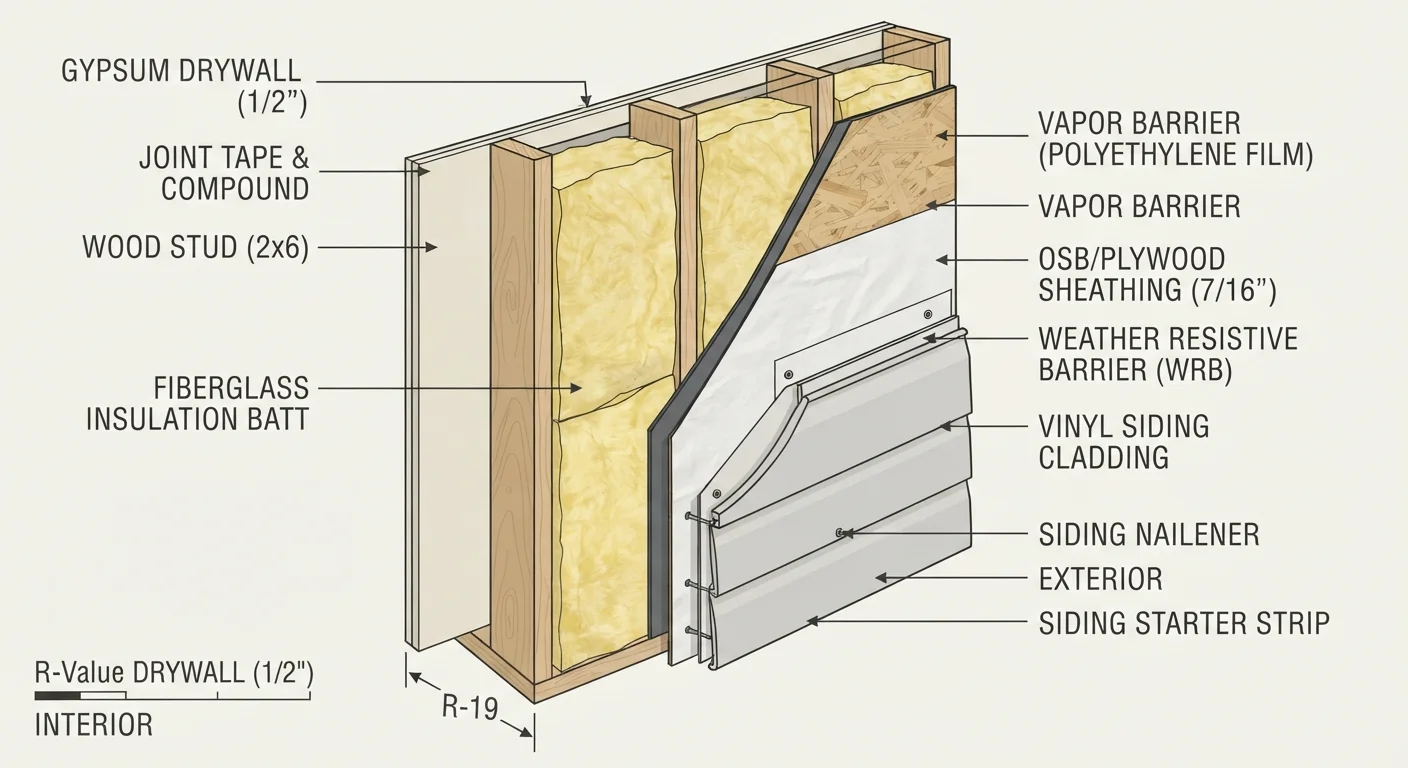
R-value is a number that measures how well a material resists the flow of heat. The higher the R-value, the better the insulation slows heat from moving through walls, floors, or ceilings. It helps homeowners and contractors compare insulation options and determine whether existing insulation is performing adequately for the climate.
R-value is calculated per inch of material thickness, so thicker insulation of the same type will have a proportionally higher total R-value. However, total R-value is what matters for code compliance and energy performance - not thickness alone.
What R-Value Actually Tells You
R-value stands for thermal resistance - a measure of how effectively insulation slows heat movement through a building assembly. Heat naturally moves from warm areas to cooler ones, and insulation's job is to slow that transfer. A wall insulated to R-13 resists heat flow significantly less than one insulated to R-21, even if both look similar from inside the room.
The number is additive. If you have R-19 batts (pre-formed insulation pieces) in your attic and add R-19 loose-fill on top, you end up with roughly R-38 total - which is within the recommended range for many U.S. climate zones. This is why knowing your current R-value matters before you decide whether to repair or replace anything.
R-38 to R-60
Recommended attic R-value for most U.S. climates
According to the U.S. Department of Energy's insulation recommendations by climate zone.
~15%
Estimated share of home heat lost through the attic
The DOE estimates that a significant portion of heating and cooling energy is lost through under-insulated attics in typical U.S. homes.
8 zones
U.S. climate zones with distinct R-value targets
The DOE's climate zone map divides the country into eight regions, each with specific insulation requirements for attics, walls, and floors.
Why R-Value Varies by Location in Your Home
Your attic, walls, and floors don't need identical R-values. Because heat rises, attics typically lose the most energy and require the highest R-value. Walls lose less heat than attics but still benefit from adequate insulation. Below-grade spaces like crawl spaces and basements have their own requirements shaped by ground temperature and moisture exposure.
The DOE divides the U.S. into eight climate zones, each with specific R-value recommendations for different areas of the home. A homeowner in Minnesota needs substantially more attic insulation than one in Arizona. Before you buy any materials or schedule repairs, identify your climate zone and the current R-value of your existing insulation - both are free to look up and will anchor every decision that follows. This kind of baseline thinking also applies when evaluating other envelope improvements; see our energy efficiency upgrades reference for a broader view.
Find Your Climate Zone Before Purchasing
The U.S. Department of Energy's website provides a free, zip-code-based climate zone lookup. Knowing your zone takes less than two minutes and ensures any insulation you add - whether DIY or contractor-installed - meets the right performance threshold for where you live.
When Insulation Loses Its Effective R-Value
R-value is a rating under ideal conditions. In practice, several factors erode real-world performance:
- Moisture: Wet insulation loses thermal resistance rapidly. Fiberglass exposed to a roof leak may look intact but perform far below its rated value until it fully dries - if it ever does.
- Compression: Insulation works partly by trapping air. Compressed batts lose effective thickness and, with it, R-value. This often happens when items are stored on top of attic insulation.
- Settling: Loose-fill insulation - cellulose or blown fiberglass - settles over time, reducing depth and therefore total R-value.
- Gaps and bypasses: Air moving through gaps around pipes, wires, or framing carries heat directly past insulation, bypassing its resistance entirely.
Identifying which of these problems you're dealing with shapes whether you repair, top off, or replace. Moisture damage or pest contamination generally warrants removal and replacement. Settling or compression often only requires adding material on top.
Air Sealing Works Alongside R-Value
R-value measures conductive resistance, but air leaks bypass insulation entirely. Sealing gaps around pipes, wires, and top plates before adding insulation is widely considered as important as the insulation itself. Many energy auditors recommend addressing air sealing first, then adding insulation on top.
Repair, Top Off, or Replace: Using R-Value to Decide
Once you know your current R-value and your target, the math is straightforward. If your attic has R-19 and your climate zone calls for R-49, adding R-30 of blown insulation may be all that's needed. This is less disruptive and typically less expensive than full replacement.
Full replacement makes sense when existing insulation is contaminated, structurally blocking air sealing work, or when you're gutting walls during a renovation. In those cases, the additional cost of removal may be worthwhile to address underlying problems properly.
The same logic applies across the home's envelope. Just as deciding between repair and replacement for windows involves weighing real conditions rather than assumptions - as covered in our window repair vs. replacement guide - insulation decisions reward honest assessment over reflexive replacement. If you're unsure about your current R-value, a home energy auditor can measure it directly using blower door tests and thermal imaging, giving you solid data before you spend anything.
For a closer look at one of the highest-impact applications, our attic insulation guide walks through what to expect from that specific upgrade.