

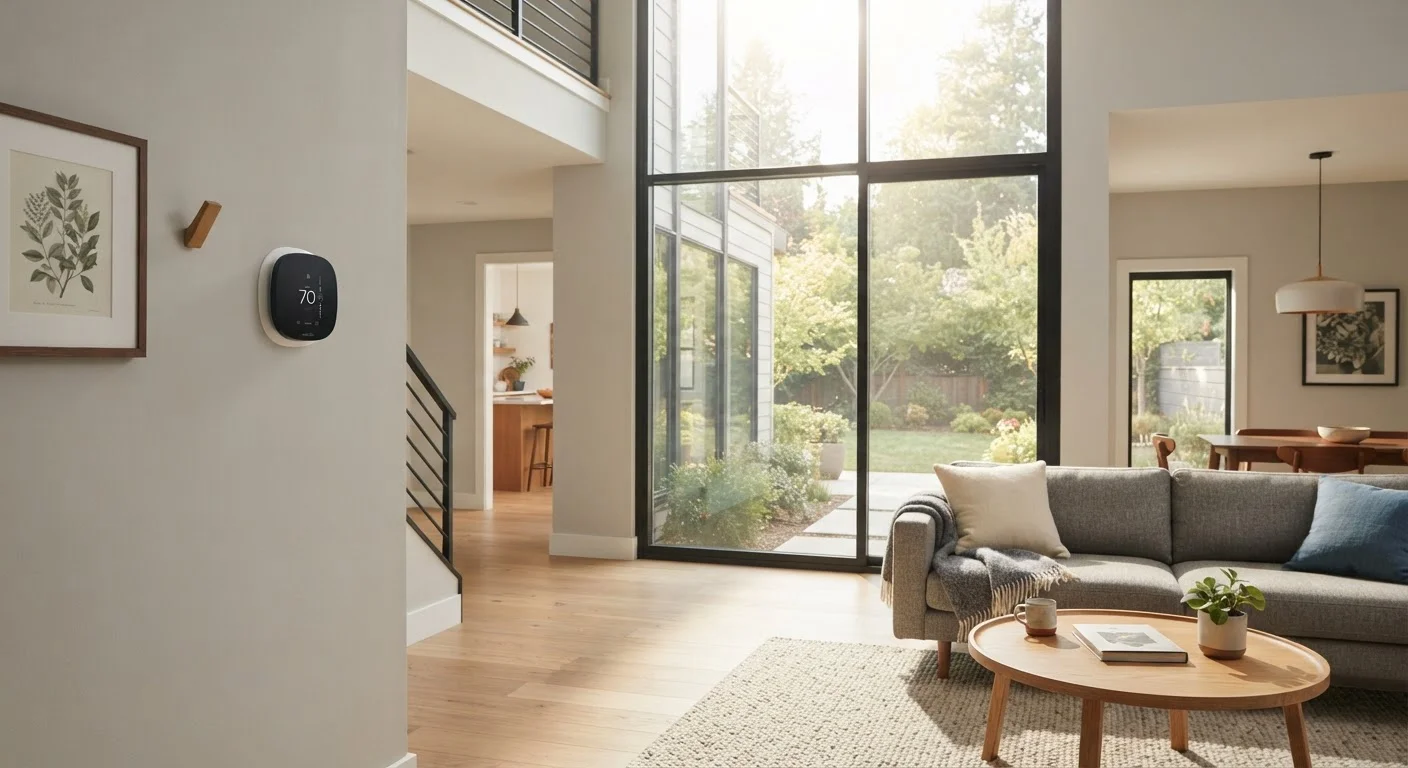
| Biggest energy user in most homes | Heating and cooling (HVAC) (U.S. Energy Information Administration) |
| Estimated loss from air leaks | 25-40% of heating/cooling costs (U.S. Department of Energy) |
| Duct leakage waste range | 20-30% of conditioned air (U.S. Department of Energy) |
| Efficiency rating for furnaces | AFUE (Annual Fuel Utilization Efficiency) |
| Efficiency rating for central A/C | SEER2 (Seasonal Energy Efficiency Ratio) |
| Appliance efficiency certification program | ENERGY STAR (EPA-administered) |
Where Home Energy Is Lost - and Why It Matters
Most residential energy loss happens through a handful of predictable pathways: the building envelope (walls, attic, floors), windows and doors, and mechanical systems like heating and cooling. Understanding where your home leaks energy is the first step toward fixing it efficiently.
| Biggest energy user in most homes | Heating and cooling (HVAC) (U.S. Energy Information Administration) |
| Estimated loss from air leaks | 25-40% of heating/cooling costs (U.S. Department of Energy) |
| Duct leakage waste range | 20-30% of conditioned air (U.S. Department of Energy) |
| Efficiency rating for furnaces | AFUE (Annual Fuel Utilization Efficiency) |
| Efficiency rating for central A/C | SEER2 (Seasonal Energy Efficiency Ratio) |
| Appliance efficiency certification program | ENERGY STAR (EPA-administered) |
The U.S. Department of Energy estimates that air leaks alone can account for 25-40% of a home's heating and cooling costs. That makes sealing gaps and improving insulation among the highest-leverage actions a homeowner can take - often before replacing any equipment.
For a room-by-room breakdown of where to focus first, see our room-by-room upgrade priority guide. And if you're also tracking seasonal maintenance tasks, our seasonal home repair checklist helps you coordinate repairs alongside efficiency work.
Insulation and the Building Envelope
Insulation is measured in R-value - a number that indicates resistance to heat flow. Higher R-values mean better thermal performance. Recommended R-values vary by climate zone, so check U.S. Department of Energy guidelines for your region before specifying materials.
R-value
A measure of thermal resistance for insulation materials. Higher R-values indicate greater resistance to heat flow and better insulating performance.
U-factor
A rating for windows and doors indicating how readily heat passes through the assembly. Lower U-factors mean better insulating performance.
Air sealing
The process of blocking gaps, cracks, and penetrations in a home's building envelope to prevent uncontrolled air movement and drafts.
Low-e coating
A microscopically thin metallic coating applied to window glass that reduces heat transfer by reflecting infrared energy while allowing visible light to pass through.
Building envelope
The physical barrier between the conditioned interior of a home and the outside - including walls, roof, foundation, windows, and doors.
AFUE
Annual Fuel Utilization Efficiency; the percentage of fuel a furnace converts to usable heat over a heating season. A 95% AFUE furnace wastes only 5% of fuel.
Attic insulation is consistently one of the most cost-effective improvements in colder and mixed climates. Because heat rises, an under-insulated attic can be a major drain on heating efficiency. Our dedicated article on attic insulation and its impact explains what to expect from this upgrade.
Wall insulation in older homes often requires blown-in insulation techniques to avoid removing drywall. Basement rim joists - the wood framing at the top of foundation walls - are frequently overlooked air-leakage points that are relatively easy to address with rigid foam board.
Air sealing and insulation work together; insulation without sealing still allows drafts. Caulking around window frames, weatherstripping doors, and sealing penetrations around pipes and wires are all low-cost tasks with meaningful impact.
Windows, HVAC, and Appliances
Windows carry a U-factor rating - the inverse of R-value - where lower numbers mean less heat transfer. Double-pane, low-emissivity (low-e) coated windows are the standard for energy efficiency in most US climates. Full window replacement is a significant investment; interior or exterior storm windows can improve performance at lower cost where original windows are otherwise sound.
25-40%
Heating/cooling costs lost to air leaks
According to the U.S. Department of Energy, uncontrolled air infiltration is one of the leading causes of energy waste in American homes.
20-30%
Conditioned air wasted by leaky ducts
The U.S. Department of Energy estimates duct leakage in the average home accounts for this range of lost conditioned air before it reaches living spaces.
~$0.60/day
Estimated daily savings from LED vs. incandescent (10 bulbs)
General estimate based on typical wattage differences; actual savings vary by usage hours and local electricity rates.
HVAC systems typically account for the largest share of home energy use. Key metrics to understand:
- SEER2 (Seasonal Energy Efficiency Ratio) for central air conditioners - higher is more efficient.
- HSPF2 for heat pump heating performance.
- AFUE (Annual Fuel Utilization Efficiency) for furnaces - expressed as a percentage.
Regular HVAC maintenance - filter changes, coil cleaning, duct inspection - preserves rated efficiency. Leaky ductwork can waste 20-30% of conditioned air before it reaches living spaces. Before upgrading to new equipment, have ducts inspected and sealed if needed.
Appliances and lighting round out a whole-home approach. ENERGY STAR-certified appliances meet efficiency thresholds set by the EPA. LED lighting uses significantly less energy than incandescent bulbs. For lighting terminology, our home lighting upgrade glossary is a useful reference. If older appliances or added EV charging require more electrical capacity, review our overview on upgrading an older home's electrical panel before proceeding.
Planning the financial side of these projects is equally important. Our home upgrade budgeting guide walks through how to build a realistic project plan that accounts for true costs.