

Key Takeaways
- Most single-pane window problems, including drafts and sticking sashes, can be repaired for far less than replacement costs.
- Replacement makes the most sense when frames are structurally compromised or windows are functionally obsolete.
- Energy savings from replacement windows often take many years to offset installation costs.
- A qualified window contractor or carpenter should evaluate structural damage before you commit to either path.
Significantly lower upfront cost than full replacement
Most common window repairs - resealing, reglazing, weatherstripping, hardware replacement - cost a fraction of new window installation, often saving hundreds to thousands of dollars per opening.
Preserves original wood frames with character and craftsmanship
Older wood windows, particularly in historic homes, were often built from old-growth lumber that is denser and more durable than modern materials; restoration maintains that quality.
Addresses the actual problem without over-engineering a solution
Many window complaints trace to seals, hardware, or weatherstripping - targeted repairs fix these directly without the disruption and waste of full replacement.
Less waste and lower environmental impact
Replacing windows generates substantial material waste; repair extends the life of existing windows and avoids the embodied energy cost of manufacturing new units.
Can be done in stages, fitting a tighter budget
Homeowners can prioritize the worst-performing windows and address others over time, rather than absorbing the full cost of whole-house replacement at once.
Repair can't fix structurally failed or rotted frames
When rot has spread through frame members or water damage has compromised surrounding structure, patching provides only a temporary fix and replacement becomes the safer choice.
Repeated repairs on old windows can accumulate cost
If a window requires several rounds of work over a few years, the cumulative expense may eventually approach or exceed replacement cost without the performance gains.
Single-pane windows remain thermally limited after repair
Air sealing and weatherstripping improve performance, but a repaired single-pane window will never match the insulating capacity of a modern double- or triple-pane unit.
Finding skilled repair tradespeople can be difficult
Window restoration is a more specialized trade than replacement installation, and in some markets it can be hard to locate a contractor with genuine repair expertise.
Our Verdict
Repair is the smarter starting point for most window issues - it costs less, wastes fewer materials, and often resolves the problem completely. Replacement earns its place when frames are rotted beyond patching, glass is structurally failed, or a home's windows are so outdated that repair is only a short-term fix. Neither option is universally correct, and the decision deserves honest evaluation rather than a sales pitch.
Homeowners who want to make a cost-conscious, informed decision about their windows rather than defaulting to the most expensive option.
Why This Decision Is Harder Than It Looks
Window repair is consistently underrated, and window replacement is frequently oversold. Part of that imbalance comes from the economics of the trades - replacement generates more revenue than caulking and glazing, so the path of least resistance in many contractor conversations leads toward new windows. That doesn't mean replacement is wrong, but it does mean homeowners need to think critically before signing anything.
The fundamental question isn't "are my windows old?" It's "what exactly is failing, and can that specific failure be corrected?" Most window problems - drafts, condensation, difficulty opening, peeling paint - have targeted repairs that cost a fraction of replacement. The cases where replacement is clearly the right call are real, but narrower than the industry often implies. For a broader look at how repair-versus-replace logic applies to other home systems, see our guide to what inflates repair costs.
When Repair Is the Right Call
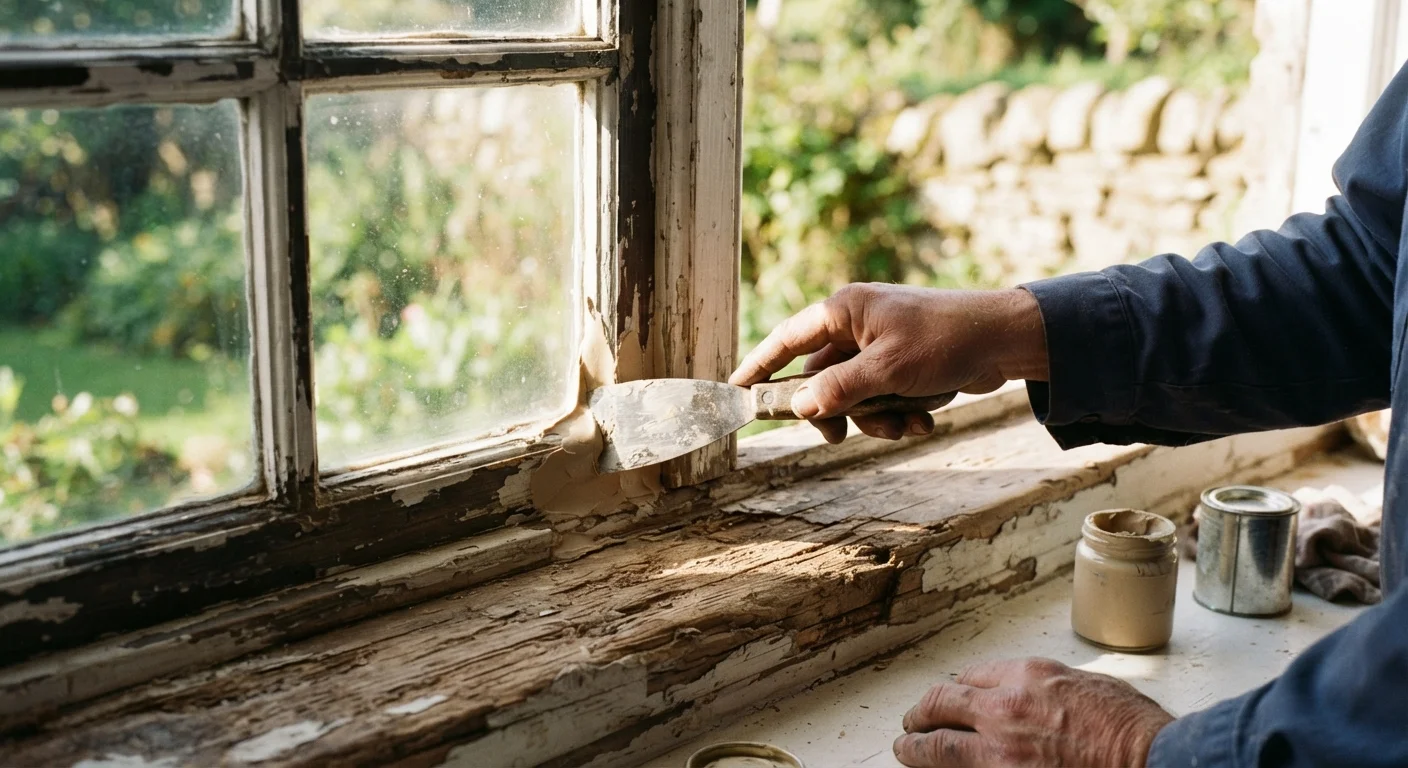
Single-pane wood windows - especially in older homes - are often excellent candidates for repair. Wood frames can be patched, epoxy-consolidated, reglazed, and weatherstripped back to solid performance. Skilled restoration can extend a window's life by decades at a cost well below replacement.
Significantly lower upfront cost than full replacement
Most common window repairs - resealing, reglazing, weatherstripping, hardware replacement - cost a fraction of new window installation, often saving hundreds to thousands of dollars per opening.
Preserves original wood frames with character and craftsmanship
Older wood windows, particularly in historic homes, were often built from old-growth lumber that is denser and more durable than modern materials; restoration maintains that quality.
Addresses the actual problem without over-engineering a solution
Many window complaints trace to seals, hardware, or weatherstripping - targeted repairs fix these directly without the disruption and waste of full replacement.
Less waste and lower environmental impact
Replacing windows generates substantial material waste; repair extends the life of existing windows and avoids the embodied energy cost of manufacturing new units.
Can be done in stages, fitting a tighter budget
Homeowners can prioritize the worst-performing windows and address others over time, rather than absorbing the full cost of whole-house replacement at once.
Even double-pane windows with failed seals (visible as fogging between panes) can sometimes be addressed by replacing the glass unit alone, without touching the frame. Hardware failures - broken locks, worn balances, stuck sashes - are almost always repair territory. If your windows open and close correctly and the frames are structurally sound, repair is usually worth pursuing first.
Consider when a temporary fix is appropriate versus a permanent one - some window repairs are genuine long-term solutions, while others buy time while you plan for replacement.
When Replacement Makes More Sense
There are clear scenarios where repair is either impossible or impractical. Severe rot that has spread through multiple frame members isn't patchable in any durable way - replacing those units is the structurally sound choice. Windows with aluminum frames that have failed thermally, single-pane windows in extreme climates where heating costs are a genuine burden, or windows so damaged by water intrusion that the surrounding wall framing is also compromised all represent legitimate replacement candidates.
Repair can't fix structurally failed or rotted frames
When rot has spread through frame members or water damage has compromised surrounding structure, patching provides only a temporary fix and replacement becomes the safer choice.
Repeated repairs on old windows can accumulate cost
If a window requires several rounds of work over a few years, the cumulative expense may eventually approach or exceed replacement cost without the performance gains.
Single-pane windows remain thermally limited after repair
Air sealing and weatherstripping improve performance, but a repaired single-pane window will never match the insulating capacity of a modern double- or triple-pane unit.
Finding skilled repair tradespeople can be difficult
Window restoration is a more specialized trade than replacement installation, and in some markets it can be hard to locate a contractor with genuine repair expertise.
Replacement also makes sense when windows are functionally obsolete - for example, when egress requirements have changed and an existing bedroom window no longer meets code for emergency exit. Cosmetic reasons alone, however, rarely justify the full cost of replacement. For a detailed look at how to evaluate replacement on its merits, see our article on whether window replacement is worth the cost.
The Energy Efficiency Argument: More Nuanced Than Advertised
The most common sales argument for replacement windows is energy savings. New double- or triple-pane windows with low-emissivity (low-e) coatings do perform better thermally than older single-pane windows. But the payback math is often sobering.
7-27%
Potential heating and cooling energy lost through windows
The U.S. Department of Energy estimates that heat gain and loss through windows accounts for roughly 25-30% of residential heating and cooling energy use, though actual savings from replacement vary widely by climate and home.
10-15+ years
Typical payback period for replacement windows
Industry analyses and consumer reporting frequently note that energy savings alone rarely recoup replacement window costs in under a decade, particularly in moderate climates.
Payback periods on replacement windows can stretch well beyond ten years, and in many climates the actual energy savings are modest enough that repair plus weatherstripping achieves most of the thermal benefit at a fraction of the cost. The U.S. Department of Energy notes that air sealing around frames - not just the glass itself - is a major driver of window-related heat loss. Addressing that through caulking and weatherstripping is inexpensive and often highly effective.
Understanding R-value and how insulation affects heat flow is useful background here - the same principles that apply to insulation apply to windows, and thermal performance depends on the whole envelope, not one component in isolation.
Condensation Isn't Always a Window Problem
Interior condensation on window glass is often caused by high indoor humidity, not a failed window seal. Before attributing fogginess or moisture to the window itself, check your home's relative humidity level - anything above 50% in winter commonly causes condensation on cooler glass surfaces. Addressing humidity through ventilation or a dehumidifier may resolve the issue without any window work at all.
How to Evaluate Your Specific Situation
Start with a honest condition assessment. Look at each window and ask: Is the frame structurally intact? Does it open and close without binding? Is fogging between panes, or is condensation forming on the interior surface (which is a humidity issue, not a window failure)? Are drafts coming from the frame-to-wall junction rather than the glass itself?
A carpenter or window restoration specialist - not just a replacement window salesperson - can give you a repair-oriented second opinion. The repair-versus-replace framework applies across many home decisions; our piece on cabinet refacing versus full replacement covers similar decision logic in another common context.
Get itemized quotes for both paths if you're genuinely unsure. If repair costs more than roughly half the replacement cost and won't provide lasting results, replacement may be economically justified. If repair addresses the actual failure for significantly less, it deserves serious consideration - regardless of how long the windows have been installed.