

Key Takeaways
- Attic insulation is consistently ranked among the highest-return energy efficiency upgrades for US homeowners.
- Heat naturally moves from warm areas to cool ones - attics are a primary path for that transfer.
- R-value measures insulation effectiveness; the right target depends on your home's climate zone.
- Common insulation types include fiberglass batts, blown-in cellulose, and spray foam - each with different applications.
- Many homes, especially those built before 1980, have insufficient attic insulation by current standards.
- Significant air sealing should accompany insulation work to maximize energy savings.
Attic Insulation
Attic insulation is material installed in the floor or ceiling of your attic to slow the movement of heat between your home's living space and the outdoors. In winter, it keeps warm air inside; in summer, it blocks heat from radiating down from the roof. The result is a more stable indoor temperature and less work for your heating and cooling system.
Insulation performance is measured in R-value - a number indicating resistance to heat flow. Higher R-values mean better thermal resistance. The U.S. Department of Energy recommends R-38 to R-60 for most attic floors, depending on climate zone.
Why the Attic Is Where Heat Goes to Escape
Heat moves naturally from warmer areas toward cooler ones. In winter, that means the warmth your furnace generates rises toward the ceiling and, if unchecked, passes straight through into an uninsulated attic and out into the cold. In summer, the process reverses - a sun-baked roof pushes heat downward into living spaces, forcing air conditioners to work harder.
The attic is the most direct pathway for this heat transfer in most American homes. It sits directly above conditioned living space and is exposed to the full force of outdoor temperature swings. Without adequate insulation, your heating and cooling system compensates by running longer - which shows up on your energy bill every month.
This is why attic insulation consistently appears near the top of any energy efficiency upgrade list. It addresses the largest single source of thermal loss in a typical home. For a deeper look at how this fits alongside other improvements, see our practical energy efficiency reference covering insulation, windows, HVAC, and more.
Up to 25%
Heat lost through a typical uninsulated attic
The U.S. Department of Energy estimates that up to 25% of a home's heating energy can escape through the attic in under-insulated homes.
R-38 to R-60
Recommended attic R-value for most US climate zones
The Department of Energy's zone-based recommendations reflect the insulation levels at which energy savings are most cost-effective for American homeowners.
Pre-1980
Homes most likely to have inadequate attic insulation
Most US homes built before 1980 were constructed before modern energy codes and insulation standards, leaving many significantly under-insulated by today's benchmarks.
Understanding R-Value and What Your Home Actually Needs
R-value is the standard measure of how well an insulating material resists heat flow. The higher the number, the more effective the material is at slowing thermal transfer. When professionals or guides refer to upgrading to R-38 or R-49, they are describing a target level of resistance appropriate for specific US climate zones.
The US Department of Energy divides the country into climate zones and publishes recommended R-values for each. Homes in the deep South may target R-38 in the attic, while those in the upper Midwest or Northeast may aim for R-49 to R-60. Existing insulation counts toward the total - installers measure what's already present and add enough new material to reach the recommended range.
Many homes built before 1980 have attic insulation well below current standards, sometimes as low as R-11 to R-19. Upgrading even partway toward the recommended level can produce noticeable comfort improvements.
Check Before You Add More
Before purchasing insulation materials, measure what is already in your attic. Use a ruler to find the depth, then check the material type against a basic R-value per inch chart - most fiberglass and cellulose runs between R-2.5 and R-3.7 per inch. This tells you your starting point and how much additional material is needed to hit your target. A local energy auditor can also do this assessment for you and check for air leaks at the same time.
Types of Attic Insulation and How They Differ
The three most common insulation types used in US attics each have distinct characteristics:
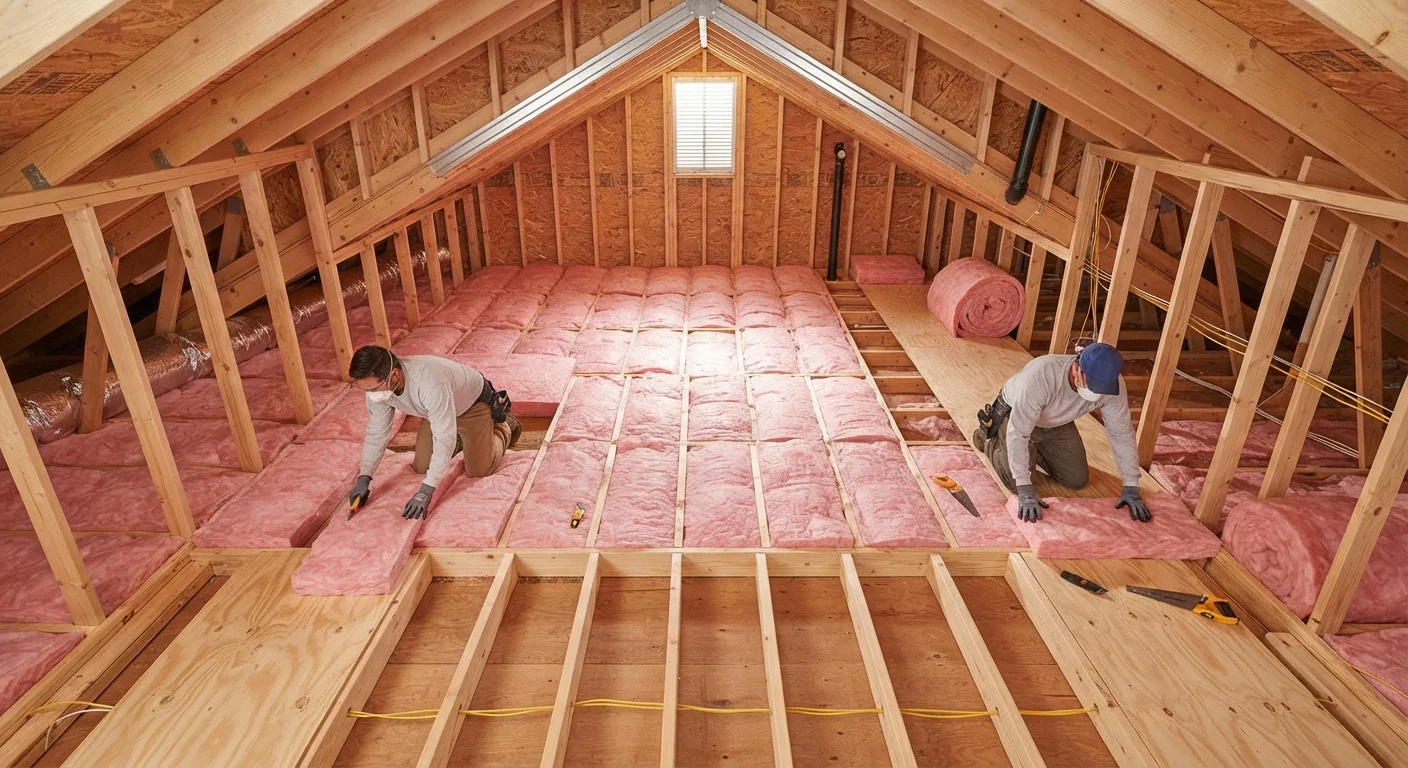
- Fiberglass batts - Pre-cut sections designed to fit between standard-spaced joists. Familiar pink or yellow rolls that many homeowners recognize. Work best when joists are evenly spaced and free of obstructions.
- Blown-in cellulose - Loose recycled paper fibers blown in using a machine. Excellent at filling irregular spaces and settling around existing obstacles like wiring and pipes. A practical choice for topping up existing insulation.
- Spray polyurethane foam - Expands and hardens to fill gaps and create an air barrier simultaneously. More commonly used on the underside of the roof deck (in unvented attic designs) or for sealing penetrations. Typically installed by professionals only.
Air sealing - closing gaps around light fixtures, plumbing stacks, and other penetrations - should precede any insulation upgrade. Without it, air leaks can significantly undermine the performance of even well-installed insulation.
Where Attic Insulation Fits in Your Upgrade Plan
If you are working through home improvements room by room or system by system, the attic often deserves early attention because its payoff affects the entire home. Unlike a kitchen renovation that improves one space, attic insulation improves the thermal performance of every room below it.
It also pairs well with other energy upgrades. A properly insulated attic reduces the load on your HVAC system, which can influence how you size or select heating and cooling equipment. If you are considering a heat pump versus traditional HVAC decision, understanding your home's existing thermal envelope matters. Similarly, a smart thermostat works most effectively in a well-insulated home where temperatures hold steadier.
For homeowners not sure which project to tackle first, our room-by-room upgrade priority guide can help you map a logical sequence. And once any significant improvement is complete, it is worth reviewing your coverage - our article on how upgrades interact with homeowners insurance explains what changes may be worth discussing with your insurer.
“The attic is almost always the first place we look when a homeowner says their energy bills are high. It's the most consistent, high-return fix in residential energy efficiency - and it's often the most overlooked.”
— Building Performance Professional, Certified Home Energy Auditor, Midwest US