

Key Takeaways
- Heat pumps move heat rather than generate it, making them more energy-efficient in mild to moderate climates.
- Traditional HVAC uses separate systems - typically a gas furnace and central air conditioner - each optimized for one job.
- Heat pumps can struggle in sustained subzero temperatures without a supplemental heat source.
- Installation costs for heat pumps are generally higher upfront, but operating costs are often lower over time.
- Your climate zone, existing infrastructure, and home insulation all influence which system makes more sense.
- Federal and state incentive programs may offset heat pump installation costs - verify current eligibility with a qualified contractor.
Option A
Heat Pump
The all-electric, dual-purpose efficiency option.
Best for: Homeowners in moderate climates seeking one system that handles both heating and cooling year-round.
Option B
Traditional HVAC (Furnace + AC)
The proven, separate-system approach to home comfort.
Best for: Homeowners in cold climates or those with existing gas infrastructure who need reliable high-output heat.
If you live in a mild to moderate climate (USDA Zones 5 and warmer)
Heat Pump
Heat pumps operate at their highest efficiency when outdoor temperatures stay above freezing. In warmer US regions, they can cover heating and cooling needs with a single system.
If your home is in a consistently cold climate with long winters
Traditional HVAC (Furnace + AC)
Gas furnaces deliver high-output heat regardless of outdoor temperature, making them more dependable where sub-freezing conditions persist for extended periods.
If you're prioritizing long-term energy cost reduction and have good insulation
Heat Pump
A well-insulated home paired with a heat pump can significantly reduce energy consumption compared to a furnace, since moving heat is more efficient than generating it.
If you have existing gas lines and ductwork already in place
Traditional HVAC (Furnace + AC)
Replacing a gas furnace and AC with a heat pump when the existing infrastructure is functional may not be cost-justified without other renovation goals driving the change.
How Each System Actually Works
The most important distinction between these two approaches isn't brand or price - it's the underlying physics.
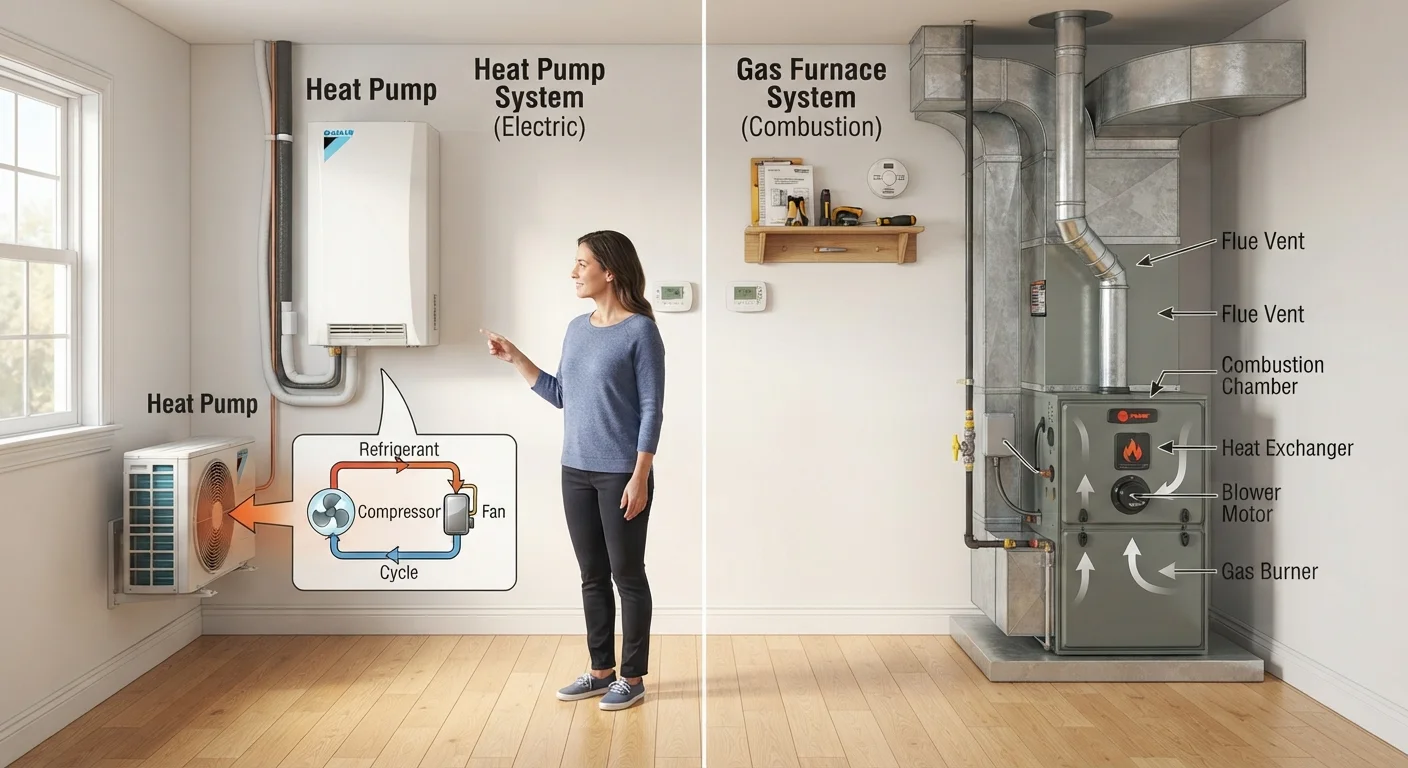
A heat pump doesn't create heat; it moves it. Using refrigerant and a compressor cycle, it extracts heat energy from outdoor air (even in cold weather) and transfers it inside. In summer, the process reverses and it acts as an air conditioner. One system handles both seasons. This is part of a broader category of energy efficiency improvements - see our practical homeowner's reference on energy upgrades for context on how HVAC fits into a whole-home efficiency plan.
A traditional HVAC system typically pairs a gas (or oil) furnace with a separate central air conditioner. The furnace combusts fuel to generate heat; the AC uses refrigerant to remove heat from indoor air. Each unit does one job well, but they're separate systems with separate maintenance considerations.
| Criterion | Heat Pump | Traditional HVAC (Furnace + AC) |
|---|---|---|
| Primary function | Heats and cools - one system | Separate units for heat and cooling |
| Energy source | Electricity only | Gas/oil for heat; electricity for AC |
| How heat is produced | Moves heat from outside air | Combusts fuel to generate heat |
| Efficiency metric | COP of 2-4 (moves more energy than consumed) | 80-98% fuel-to-heat conversion |
| Cold-weather performance | Reduced below ~35°F; needs backup at extremes | Consistent regardless of outdoor temperature |
| Typical installation complexity | Moderate to high; may need electrical upgrades | Straightforward if replacing like-for-like |
| Best climate fit | Mild to moderate (Zone 5 and warmer) | Cold climates with long winters |
Efficiency, Climate, and the Cold-Weather Limit
Heat pumps are measured by a metric called COP - for every unit of electricity consumed, a heat pump can deliver two to four units of heat energy. That ratio is what makes them efficient. Traditional furnaces convert fuel to heat at roughly 80-98% efficiency depending on the unit, but they're still generating heat rather than moving it.
The practical limitation of heat pumps is temperature. Standard air-source heat pumps lose efficiency as outdoor temperatures drop below about 35-40°F, and most struggle significantly below 0°F. Cold-climate heat pumps (a newer category) push effective operation further, but they still may require a backup resistance heater in extreme conditions. This is worth understanding alongside other whole-home decisions - good attic insulation, for instance, reduces the heating load on whichever system you choose. Our article on attic insulation as a high-impact upgrade explains why that layer of the envelope matters so much.
2-4×
Heat energy delivered per unit of electricity
The U.S. Department of Energy notes that heat pumps can deliver two to four times more heat energy than the electrical energy they consume, depending on conditions.
~35°F
Temperature where standard heat pump efficiency drops
Most conventional air-source heat pumps begin to lose efficiency meaningfully below this outdoor air temperature, though cold-climate models extend that range.
43 million
US homes using heat pumps
According to U.S. Energy Information Administration data, heat pump adoption in American homes has grown significantly over the past decade.
Cost Considerations: Upfront vs. Operating
Installation costs for heat pumps are generally higher than replacing a furnace or AC unit alone, though costs vary widely by region, home size, and whether ductwork modifications are needed. Ductless mini-split heat pumps carry different cost profiles than ducted systems.
Operating costs depend heavily on local electricity and gas prices. In areas where natural gas is inexpensive and electricity rates are high, the operating cost advantage of heat pumps narrows. Conversely, where electricity is reasonably priced - particularly if generated from renewable sources - heat pumps tend to cost less to run month to month.
Federal tax credits and state-level rebate programs have expanded incentives for heat pump installations in recent years, but eligibility rules, income limits, and program availability change. Always verify current program details directly with a licensed HVAC contractor or your state energy office before making a decision based on incentives.
Permits and Professional Installation Apply
HVAC system replacements - whether heat pumps or traditional furnaces - typically require permits and must be installed by a licensed HVAC contractor in most US jurisdictions. This is not a DIY project. Improper installation can void equipment warranties, fail inspections, and create safety hazards. Always verify your local permit requirements before work begins.
Making the Decision for Your Home
Neither system is universally superior. The right choice depends on your climate zone, existing infrastructure, home insulation quality, local utility rates, and comfort priorities.
Before committing, a qualified HVAC contractor should conduct a Manual J load calculation - a standardized method for sizing heating and cooling equipment to your specific home. Skipping this step and sizing by square footage alone often leads to oversized or undersized equipment, which causes comfort problems and shortens equipment life.
If you're comparing heat pumps to other whole-home efficiency decisions, it can help to evaluate them together. For example, pairing a heat pump with improved insulation generally produces better outcomes than either upgrade in isolation. The same logic applies to other systems - as we note in our overview of common misconceptions about tankless water heaters, efficiency upgrades often work best when the surrounding envelope and systems are also addressed.
Heat pumps also appear in other contexts worth distinguishing - if you've encountered the term while researching electric vehicles, note that EV heat pumps serve a different purpose than residential HVAC systems, though the underlying principle is similar.