

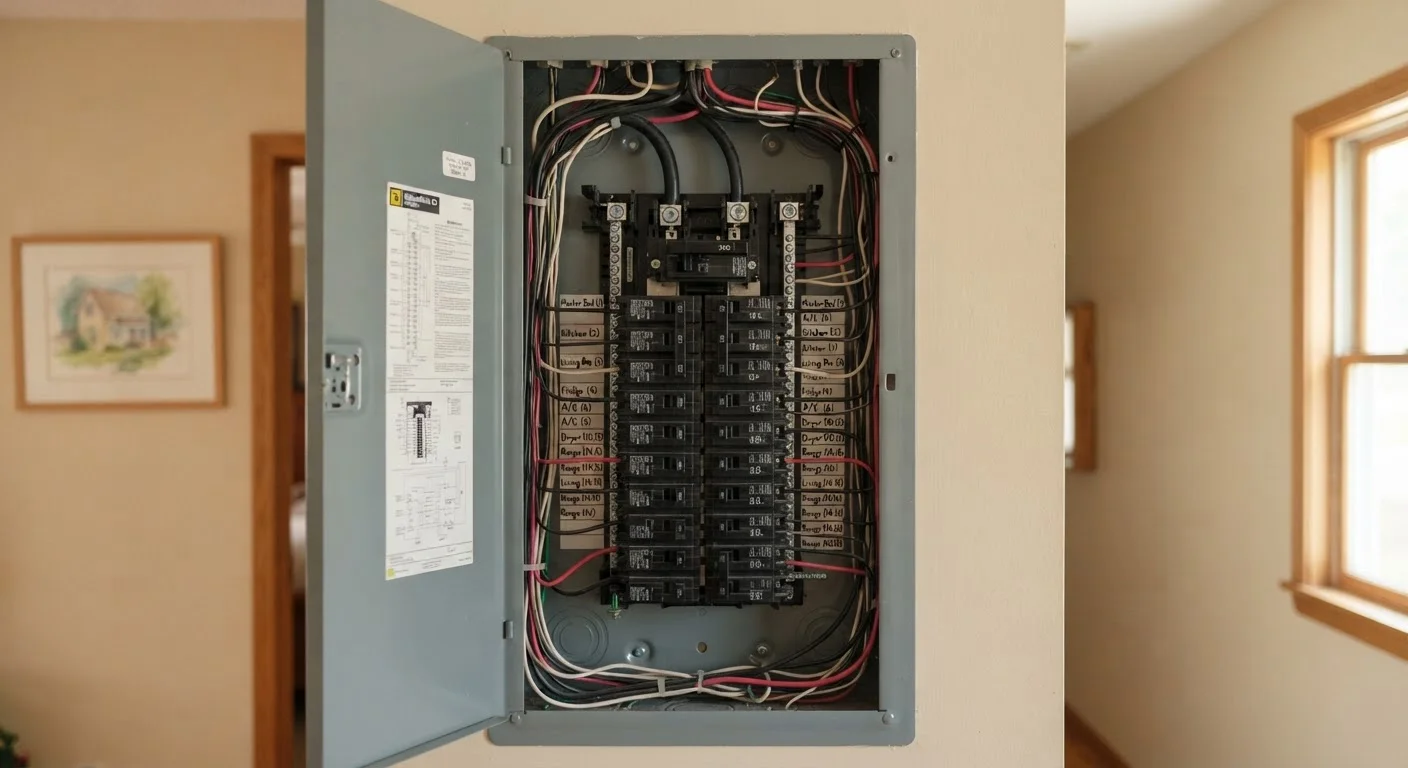
Key Takeaways
- Panels in homes built before the 1980s may be undersized or use outdated technology that no longer meets modern safety standards.
- Signs like frequently tripping breakers, flickering lights, or a fuse-based system suggest your panel may need professional evaluation.
- Electrical panel work requires a licensed electrician and almost always requires permits and inspections.
- Upgrading your panel can enable future improvements like EV charging, solar panels, and modern HVAC systems.
- Skipping proper permitting creates safety hazards and can cause complications with insurance and home sales.
Electrical Panel Upgrade
An electrical panel upgrade replaces an older breaker box or fuse box with a modern panel that can safely handle today's electricity demands. The panel - sometimes called a load center or breaker box - is the hub that distributes electrical power throughout your home. Upgrading it typically means installing a panel with higher amperage capacity and updated safety features.
Most older homes were wired for 60-100 amp service; modern households commonly require 150-200 amp service or more to support high-draw appliances, EV chargers, and home additions.
Why Older Panels Become a Problem
Homes built decades ago were designed around far lower electrical demands. A household in the 1960s might run a refrigerator, a few lights, and a television. Today's homes power multiple computers, large HVAC systems, electric vehicle chargers, induction ranges, and more - often simultaneously.
Many panels from the mid-20th century were rated for only 60 or 100 amps. Beyond capacity limits, some older panels used fuses rather than circuit breakers, or were manufactured with designs now known to have safety shortcomings. These systems weren't built for the loads modern living places on them.
Homes built before the 1980s may also carry other renovation-era concerns. If you're evaluating what's inside your walls, understanding what materials may be present is a useful starting point before any work begins.
Knob-and-Tube and Aluminum Wiring
Some older homes contain knob-and-tube wiring (pre-1940s) or aluminum branch circuit wiring (common in the 1960s-70s). These don't always require full replacement, but they do need professional evaluation. An electrician can assess whether your existing wiring is compatible with a panel upgrade or if additional remediation is needed. Insurers may also ask about these conditions when issuing or renewing a policy.
Recognizing the Warning Signs
Your panel will often signal that it's struggling before a serious problem develops. Pay attention to these indicators:
- Frequently tripping breakers - Occasional trips are normal, but repeated trips on the same circuit suggest it's being overloaded regularly.
- Flickering or dimming lights - Especially when large appliances start up, this can indicate the panel is straining to distribute power.
- A fuse-based system - If your panel uses screw-in fuses rather than flip switches, it's almost certainly time for an evaluation.
- Burning smell or scorch marks - Any smell of burning plastic near the panel warrants an immediate call to a licensed electrician.
- No room for new circuits - If you want to add a dedicated circuit and your panel is full, an upgrade may be the only safe path forward.
None of these signs are a definitive diagnosis - only a qualified electrician can assess whether an upgrade is necessary and what scope of work is involved.
Document Your Panel Before Calling an Electrician
Before scheduling an evaluation, take a photo of your existing panel label and note any breakers that trip frequently. This gives the electrician useful context before the visit. Also write down any planned additions - like a hot tub, EV charger, or workshop - so the electrician can size the new panel to accommodate future needs, not just current ones.
What an Upgrade Actually Involves
A panel upgrade typically means replacing the existing breaker box with a new one rated for higher amperage - most commonly 200 amps for a modern single-family home. The electrician coordinates with your utility provider to temporarily disconnect service, then installs the new panel, maps existing circuits, and reconnects everything properly.
Depending on the age of your home's wiring, the electrician may identify additional work needed - such as grounding updates or replacing aluminum branch wiring, which was common in the 1960s and 70s and requires special handling. This is why a thorough evaluation matters before assuming a simple swap is all that's required.
The work must be permitted and inspected. Understanding what permits involve before work begins helps homeowners know what to expect from the process. Your electrician should pull the permit - if they suggest skipping it, that's a red flag.
~60%
U.S. homes over 40 years old
According to the U.S. Census Bureau's American Housing Survey, a substantial share of the U.S. housing stock was built before 1980, when electrical standards were significantly different.
200 amps
Standard modern panel capacity
The National Electrical Code and most electricians consider 200-amp service the baseline for a modern single-family home with typical appliances and potential EV or solar infrastructure.
~51,000
Home electrical fires annually (U.S.)
The U.S. Fire Administration has reported tens of thousands of residential electrical fires each year, with outdated wiring and equipment among the contributing factors.
Why This Isn't a DIY Project
Electrical panel work is one of the clearest cases where professional involvement isn't optional - it's a safety and legal requirement. The service entrance wires that feed your panel from the utility remain energized even when your main breaker is off. Only the utility company can de-energize them, and only a licensed electrician should be working near them.
Beyond the immediate hazard, improper panel work can create hidden fire risks, void your homeowners insurance, and create serious complications when selling your home. Electrical upgrades carry risks that cosmetic DIY projects simply don't - this is one area where hiring a licensed professional is non-negotiable.
When hiring, verify that your electrician holds a current state license, carries liability insurance, and has experience with service upgrades in your jurisdiction. Ask whether they will handle the permit and coordinate with the utility.
What a Panel Upgrade Makes Possible
Beyond resolving safety concerns, a modern panel opens the door to meaningful home improvements. With adequate capacity, you can add a dedicated circuit for a home office, support a whole-home EV charger, or accommodate a heat pump system without straining your electrical infrastructure.
Homeowners planning to install EV charging at home should know that panel capacity is often the first question a qualified installer will ask. Setting up home EV charging starts with understanding what your panel can support. Similarly, energy efficiency upgrades like heat pumps and modern HVAC often require the kind of dedicated circuits a fully loaded older panel simply can't provide.
It's also worth notifying your homeowners insurer after completing the work. Significant improvements can affect your coverage, and an updated panel may actually improve your insurability in older homes.