

| Lumens needed for a living room | 1,500-3,000 lumens (general guidance) (Lighting Design Guidelines, common industry reference) |
| Warm white color temperature range | 2,700-3,000 K |
| CRI threshold for high-quality rendering | 90+ (Lighting industry standard) |
| Typical LED lifespan | 15,000-25,000 hours (U.S. Department of Energy) |
| Energy savings vs. incandescent | LEDs use roughly 75% less energy (U.S. Department of Energy) |
| IP44 rating suitability | Protected against splashing water - suitable for bathrooms (IEC 60529 Standard) |
Why Lighting Terminology Matters
Upgrading your home's lighting is one of the highest-impact improvements you can make - yet the product labels and spec sheets that come with modern fixtures can feel like a foreign language. Terms like lumens, Kelvin, and CRI appear on every box, but few of us were ever taught what they actually mean for how a room feels to live in.
This glossary exists to change that. Whether you're rethinking your kitchen's task lighting - as explored in our guide to kitchen upgrades that change how the space functions - or pairing smart bulbs with a connected home system (see our explainer on smart connected devices), a solid grasp of the core terms helps you choose purposefully rather than guessing.
| Lumens needed for a living room | 1,500-3,000 lumens (general guidance) (Lighting Design Guidelines, common industry reference) |
| Warm white color temperature range | 2,700-3,000 K |
| CRI threshold for high-quality rendering | 90+ (Lighting industry standard) |
| Typical LED lifespan | 15,000-25,000 hours (U.S. Department of Energy) |
| Energy savings vs. incandescent | LEDs use roughly 75% less energy (U.S. Department of Energy) |
| IP44 rating suitability | Protected against splashing water - suitable for bathrooms (IEC 60529 Standard) |
The Core Lighting Terms Defined
Use the reference below to look up any term you encounter when reading fixture specs, hiring an electrician, or planning a room-by-room lighting scheme. Definitions are written for practical use, not technical completeness.
Lumens
A measure of the total amount of visible light a source emits. The higher the lumen count, the brighter the light - use lumens, not watts, to compare bulb brightness.
Watts
A measure of electrical power consumed by a light source. With LEDs, lower wattage can produce the same lumens as a much higher-wattage incandescent bulb.
Color Temperature (Kelvin)
A scale that describes the appearance of a light source's color, measured in Kelvin (K). Lower values (2700-3000K) appear warm and amber; higher values (5000K+) appear cool and bluish-white.
Color Rendering Index (CRI)
A 0-100 scale indicating how accurately a light source renders colors compared to natural daylight. A CRI of 90 or above is generally considered excellent for living spaces.
Dimmer Switch
A wall control that adjusts a fixture's brightness by varying the electrical current. Not all dimmers work with all bulb types - LED-compatible dimmers are required for LED bulbs.
Layered Lighting
A design approach that combines ambient, task, and accent lighting in one room to provide flexibility, depth, and function at different times of day.
Ambient Lighting
The primary, general light source in a room - typically ceiling fixtures, recessed lights, or chandeliers - that provides overall illumination.
Task Lighting
Focused light directed at a specific work area, such as under-cabinet lights over a countertop or a desk lamp. Reduces eye strain during detail-oriented activities.
Accent Lighting
Directional light used to highlight architectural features, artwork, or decor. Track lighting and picture lights are common examples.
Efficacy (lm/W)
A measure of how efficiently a bulb converts electrical power into visible light, expressed as lumens per watt. Higher efficacy means more light output for less energy consumed.
Trim
The visible insert or ring of a recessed light fixture that sits flush with the ceiling. Trim styles affect both aesthetics and the direction of light output.
Ingress Protection (IP) Rating
A two-digit code indicating a fixture's resistance to dust and moisture. Relevant for bathrooms, kitchens, and outdoor spaces where water exposure is possible.
For a broader look at how lighting fits into whole-home energy planning, the Energy Efficiency Upgrades reference covers how electrical and lighting changes interact with insulation, HVAC, and appliance choices.
Putting the Terms to Work: Room-by-Room Basics
Knowing what the terms mean is step one. Applying them room by room is where the real difference shows up.
75%
Less energy used by LEDs vs. incandescents
According to the U.S. Department of Energy, LED bulbs use approximately 75% less energy than traditional incandescent bulbs.
25,000 hrs
Typical maximum LED bulb lifespan
The U.S. Department of Energy notes LED bulbs can last 15,000-25,000 hours, compared to roughly 1,000 hours for incandescents.
90+
CRI score considered excellent
Lighting designers generally recommend a CRI of 90 or above for spaces where accurate color perception matters, such as kitchens and bathrooms.
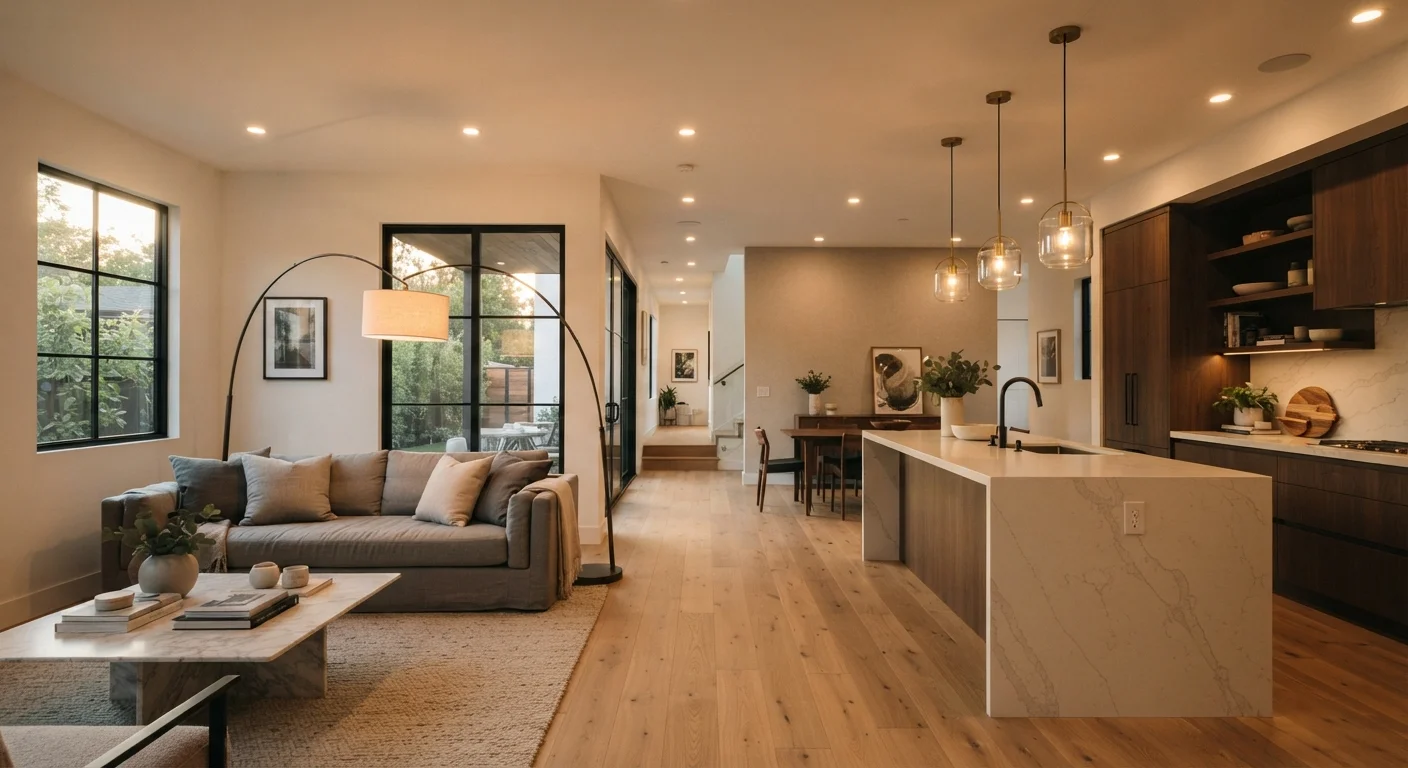
- Living rooms benefit from layered lighting - an ambient source overhead, a floor or table lamp for warmth, and accent lighting on artwork or shelving. Aim for 2,700-3,000K for a comfortable, inviting feel.
- Kitchens need higher task-lighting lumens over countertops and islands. A CRI of 90+ helps you accurately see food colors. Under-cabinet LED strips are a common and effective choice.
- Bathrooms require fixtures with an appropriate IP rating for moisture resistance. Vanity lighting placed at face level (rather than directly overhead) reduces shadows and improves visibility for grooming.
- Home offices work best with cooler color temperatures (4,000-5,000K) to support alertness, paired with dimmable overhead lighting so you can reduce intensity in the evening.
Check Dimmer Compatibility Before Buying
Not every LED bulb works smoothly with every dimmer switch. Using an incompatible pairing can cause flickering, buzzing, or reduced bulb lifespan. Always verify that your dimmer is rated for LED loads, and check the bulb manufacturer's compatibility list before purchasing. When in doubt, an electrician can advise on the right setup for your fixtures.
When any lighting project involves running new wiring, installing circuits, or modifying your electrical panel, consult a licensed electrician. Permits may be required depending on the scope of work and your local jurisdiction - always verify requirements with your local building department before starting.