

Key Takeaways
- A fresh coat of paint on the front door or trim is one of the lowest-cost, highest-visibility upgrades available.
- Landscaping details like edging, mulching, and seasonal plantings add structure and polish without major excavation.
- Exterior lighting improves both safety and nighttime curb appeal with relatively simple installation.
- Swapping dated hardware-house numbers, mailboxes, door handles-creates a cohesive, updated look for minimal spend.
- These improvements can be phased over time, making them manageable for most homeowners and budgets.
Why Curb Appeal Matters Beyond Aesthetics
The exterior of a home sets expectations before anyone steps through the door. Whether you're thinking about resale value, neighborhood pride, or simply the satisfaction of coming home to a place that looks cared for, the front of your house tells a story-and it doesn't take a full renovation to change that story.
The good news: most high-impact exterior upgrades are incremental, not structural. You don't need to replace siding, regrade the yard, or take out permits to make a real difference. The upgrades below focus on visible, achievable changes that most homeowners can approach one step at a time. For a broader look at how to stage improvements over months or seasons, see the phased home upgrade approach.
Repaint or Refinish the Front Door
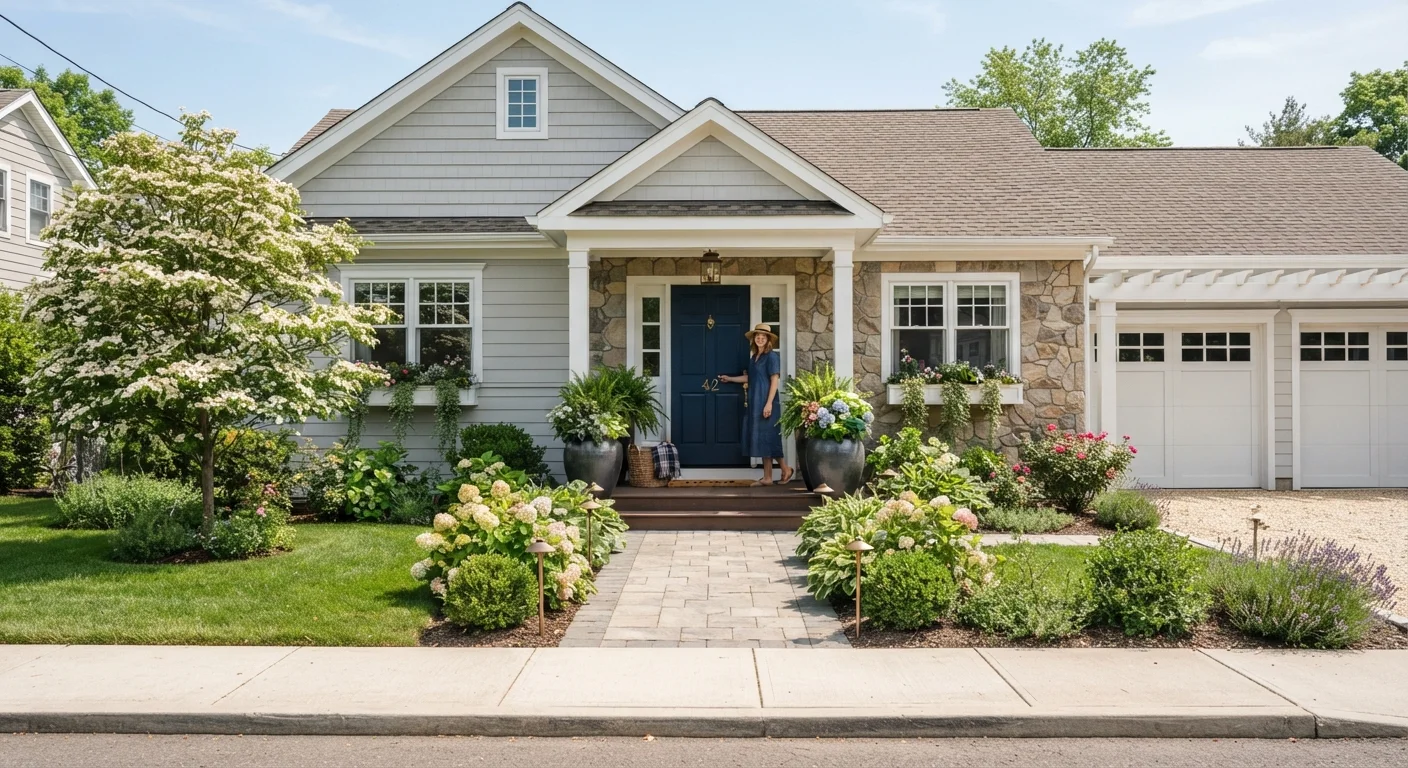
The front door occupies a small portion of your facade but draws a disproportionate amount of attention. A door in a bold, well-chosen color-navy, forest green, black, or a warm red-signals personality and care in a way that neutral siding rarely can.
Before painting, sand lightly, clean the surface thoroughly, and use an exterior-rated paint formulated for doors, which is more durable against UV and temperature swings than standard wall paint. If the door has hardware that's worn or mismatched, consider replacing it at the same time so the upgrade reads as complete. For more on what paint can realistically achieve on exterior surfaces, see paint as a home upgrade.
A bold front door color signals care and personality with minimal effort or cost.
Update Exterior Hardware and House Numbers
House numbers, a mailbox, door handles, and light fixtures near the entry are small objects with outsized visual weight. When these elements are mismatched in finish or clearly dated, they fragment what could otherwise be a cohesive look.
Choose a finish-matte black, brushed nickel, oil-rubbed bronze-and apply it consistently across all visible hardware elements. Large-format house numbers in a clean typeface are especially effective; they improve legibility for visitors and emergency services while giving the entry a modern, intentional feel.
Consistent hardware finishes across door, mailbox, and fixtures unify the entire entry zone.
Add or Refresh Exterior Lighting
Homes that look great in daylight often lose that quality after dark simply because the lighting is inadequate, poorly aimed, or uses fixtures that clash with the architecture. Well-placed exterior lighting extends curb appeal into evening hours and also improves safety along walkways and steps.
Consider path lights leading to the entry, wall-mounted sconces flanking the door, and accent lighting that highlights a mature tree or architectural feature. Solar-powered and low-voltage LED options have become more reliable and easier to install without running new wiring-though any work involving your home's main electrical panel should be handled by a licensed electrician. For a full breakdown of placement strategies and light types, outdoor lighting upgrades covers the topic in depth.
Path lights and entry sconces extend curb appeal into evening hours while improving safety.
Edge, Mulch, and Define Landscape Beds
Overgrown or shapeless landscape beds undermine even an otherwise attractive home. Clean bed edges-where lawn meets planting area-create a sense of order that reads immediately from the street. A flat spade or half-moon edger creates crisp lines without power equipment.
Follow edging with a fresh layer of mulch (typically 2-3 inches deep, kept away from plant stems) to suppress weeds, retain moisture, and give beds a finished appearance. This combination alone can transform a front yard's perceived maintenance level. For a broader look at how landscaping functions as a structural upgrade-not just decoration-see landscaping as a home upgrade.
Clean bed edges and fresh mulch signal maintenance and add immediate visual structure.
Add Potted Plants and Seasonal Color
Flanking your front entry with large planters creates a sense of arrival and frames the door without any permanent landscaping commitment. This approach works particularly well for homeowners in rental situations or those who want flexibility to swap plantings by season.
Choose container sizes proportional to your entryway-small pots on a wide porch tend to look incidental rather than intentional. Thriller-filler-spiller planting combinations (a tall focal plant, mid-height filler, and trailing plant) maximize visual impact per pot. Hardy, low-maintenance options like ornamental grasses, boxwood, or evergreen shrubs provide year-round structure even when flowering annuals fade.
Large, well-planted containers flanking the entry create a sense of arrival with no permanent changes.
Clean and Repair Walkways and the Driveway Apron
Cracked, stained, or weed-ridden walkways undercut the effect of every other improvement. Pressure washing concrete or brick paths removes years of grime and biological growth relatively quickly. For cracks, a concrete filler or patching compound can stabilize minor damage-though significant structural cracking or settling warrants a professional assessment before patching.
The driveway apron-the section connecting your driveway to the street-is particularly visible and often overlooked. Keeping it clean, edged, and free of weeds or encroaching grass makes the entire property feel more cared for from the moment someone pulls up. If you're thinking about longer-term hardscape improvements alongside softscape planning, balancing hardscape and softscape offers useful framing.
Pressure-washed walkways remove years of grime and immediately refresh the path to your door.
Refresh or Replace the Garage Door
On many homes, the garage door covers a larger portion of the facade than any other single element-sometimes more than 30% of the visible front. A door that's faded, dented, or stylistically out of place with the rest of the home can anchor the entire exterior in a dated look.
Short of replacement, a thorough cleaning and a coat of appropriate paint (on steel or fiberglass doors) can refresh the appearance meaningfully. If the door is beyond cosmetic help, replacement is among the more impactful exterior investments available, with a significant portion of the cost often recoverable in perceived home value. Garage door replacement explains why it ranks so highly among exterior upgrades.
The garage door can occupy a third of your home's facade-its condition matters more than most elements.
Putting It All Together
The most effective curb appeal improvements share one quality: they address what a visitor actually notices first. That typically means the entry sequence-pathway, door, lighting, and framing plants-followed by the condition of surfaces like trim and siding. Tackle those zones in order and the cumulative effect is far greater than any single change alone.
Start With a Walkaway Assessment
Before spending anything, walk to the edge of your property or the opposite side of the street and look at your home the way a visitor would. Note what draws your eye first-positively or negatively. That honest first impression typically identifies the one or two changes that will have the greatest impact. Photograph the front so you can study it without the distraction of familiarity.
If you want to go deeper on the balance between hardscape elements like walkways and softscape plantings, planning an outdoor space that works together is a useful next step. And if you discover peeling trim during your assessment, spot-repairing exterior trim paint can resolve the issue without a full repaint.