

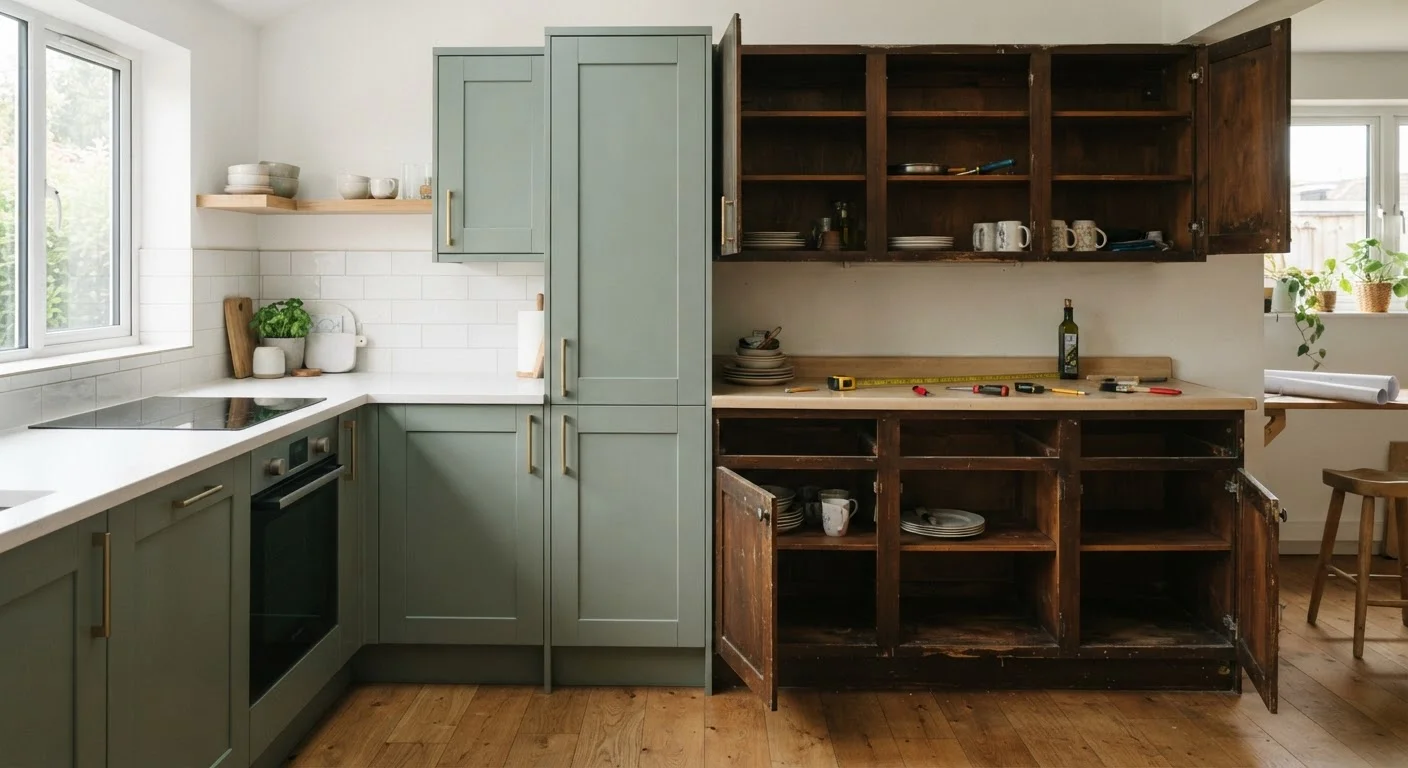
Key Takeaways
- Refacing replaces doors, drawer fronts, and visible veneer but keeps the existing cabinet boxes in place.
- Full replacement removes everything and allows layout changes, deeper storage upgrades, and structural fixes.
- Refacing typically costs less and disrupts daily life for a shorter period than full replacement.
- The condition and configuration of your current cabinet boxes is the single most important factor in this decision.
- Neither option automatically adds resale value - quality of execution and fit for the home matter most.
Option A
Cabinet Refacing
The cosmetic overhaul that preserves your existing structure.
Best for: Homeowners whose cabinet boxes are solid and square but want a fresh look without a full gut renovation.
Option B
Full Cabinet Replacement
The comprehensive reset that changes layout, storage, and all materials.
Best for: Homeowners whose cabinets are damaged, poorly configured, or whose kitchen layout genuinely needs to change.
If your cabinet boxes are structurally sound and you mainly dislike the look
Cabinet Refacing
Refacing delivers a meaningful visual transformation without the cost or disruption of removing and replacing the underlying structure.
If your kitchen layout doesn't work for how you actually cook and move
Full Cabinet Replacement
Only full replacement lets you relocate cabinets, change configurations, or add storage where it didn't exist before.
If cabinet boxes show water damage, warping, or pest damage
Full Cabinet Replacement
Refacing over compromised boxes is a short-term fix that will need revisiting soon; replacement addresses the root problem.
If you're working with a limited renovation budget
Cabinet Refacing
Refacing generally costs a fraction of full replacement, making it the more accessible path when budget is a real constraint.
If you're planning a broader kitchen renovation involving appliances or plumbing
Full Cabinet Replacement
When walls are already open and trades are already scheduled, coordinating full replacement is far more practical than working around existing boxes.
What Each Approach Actually Involves
Understanding the scope of each option prevents the most common mistake homeowners make: assuming refacing and replacement are interchangeable paths to the same destination.
Cabinet refacing means keeping every existing cabinet box exactly where it is, then replacing only the parts you see - doors, drawer fronts, and the veneer applied to exposed box sides and face frames. Hardware, hinges, and sometimes interior shelving can be updated at the same time. The result looks like a new kitchen from the outside, but the underlying structure is unchanged.
Full cabinet replacement removes everything - boxes, doors, hardware - down to the studs. New cabinets are installed from scratch, which means layout changes, plumbing or electrical adjustments, and entirely new interior storage features are all on the table. This is a true construction project requiring coordination with other trades and temporary loss of kitchen use. For a broader look at what kitchen-level changes actually shift functionality, see kitchen upgrades that change how the space functions.
| Criterion | Cabinet Refacing | Full Cabinet Replacement |
|---|---|---|
| Scope | Doors, fronts, veneer only | Everything, including boxes |
| Layout changes possible | No | Yes |
| Relative cost | Lower | Higher |
| Typical timeline | Days to one week | Two to four weeks or more |
| Kitchen usability during work | Mostly usable | Largely unusable |
| Addresses structural damage | No | Yes |
| Interior storage upgrade | Limited | Full flexibility |
The Condition of Your Boxes Is the Deciding Factor
Before weighing cost or style, assess the cabinet boxes themselves. Open every door. Press on the interior walls and floor of each cabinet. Look for soft spots, swelling, discoloration from moisture, or frames that are out of square. If the boxes pass that inspection - firm, square, and dry - refacing becomes a reasonable option.
If you find warped shelving, water stains creeping up from under the sink, or faces that don't close flush anymore, refacing will only mask those problems temporarily. A professional installer will typically flag compromised boxes before beginning a refacing job, but it's worth doing your own audit first.
40-60%
Typical refacing cost as share of replacement
Industry estimates consistently place refacing at a fraction of full replacement cost, though actual figures vary by region, materials, and kitchen size.
~70%
Kitchen renovation cost typically recouped at resale
According to Remodeling Magazine's Cost vs. Value reports, major kitchen remodels historically recoup roughly 60-80% of cost at resale - not a guaranteed return.
Cabinet layout is a separate question from box condition. Even perfectly sound boxes may be arranged in ways that limit storage or impede workflow. Refacing cannot change where a cabinet sits; only replacement can. This same principle applies in other areas of the home - the bathroom refresh vs. full renovation distinction follows identical logic about scope versus surface.
Cost, Timeline, and Disruption
Cost varies significantly by kitchen size, material choices, and region, so treat any figures here as general context rather than quotes for your project. That said, refacing is consistently less expensive than full replacement - industry estimates generally place refacing at roughly 40-60% of comparable replacement costs, though your actual numbers will depend on material grades and local labor rates. Always get itemized estimates from licensed contractors before committing.
Timeline differences are equally significant. A refacing project on an average-sized kitchen typically runs several days to about a week. Full replacement - including demo, installation, and finishing - often stretches two to four weeks or longer, especially when plumbing or electrical work is involved. During replacement, the kitchen is largely unusable, which affects meal planning and daily routines in ways refacing does not.
Permits and Professional Involvement
Refacing is generally considered a cosmetic project and rarely requires a permit, but full cabinet replacement - especially when it involves moving plumbing lines, adding electrical outlets, or altering ventilation - typically does. Requirements vary by municipality, so check with your local building department before work begins. Hiring a licensed contractor helps ensure inspections are properly handled.
The repair-versus-replace logic here echoes decisions in other home systems. The window repair vs. replacement framework offers a useful parallel: when the core structure is sound, targeted intervention usually makes sense; when it's compromised, full replacement avoids compounding costs.
Making the Right Call for Your Kitchen
If your boxes are solid, your layout serves you well, and your goal is purely aesthetic - new door style, different finish, updated hardware - refacing is a practical, cost-conscious path. It delivers genuine visual impact without the scope creep that full replacement often brings.
If your boxes are damaged, your kitchen configuration has never worked for your household, or you're already planning disruptive renovations nearby, full replacement offers a reset that refacing simply cannot. Spending on refacing when boxes need replacing is, at best, a deferred expense.
Neither option is universally better. The smart move is diagnosing your specific situation honestly - starting with the boxes - rather than defaulting to the more dramatic option because it sounds more thorough. For a broader framework on weighing restoration against replacement across categories, the new vs. refurbished tradeoff guide applies similar thinking across product decisions.