

| Clean Title Definition | No total-loss declaration; no major state-flagged damage designation |
| Typical Salvage Threshold | Repair cost exceeds 70%-90% of actual cash value (Varies by state) |
| Rebuilt Title | Salvage vehicle repaired and reinspected; road-legal but permanently marked |
| Resale Value Impact (Salvage/Rebuilt) | Typically 20%-40% below comparable clean-title vehicles (General market estimate; varies by condition and state) |
| Insurance Coverage | Comprehensive and collision often unavailable for salvage; limited for rebuilt |
| Permanent Record | Title designations stay with the vehicle and appear in history reports |
Why Title Status Matters
When a vehicle changes hands - whether through a private sale, auction, or dealership - the title document tells a critical part of its story. Title status is a legal designation assigned by state motor vehicle agencies that reflects a vehicle's condition history. It isn't just paperwork; it directly affects what you can do with a car, how much it's worth, and whether an insurer will cover it fully.
Understanding the differences between a clean title, a salvage title, and a rebuilt title is essential for anyone who owns, buys, or sells a vehicle. For a broader look at ownership responsibilities beyond the title itself, see our guide to comprehensive car ownership.
| Clean Title Definition | No total-loss declaration; no major state-flagged damage designation |
| Typical Salvage Threshold | Repair cost exceeds 70%-90% of actual cash value (Varies by state) |
| Rebuilt Title | Salvage vehicle repaired and reinspected; road-legal but permanently marked |
| Resale Value Impact (Salvage/Rebuilt) | Typically 20%-40% below comparable clean-title vehicles (General market estimate; varies by condition and state) |
| Insurance Coverage | Comprehensive and collision often unavailable for salvage; limited for rebuilt |
| Permanent Record | Title designations stay with the vehicle and appear in history reports |
Clean Title: The Baseline Standard
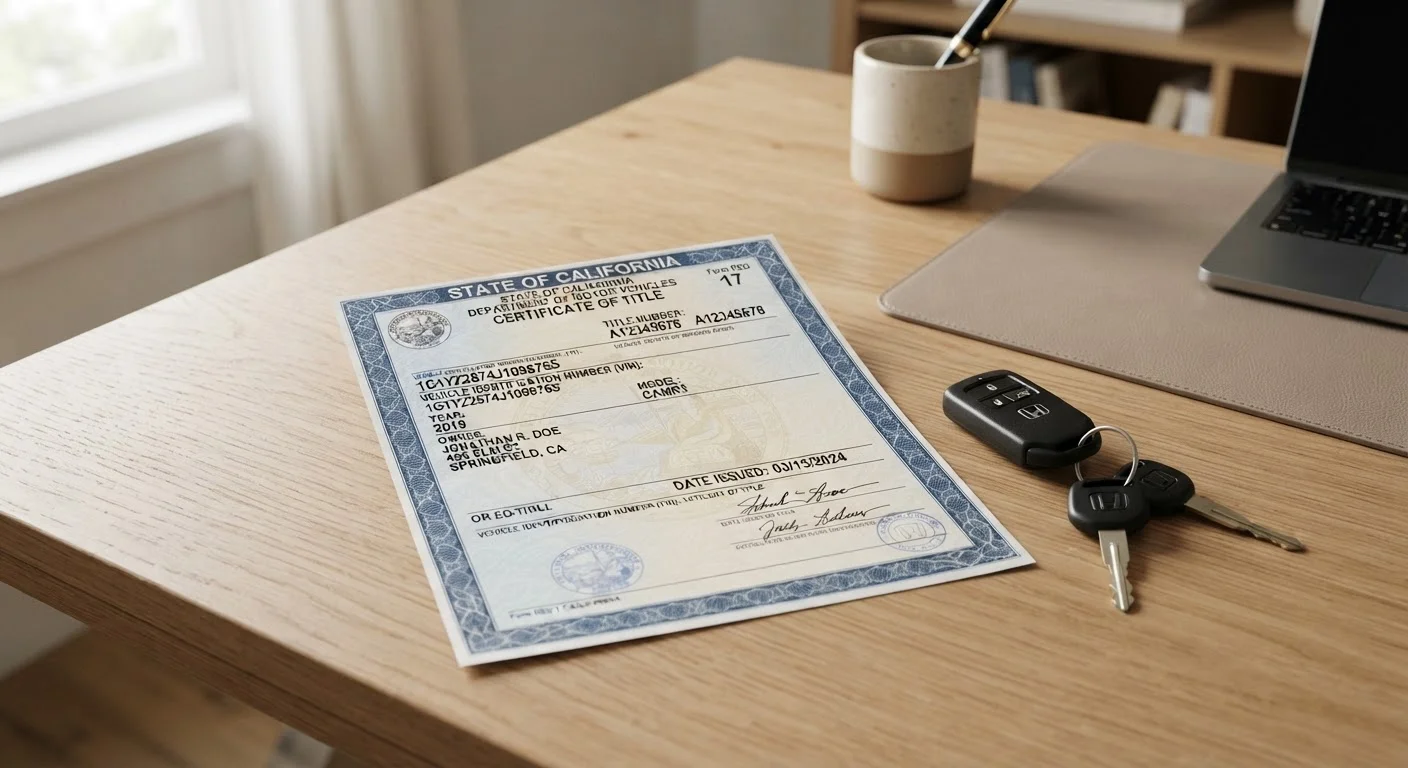
A clean title means the vehicle has not been declared a total loss, has no major unresolved damage on record, and meets the standard requirements of the issuing state's DMV. It is the default status for most vehicles and what most buyers assume they're getting unless told otherwise.
A clean title does not mean the vehicle has never been in an accident or has no mechanical history. It simply means no insurer has written it off as a total loss and no state agency has flagged it with a special designation. For that reason, pairing a title check with a full vehicle history report is good practice. Learn what to focus on in our article on how to read a vehicle history report.
Salvage Title: When a Vehicle Is Declared a Total Loss
A salvage title is issued when an insurance company declares a vehicle a total loss - typically when repair costs exceed a defined percentage of the vehicle's actual cash value, commonly between 70% and 90% depending on the state. The threshold varies by jurisdiction, which is why the same vehicle may receive different designations in different states.
Common reasons for a salvage designation include severe collision damage, flood or hail damage, theft recovery with significant damage, or fire. Once a salvage title is issued, the original title is cancelled and replaced.
Clean Title
A standard vehicle title indicating no total-loss declaration or major state-issued damage designation. It does not guarantee the vehicle has no accident history.
Salvage Title
A title issued by a state DMV when an insurer declares a vehicle a total loss, typically because repair costs exceed a set percentage of the vehicle's value. Salvage-titled vehicles cannot legally be driven until repaired and reinspected.
Rebuilt (Reconstructed) Title
A title issued to a previously salvage-titled vehicle that has been repaired and passed a state inspection. The rebuilt designation remains on the title permanently.
Actual Cash Value (ACV)
The market value of a vehicle at the time of a loss, used by insurers to determine whether a vehicle should be declared a total loss. It accounts for depreciation.
Total Loss
An insurer's determination that a damaged vehicle's repair costs meet or exceed the threshold percentage of its actual cash value, making repair economically impractical.
Junk Title
A designation for vehicles deemed suitable only for scrap or parts. Junk-titled vehicles generally cannot be retitled or returned to legal road use.
Key implications for salvage-titled vehicles:
- They cannot legally be driven on public roads in most states until inspected and retitled.
- Most standard auto insurers will not offer comprehensive or collision coverage on a salvage-titled vehicle.
- Resale value is significantly reduced - often 20% to 40% below comparable clean-title vehicles, depending on condition and repair quality.
- Financing through traditional lenders is often unavailable or difficult to arrange.
Rebuilt Title: After Repair and Reinspection
A rebuilt title (sometimes called a reconstructed title) is issued when a salvage-titled vehicle has been repaired to a condition that passes a state-mandated inspection. The specifics of what's required vary considerably by state - some require detailed documentation of replacement parts, others focus primarily on safety systems.
A rebuilt title vehicle is road-legal and can be registered, but the rebuilt designation stays with the vehicle permanently. It will appear in any vehicle history report, which prospective buyers and insurers will see. You can learn more about how these events are recorded in our VIN and vehicle history explainer.
Get an Independent Inspection Before Buying Rebuilt
Because state reinspection standards for rebuilt vehicles vary widely, a passing inspection does not guarantee high-quality repair work. Before purchasing any rebuilt-title vehicle, have it independently inspected by a qualified mechanic who can assess structural integrity, safety systems, and prior repair quality. This step is strongly advisable and not a substitute for the required state inspection.
What rebuilt status means practically:
- Some insurers will offer liability coverage but may decline comprehensive and collision.
- Resale value remains below clean-title equivalents, though typically higher than a salvage-titled vehicle.
- The quality of the rebuild varies widely; a professional inspection by a qualified mechanic is strongly advisable before purchasing.
- If you're transferring ownership of a rebuilt-title vehicle, state requirements apply - see our overview of what's involved in transferring a car title.
Other Designations You May Encounter
Beyond the three primary categories, several other title designations appear in some states:
- Lemon Law Buyback
- Issued when a manufacturer repurchases a vehicle under a state lemon law due to recurring defects. The vehicle may have been repaired and resold.
- Flood / Water Damage
- Some states separately designate flood-damaged vehicles even if they were not declared total losses. Flood damage can cause long-term electrical and corrosion issues that are difficult to detect.
- Junk Title
- Assigned to vehicles deemed suitable only for parts or scrap. Junk-titled vehicles generally cannot be retitled or returned to road use.
Title designations vary by state, so always verify the specific rules in the state where a vehicle was most recently titled. Comparing vehicles with different histories is similar in principle to evaluating what CPO and used labels actually mean - the label is a starting point, not the whole picture.
70%-90%
Typical total-loss threshold by repair cost
State regulations set the percentage of actual cash value that triggers a salvage title; the range varies significantly across the US.
20%-40%
Typical resale value reduction for salvage/rebuilt vehicles
General market estimates indicate rebuilt and salvage-titled vehicles sell at a significant discount relative to clean-title equivalents in similar condition.