

Key Takeaways
- The upfront price of a product rarely reflects its true long-term cost when subscriptions are involved.
- Calculate a total cost of ownership by multiplying the monthly fee by your realistic usage period before buying.
- Some features advertised on the box may be locked behind a paid tier you haven't accounted for.
- Cancellation policies and data portability matter - check them before committing.
- A low sticker price paired with a mandatory subscription can cost more over two years than a premium one-time purchase.
Subscription-Embedded Cost
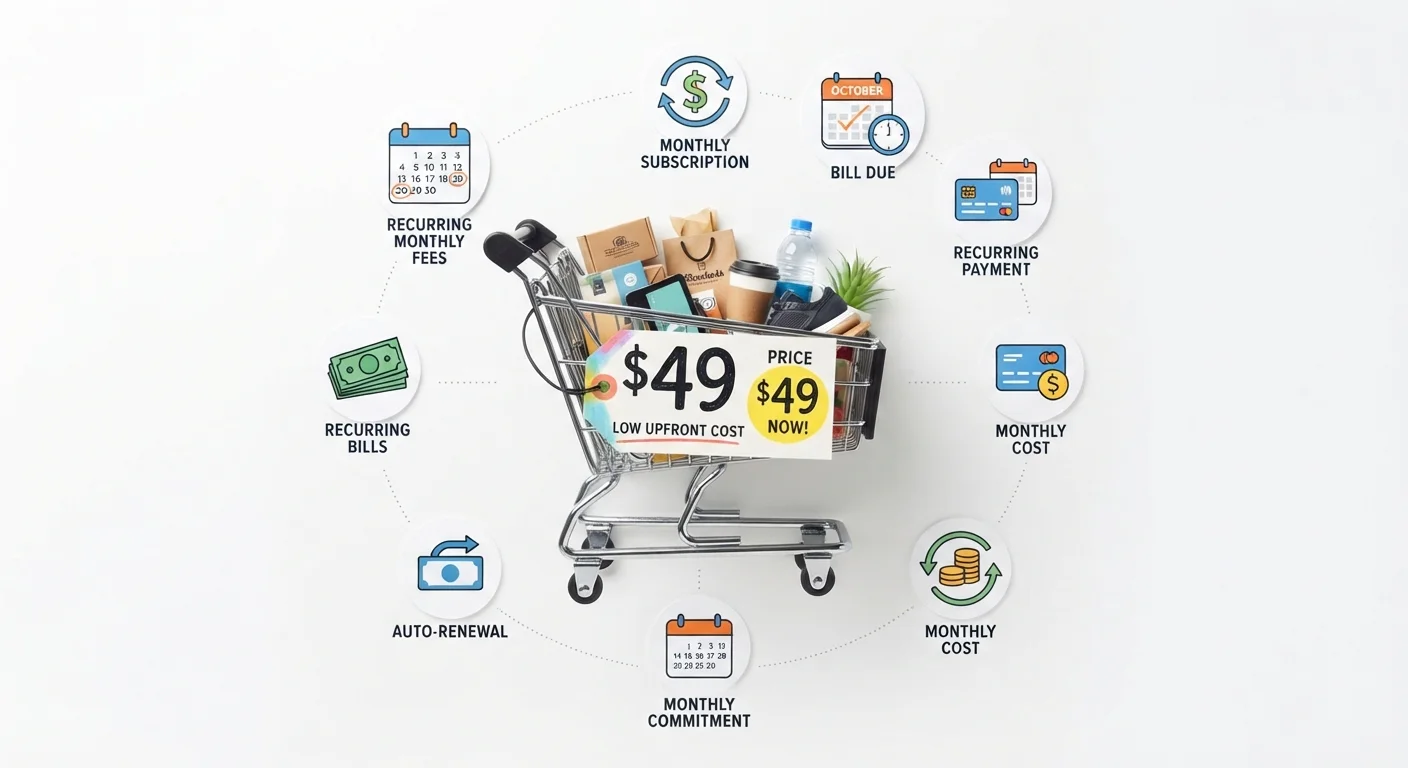
A subscription-embedded cost is the total amount you pay for a product or service when you include not just the upfront price but also any recurring fees required to access its full features over time. Many modern products - from smart home devices to software tools - are priced low at purchase but depend on ongoing subscriptions to remain functional or useful. Ignoring those recurring charges can make a purchase look much cheaper than it actually is.
Economists sometimes call this a 'razor and blades' model: the initial product is sold at a low margin while recurring consumables or services generate the bulk of revenue. In the digital era, software-as-a-service (SaaS) pricing applies the same logic to apps, devices, and connected hardware.
Why the Sticker Price Is No Longer the Whole Story
Walk into any electronics or home goods retailer and you'll find products priced attractively - until you read the fine print. Security cameras, robot vacuums, fitness trackers, and even some appliances now bundle ongoing subscriptions to unlock storage, data analysis, or remote access. The device itself may cost $80, but a required cloud plan at $10 per month means you're spending $200 in fees alone over the first year and a half.
This shift changes how consumers need to evaluate purchases. A product's advertised price is now better understood as an entry fee rather than a complete transaction. The broader gadget subscription landscape illustrates how pervasive this model has become across electronics - software, storage, and premium features are increasingly metered rather than owned outright.
~$1,000+
Average US household annual subscription spend
Consumer surveys in recent years have estimated typical US households spend over $1,000 annually across streaming, software, and connected-device subscriptions combined.
2-3x
Subscription cost vs. device price over 2 years
For many mid-range connected devices, cumulative subscription fees over a two-year period commonly exceed the original device purchase price by two to three times.
42%
Consumers who underestimate recurring costs
Research from consumer finance organizations has found that a substantial share of buyers underestimate total subscription costs at the point of purchase.
Calculating True Cost of Ownership
The most practical tool a consumer can apply is a simple total cost of ownership (TCO) calculation. Before purchasing, identify three numbers: the upfront device or product price, the monthly subscription cost, and the number of months you realistically expect to use it. Multiply the monthly fee by the usage period and add it to the purchase price. That sum is the real number you're committing to.
Compare that figure against alternatives - including premium one-time-purchase products that carry no subscription. Whether a subscription or one-time purchase saves more over time depends heavily on actual usage patterns, not just the per-month rate. A $200 device with no recurring fees may be more economical than a $99 device requiring $15 per month after just eight months.
Build a 24-Month Cost Estimate
Two years is a reasonable baseline for most consumer electronics and connected devices. Before purchasing any subscription-linked product, multiply the monthly plan cost by 24 and add it to the upfront price. This single number gives you a comparable figure you can use across different products - regardless of how each one is packaged or marketed.
Hidden Tiers and Feature Paywalls
Not all subscription costs are mandatory - but some features prominently showcased in advertising are quietly locked behind paid tiers. A smart doorbell might record and display live video for free, but storing footage for later review requires a subscription. A fitness device might track your workouts locally but reserve trend analysis and sleep coaching for premium subscribers.
Before purchasing, look up the product's pricing page and compare what the free tier actually includes against what you expect to use day-to-day. If the free tier doesn't cover your core use case, treat the subscription as a required cost rather than an optional upgrade. Evaluating whether a subscription is worth keeping is a useful exercise both before and after a purchase.
Free Tiers Are Often Designed to Upsell
A free subscription tier is a business decision, not a consumer benefit - it's structured to demonstrate value just long enough to convert users to paid plans. That doesn't make it useless, but it means the free tier's limitations are deliberate. Evaluate the free tier on its own merits and assume it will remain limited rather than expecting it to expand over time.
Protecting Yourself Before You Commit
A few due-diligence steps can prevent expensive surprises. First, check cancellation terms: can you cancel monthly, or are you locked into an annual plan? Second, confirm whether the device retains meaningful functionality without the subscription - some products become largely inert without cloud connectivity. Third, review data portability: if you cancel, can you export your data, or does it disappear?
Subscription accumulation is also a real budgeting hazard. A household with several connected devices, each carrying a modest monthly plan, can easily accumulate $50-$100 in recurring product-related fees before accounting for streaming or software services. Auditing your active digital subscriptions periodically helps keep that total visible and intentional rather than quietly compounding.