

Key Takeaways
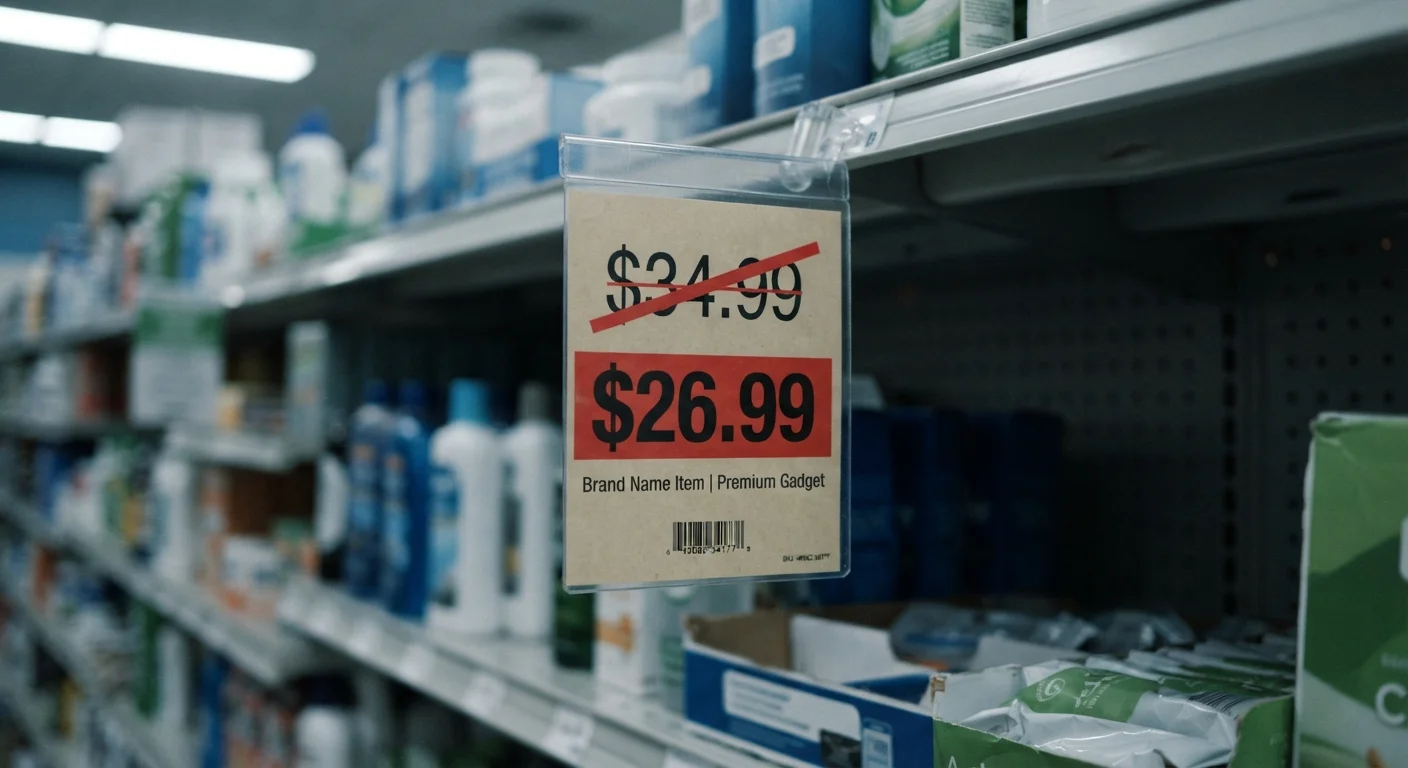
- A sale price is only genuine savings if the reference price reflects what the item regularly sold for.
- Retailers are legally permitted to set reference prices in ways that can make discounts look larger than they are.
- Your actual savings depend on what you would have paid elsewhere, not the number crossed out on a tag.
- Price history tools and cross-retailer comparisons are reliable ways to verify whether a deal is real.
- Buying a discounted item you don't need produces no savings - only a smaller loss.
Why Sale Pricing Is More Complicated Than It Looks
At first glance, a sale price seems straightforward: an item normally costs X, it's now priced at Y, and the difference is your savings. The reality is more layered. For a discount to represent genuine savings, the original price has to be a price the item actually sold at - or at least was genuinely offered at - for a meaningful period. When that condition isn't met, the "savings" figure is largely cosmetic.
Consumer protection agencies in the US, including the Federal Trade Commission, have historically warned that comparison pricing - showing an original price alongside a sale price - can mislead shoppers when the higher price was never a real transaction price. Retailers aren't required to prove every unit sold at the reference price, only that it was legitimately offered. That leaves considerable room for reference prices that inflate the apparent discount. For a closer look at how retailers construct these markdowns, see how retailers plan and price markdowns.
Myth
If the tag shows a percentage off, I'm saving that percentage.
Fact
You only save that percentage relative to the reference price - and the reference price may not reflect what the item realistically cost before the sale.
Percentage-off claims are calculated against a stated original or "regular" price. If that price was set artificially high, or was only ever offered briefly, the percentage figure exaggerates your actual saving. The relevant question is: what would a comparable item cost you at another retailer today? That market price is a more honest baseline than the number crossed out on a tag.
Myth
Sale events like holiday weekends guarantee the lowest prices of the year.
Fact
Promotional events often feature selective discounts, and many items are available at equivalent or lower prices at other times.
Retailers concentrate marketing spend around major sale events, which creates an expectation of deep, broad discounts. In practice, price data shows that the deepest discount on any given item can occur weeks before or after a headline event. Some categories - like televisions or apparel - do see genuine seasonal pricing pressure, but blanket assumptions about event pricing lead many shoppers to skip better opportunities or rush unnecessary purchases. The patterns behind this are detailed further in what 'original price' claims really mean.
Myth
Outlet store prices are discounted because the merchandise comes from full-price stores.
Fact
A large share of outlet merchandise is manufactured specifically for outlet channels and was never sold in full-price retail stores.
Many major retailers produce distinct product lines intended solely for their outlet locations. These items may carry a similar brand identity but use different materials, specifications, or quality tiers than their full-price counterparts. The "original price" shown on an outlet tag may reference a full-price equivalent that was never actually the same product. Understanding what outlet pricing actually signals helps you evaluate whether an outlet purchase represents genuine value.
Myth
Buying something on sale always means I spent less than I would have otherwise.
Fact
If you wouldn't have purchased the item at full price, the sale price is still an unplanned expenditure - not a saving.
Savings require a counterfactual: you intended to buy something, you paid less than you expected to. Purchasing an item solely because a promotion made it feel affordable doesn't satisfy that condition. Consumer behavior research consistently shows that promotional framing increases purchase likelihood for items consumers had not planned to buy, which benefits the retailer's revenue while generating no measurable financial benefit for the shopper.
Myth
If I stack multiple discounts, I'm always getting the best possible deal.
Fact
Combining discounts doesn't guarantee the final price is competitive - the base price still needs to be evaluated independently.
Layering a coupon, a cashback offer, and a store promotion can produce a lower net price, but only if the starting price is fair market value. Stacking discounts on an inflated reference price can still result in paying more than you would at a competing retailer with no promotion at all. When multiple savings methods can combine explains the specific conditions under which stacking genuinely works in the shopper's favor.
How to Measure What You're Actually Saving
The most reliable benchmark for real savings isn't the crossed-out sticker price - it's the price you'd pay if you walked into a different store or searched a competing retailer today. If the "sale" price at Store A matches or exceeds the everyday price at Store B, no savings have occurred regardless of the percentage-off banner.
~87%
Shoppers who trust strikethrough pricing
Consumer research published by academic retail studies has found the large majority of shoppers assume reference prices on tags reflect genuine prior selling prices, even when those prices were rarely transacted.
6 in 10
Surveyed holiday items found cheaper post-event
Retail price-tracking analyses have repeatedly found that a majority of items promoted during major sale events return to equivalent or lower prices within weeks of the event's end.
Price-tracking browser extensions and history tools log how an item's price has changed over time on a given retailer's site. If a product listed at "40% off" has spent most of the past six months at exactly that "sale" price, the reference price carries little weight. This is especially common around major promotional events. Research on promotional pricing patterns has found that some items see their reference prices raised weeks before a sale event so the discount appears deeper - a pattern also explored in why Black Friday prices aren't always the lowest of the year.
Cross-retailer price comparison is another practical filter. Comparing prices meaningfully across sellers means checking equivalent models, configurations, and warranty terms - not just the headline number. A lower price on a stripped-down configuration is not the same discount as it appears.
Dynamic Pricing Can Shift the Goalposts
Online retailers adjust prices in real time based on demand signals, browsing behavior, and inventory levels. A price you checked yesterday may not be the price shown today - and may not be the price shown to another shopper at the same moment. This means a single price check is rarely sufficient for high-stakes purchases. How dynamic pricing works explains why the same item can carry different price tags on the same day.
Finally, consider the necessity test. Even a genuine 30% price reduction produces no net savings if you were not going to buy the item anyway. Spending money you had not planned to spend - even at a lower price than usual - is a cost, not a saving. Before completing any discounted purchase, a structured approach helps: a pre-purchase checklist for evaluating any deal gives you the questions worth asking before checkout.