

Key Takeaways
- Retailers deliberately maintain separate pricing structures for online and physical channels due to different cost bases.
- Operational costs - rent, staffing, warehousing - directly shape where a retailer sets its prices.
- Online prices shift more frequently than in-store tags, sometimes multiple times per day.
- Price-match policies can bridge the gap, but eligibility rules vary significantly by retailer.
- Neither channel is consistently cheaper - the advantage depends on category, timing, and retailer strategy.
Option A
Online Pricing
The dynamic, algorithm-driven channel.
Best for: Shoppers who can wait for delivery, compare easily across sellers, and want access to a broader inventory.
Option B
In-Store Pricing
The fixed-overhead, tactile retail experience.
Best for: Shoppers who need items immediately, want to inspect before buying, or are negotiating on high-ticket purchases.
If you need the item today and want to physically inspect it
In-Store Pricing
Immediate availability and the ability to assess quality in person often outweigh modest price differences, particularly for apparel, furniture, and perishables.
If you're buying electronics or household goods and can wait for delivery
Online Pricing
Digital channels typically offer broader price competition, easier comparison across sellers, and more frequent promotional windows.
If you're making a large purchase and want leverage
In-Store Pricing
Physical stores are more likely to price-match or negotiate on high-ticket items, especially near the end of a sales cycle.
If you want to track price history before committing
Online Pricing
Digital prices are more easily tracked over time using browser tools, making it simpler to identify genuine reductions versus inflated baselines.
Why Pricing Differs Between Channels
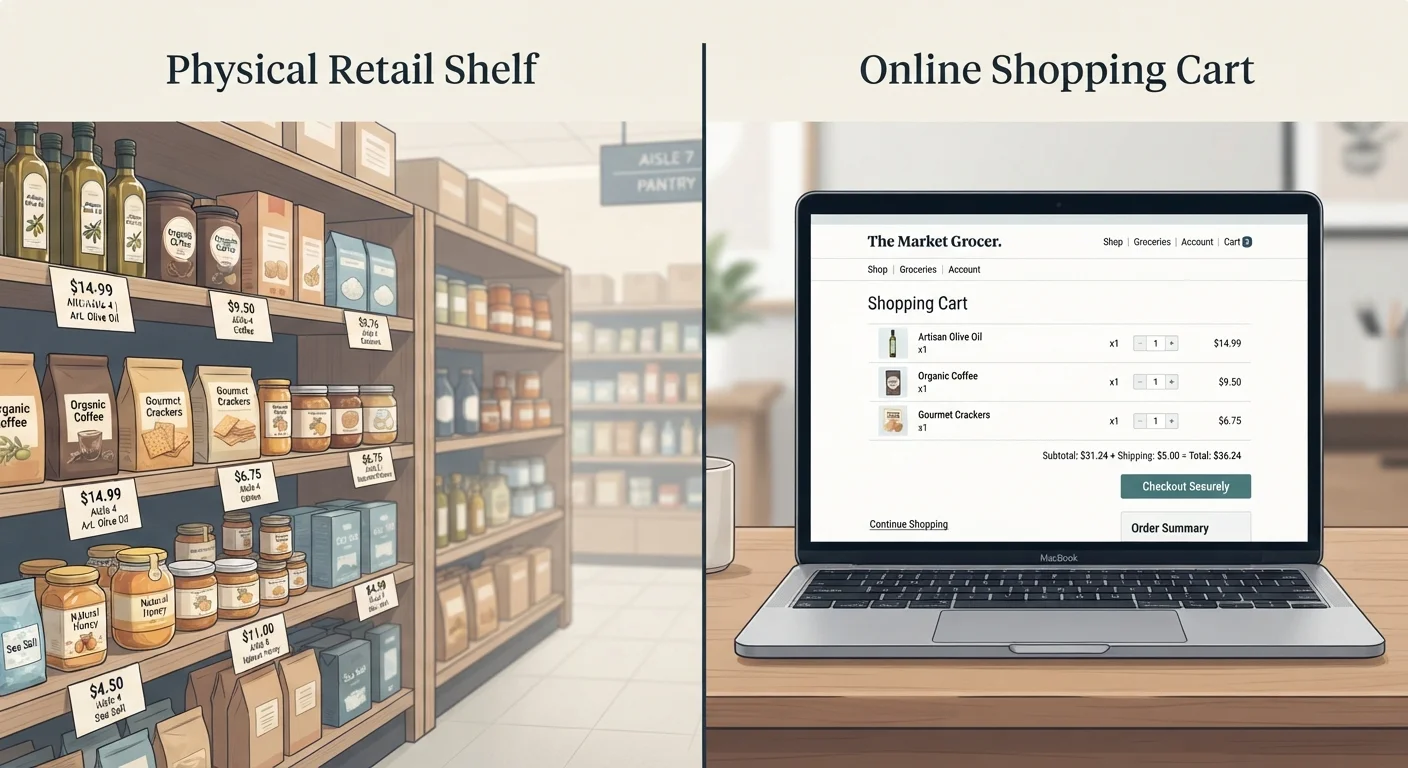
When the same SKU rings up at different prices online versus in-store, it's rarely an error. Retailers typically maintain separate pricing structures for each channel as a deliberate business decision, rooted in fundamentally different cost structures.
Physical stores carry overhead that digital storefronts don't: commercial lease costs, in-store staffing, visual merchandising, and shrinkage (theft and damage). Online operations, by contrast, bear fulfillment center costs, last-mile delivery expenses, and significant investment in digital advertising and platform fees. Neither model is inherently cheaper to run - they're just expensive in different ways.
Those cost differences translate directly into where each channel sets its prices. A retailer might price a product lower online to compete with pure-play e-commerce competitors, while keeping in-store prices higher to offset physical overhead. Or the reverse: some categories - particularly appliances and furniture - can be priced more competitively in-store, where the retailer avoids the high cost of large-item shipping.
| Criterion | Online Pricing | In-Store Pricing |
|---|---|---|
| Price update frequency | Multiple times daily, algorithm-driven | Weekly or per promotional cycle |
| Primary cost driver | Fulfillment, shipping, digital ads | Rent, staffing, shrinkage |
| Competitive pressure | High - cross-retailer comparison is instant | Lower - requires physical travel to compare |
| Promotional structure | Event-driven, flash sales, personalized offers | Weekly circulars, clearance cycles |
| Large-item pricing tendency | Higher, due to shipping costs | Competitive, shipping cost avoided |
| Price-match availability | Varies by retailer policy | Often available for own-site prices |
How Each Channel's Pricing Actually Works
Online prices are rarely static. As explained in our piece on how dynamic pricing works, retailers and third-party sellers use algorithms to adjust prices based on demand signals, competitor activity, time of day, and even individual browsing behavior. A price you see in the morning may differ from what appears that evening.
In-store prices move more slowly. Physical tags require manual updates, so retailers tend to batch pricing changes - often tied to weekly ad cycles, seasonal resets, or planned promotional events. This lag can work in a shopper's favor (a sale price may persist past its online expiration) or against it (an online price drop may not appear on the shelf for days).
~3x
Faster price change rate online vs. in-store
Retail analytics firms have consistently found that e-commerce prices change far more frequently than physical shelf prices, particularly in electronics and home goods categories.
70%+
US shoppers who check online prices while in-store
Consumer behavior research from multiple retail industry surveys indicates a majority of in-store shoppers use their phones to compare prices before completing a purchase.
It's also worth understanding that what's labeled a "retail price" in either channel carries specific strategic intent. Our explainer on what retail price actually means covers how MSRP and "original price" labels function as reference points rather than neutral benchmarks.
Navigating the Gap as a Shopper
Knowing the gap exists is useful. Knowing how to work with it is more useful.
Check both channels before buying. Don't assume one channel is always cheaper. For the same item, the price spread between online and in-store can range from negligible to meaningful depending on category and retailer. Our guide on comparing prices meaningfully across sellers outlines how to ensure you're actually comparing equivalent offers - same model number, same configuration, same warranty terms.
Understand price-match eligibility. Many major retailers have price-match policies that allow you to request an in-store price adjustment if the retailer's own website shows a lower price, or vice versa. However, the details matter: exclusions for marketplace sellers, minimum price thresholds, and time windows all vary. See our breakdown of what price-match policies actually cover before counting on this option.
Time your purchases around channel-specific patterns. Online prices are more responsive to events like major sales holidays, while in-store markdowns often align with physical inventory clearance. For more on reading those patterns, matching the channel to the purchase type is a practical starting point. Understanding shifting consumer preferences also helps clarify why retailers increasingly differentiate their channel strategies.
When Online and In-Store Prices Are Legally Required to Match
In most US states, retailers are not legally required to honor a discrepancy between a posted online price and a physical shelf price unless the purchase was completed at that price. However, some states have consumer protection regulations around scanner accuracy and shelf price advertising. If you notice a consistent discrepancy, it's worth raising with store management or checking your state's consumer affairs guidelines.