

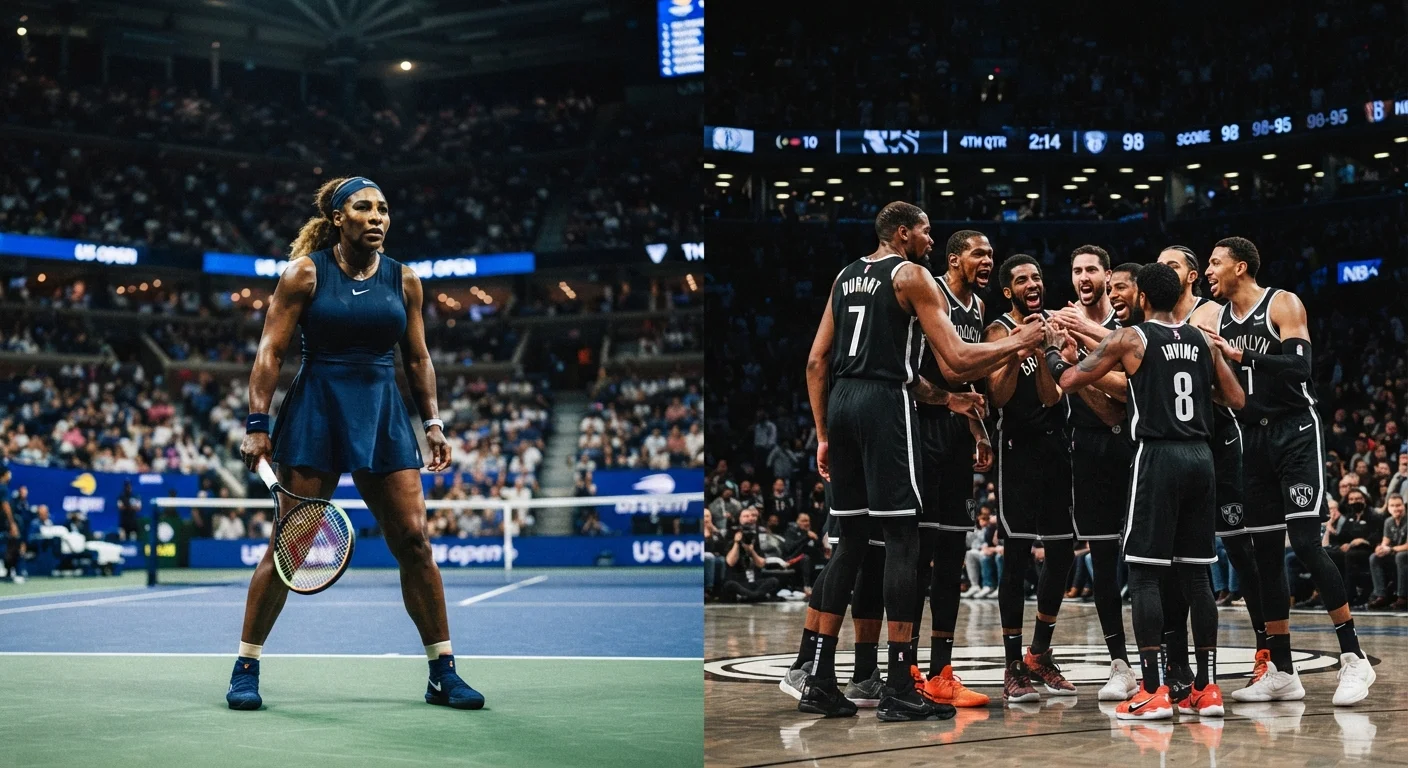
Key Takeaways
- Individual sport athletes bear sole accountability for outcomes, intensifying psychological pressure.
- Team sport athletes must master communication, role adaptation, and collective strategy alongside physical conditioning.
- Physical training profiles differ significantly - endurance and technical precision dominate individual sports, while sport-specific power and positional conditioning define team play.
- Mental resilience looks different across contexts: solo performers manage isolation, while team athletes navigate group dynamics.
- Some elite athletes have crossed both worlds, revealing overlapping yet distinct skill sets.
Our Verdict
Neither individual nor team sport athletes face easier demands - they face different ones. Solo competitors must internalize every coaching cue and absorb every loss alone, while team athletes must synchronize physical effort and decision-making across complex social systems. Both pathways require elite-level mental and physical preparation, just configured differently.
| Best for | Recommended |
|---|---|
| Athletes who thrive on personal autonomy and direct accountability | Individual sport training models |
| Athletes energized by collaboration, role specialization, and shared goals | Team sport training models |
| Coaches designing sport-specific mental skills programs | Understanding both models to tailor psychological support |
Accountability: Alone vs. Shared
The most immediate difference between individual and team sport athletes is where accountability lands. A tennis player who double-faults at match point carries that moment alone. There is no teammate to share the weight, no collective performance stat to soften the blow. This singular accountability shapes how individual athletes train, recover, and approach competition mentally.
Team sport athletes distribute both glory and failure. A basketball player who misses a crucial free throw is supported - or scrutinized - within a broader team context. Research in sport psychology consistently highlights that shared accountability can reduce individual anxiety in some athletes while creating unique pressures around role conflict and social cohesion. For a deeper look at how mental skills differ at the elite level, see The Psychology of Performance.
Mental Skills Transfer Across Both Contexts
Core mental skills - focus, pre-performance routines, and pressure management - are valuable whether you compete alone or as part of a team. Athletes switching between sport types often find these transferable skills give them a meaningful edge. Building a sport-agnostic mental toolkit early in an athletic career pays dividends across any competitive environment.
Physical Demands: Specialization vs. Versatility
Individual sport athletes typically train toward a narrow but extremely refined physical profile. A marathon runner pursues aerobic efficiency and pacing discipline. A gymnast develops explosive power combined with extraordinary flexibility and body control. Their conditioning is highly specific because their competition environment is fixed and predictable.
Team sport athletes, by contrast, must prepare for a wider physical spectrum. A soccer midfielder might sprint, decelerate, change direction, and execute technical skills hundreds of times across 90 minutes - often while managing fatigue and opponents simultaneously. Positional versatility adds another layer; athletes who cover multiple roles carry conditioning demands that go well beyond a single-position player. The Physical Demands of Playing Multiple Positions in Team Sports explores this in detail.
| Individual Sport Athletes | Team Sport Athletes | |
|---|---|---|
| Accountability | Solely personal | Shared across roster |
| Physical conditioning focus | Narrow, highly specialized | Broad, position-specific versatility |
| In-competition decision-making | Self-directed, internalized | Collaborative, real-time communication |
| Primary psychological stressor | Isolation and sole accountability | Group dynamics and role conflict |
| Coaching interaction during play | Limited to designated breaks | Continuous on-field/sideline input |
| Identity formation | Deeply individual and craft-focused | Rooted in team culture and belonging |
Strategic and Tactical Complexity
Strategic demands diverge sharply between sport types. Individual athletes internalize tactics almost entirely - reading an opponent's serve pattern, adjusting a race strategy mid-event, or recalibrating a game plan during a match. Their coach can often advise only during designated breaks, making in-competition adaptation a largely solitary cognitive task.
Team athletes must process individual tactical assignments while continuously reading shifting collective patterns. A quarterback reads a defense in real time, adjusting routes and protections at the line of scrimmage. These decisions ripple across ten other players. The cognitive load is enormous, and miscommunication can unravel a perfectly designed play. Some rare athletes have demonstrated fluency in both environments - dual-sport athletes who competed at the highest level offer a fascinating window into how adaptable elite performers can be.
Psychological Pressures and Identity
The psychological texture of competition differs meaningfully. Individual sport athletes often build their sporting identity in isolation - hours of solo practice create a deeply personal relationship with their craft. When performance slips, there is no team culture to anchor them, which can amplify feelings of self-doubt. Many elite solo performers develop exceptionally strong internal motivation and self-regulation habits as a result.
Team sport athletes anchor identity partly in group belonging, which provides psychological stability but also exposes them to unique stressors - locker room dynamics, media narratives about chemistry, and the pressure of not letting teammates down. The Public and Private Faces of Professional Athletes captures how these pressures manifest beyond the field.
Interestingly, even traditionally individual sports like golf have developed high-stakes team formats. Events such as the Ryder Cup transform solo competitors into collaborative units, revealing how team dynamics can pressure-test athletes trained entirely for individual performance. How Golf's Team Competitions Compare unpacks that fascinating tension.
~70%
Team sport athletes reporting role conflict stress
Sport psychology literature consistently identifies role ambiguity as a leading team-athlete stressor, with estimates frequently exceeding 60-70% among competitive-level players.
2x
Greater direction changes per minute in team vs. individual sports
Studies on intermittent sport demands show team sport athletes execute significantly more multi-directional movements per match than most individual sport competitors.
This article is for informational purposes only. Information on physical and psychological athlete demands reflects general sports science knowledge and should not be interpreted as personalized training or medical advice.