

Key Takeaways
- Phishing, smishing, and vishing use different delivery methods but share the same manipulation tactics.
- Urgency, fear, and impersonation of trusted institutions are the most common pressure levers scammers use.
- Legitimate organizations will never demand immediate action or sensitive information over unsolicited contact.
- Verifying independently - by calling an official number or visiting a known website - is the safest response to any suspicious message.
- Scam techniques evolve quickly, so recognizing patterns matters more than memorizing specific scripts.
Phishing, Smishing, and Vishing
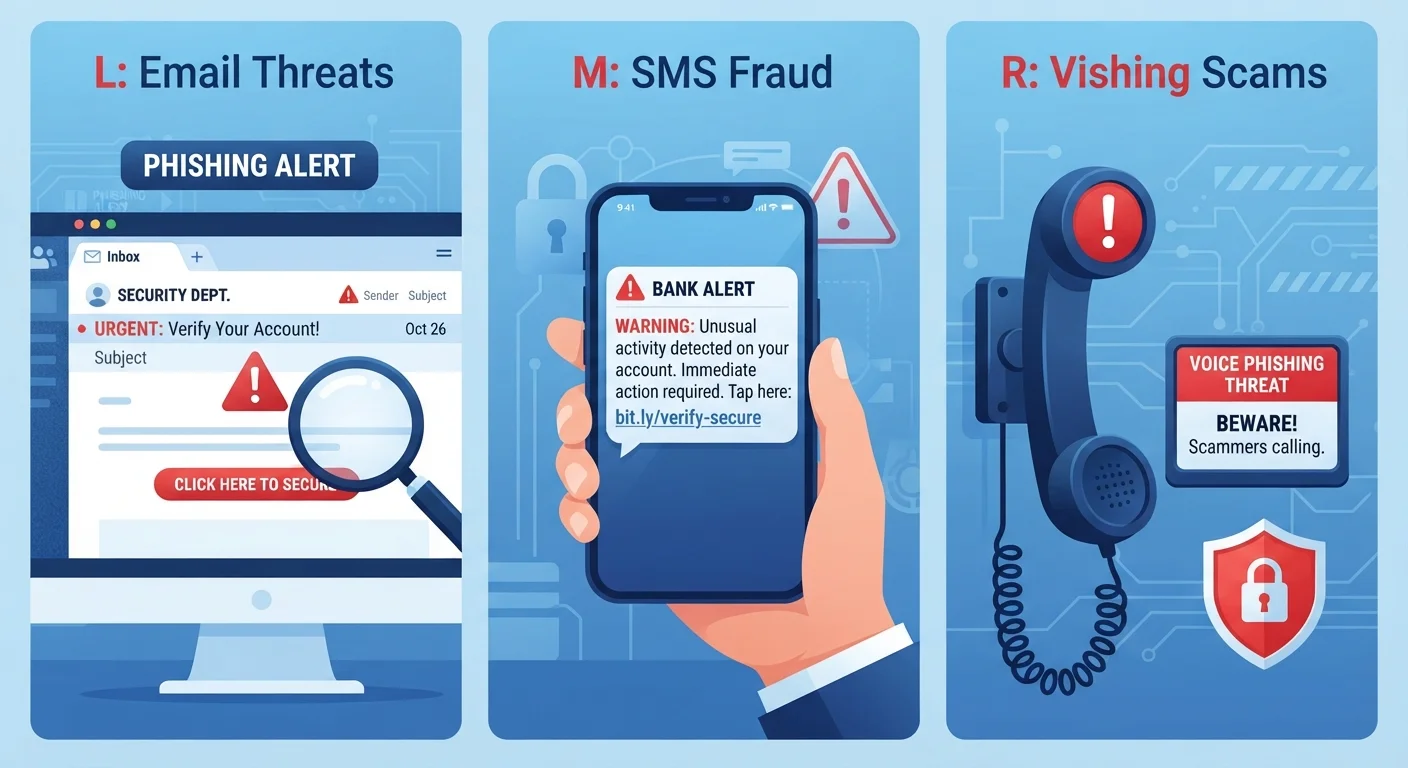
These three terms describe social engineering scams delivered through different channels: phishing uses email, smishing uses SMS text messages, and vishing uses voice calls. In each case, an attacker impersonates a trusted source - a bank, government agency, or familiar company - to trick you into handing over sensitive information or taking a harmful action. The goal is always the same: credentials, financial data, or account access.
All three exploit psychological manipulation rather than technical vulnerabilities, making them effective against individuals regardless of their device's security settings or software patches.
How Each Attack Channel Works
Understanding how each scam type operates is the first step toward recognizing them in the wild.
Phishing emails typically mimic the visual design of a known brand - a bank, a streaming service, a government agency - and arrive with a message designed to provoke immediate action. A subject line might warn that your account has been suspended, that unusual activity was detected, or that you owe a payment. The email links to a fake website that looks authentic but captures anything you type into it.
Smishing texts follow similar logic compressed into a shorter format. A common script claims to be a package delivery notification with a link to reschedule, a bank fraud alert, or a prize notification. Because people are accustomed to receiving brief texts from services they use, the format can feel more credible than a cold email. Mobile screens also make it harder to inspect URLs before tapping. For guidance on evaluating links before you click, see how to read URLs like a pro.
Vishing calls add a human voice to the manipulation. Callers may claim to be IRS agents, Social Security Administration representatives, tech support staff, or bank fraud investigators. Some use pre-recorded messages followed by a live operator. The voice channel creates a sense of immediacy and authority that text-based attacks sometimes lack.
Scammers Adapt Their Scripts Constantly
Attack themes shift with current events - tax season, major data breaches, disaster relief, and popular technology trends all generate new phishing campaigns. The specific story may change, but the underlying patterns of urgency, impersonation, and pressure remain consistent. Focusing on those patterns rather than specific message content gives you more durable protection.
The Psychological Tactics Behind Every Scam
The channel varies, but the psychological levers scammers pull are remarkably consistent across phishing, smishing, and vishing.
- Urgency: You must act now or lose access, face a fine, or miss a deadline. Time pressure reduces careful thinking.
- Authority: Impersonating a bank, federal agency, or well-known company borrows their credibility. People are less likely to question someone who sounds official.
- Fear: Threats of arrest, account freezes, or legal consequences trigger panic responses that bypass rational evaluation.
- Familiarity: Scammers increasingly use personal details scraped from data breaches or social media to make messages feel specific and legitimate.
Recognizing these patterns is more valuable than memorizing particular scripts, because the specific stories scammers tell change constantly while the underlying manipulation structure stays the same.
“Scammers are expert manipulators who exploit trust, fear, and urgency. The most effective defense isn't better software - it's learning to pause and question before you act.”
— Cybersecurity and Infrastructure Security Agency (CISA), U.S. federal agency responsible for national cybersecurity guidance
Protecting your accounts from the credential theft that often follows a successful scam is equally important. Understanding why password reuse is dangerous can help limit the damage if any information is ever compromised.
Warning Signs to Look for in Every Channel
Each delivery channel has specific signals worth watching for.
3.4 billion
Phishing emails sent daily, globally
According to estimates widely cited by cybersecurity researchers, phishing remains the most prevalent form of cyberattack by volume.
98%
Of cyberattacks rely on social engineering
Cybersecurity research consistently finds that human manipulation, rather than technical exploits, drives the overwhelming majority of successful attacks.
$10B+
Reported fraud losses in the US (2023)
The FTC reported that consumers filed fraud losses exceeding $10 billion in 2023, with imposter scams among the leading categories.
In emails
- The sender's actual email address doesn't match the organization's real domain - hover over the name to reveal it.
- Generic greetings like "Dear Customer" instead of your name.
- Spelling errors or awkward phrasing inconsistent with professional communication.
- Links that display one domain but point to another when inspected.
In text messages
- Messages from unknown numbers claiming to represent services you use.
- Shortened URLs that hide the actual destination.
- Requests to click a link to confirm, verify, or claim something.
In phone calls
- Callers who refuse to let you call back on an official number or who pressure you to stay on the line.
- Requests for payment via gift cards, wire transfers, or cryptocurrency - methods that are difficult to reverse.
- Any claim that you must act before the call ends to avoid serious consequences.
Being thoughtful about your digital footprint also matters. Connected home devices can expose personal data that scammers may use to personalize attacks - see what smart home devices are actually collecting for context.
What to Do When Something Feels Off
A suspicious message doesn't require immediate action - that pressure itself is part of the scam's design. Here's a reliable framework for responding.
- Pause before acting. If an email, text, or call creates a sense of panic or urgency, treat that as a warning sign, not a prompt to comply.
- Verify independently. Look up the official website or phone number for the organization using a search engine or a known source - not the contact details provided in the suspicious message - and confirm whether the communication was real.
- Don't use the links or numbers provided. Even calling back the number in a voicemail can connect you to a scammer posing as the company.
- Report it. The FTC (reportfraud.ftc.gov), the FCC, and your email or phone provider all accept scam reports. Reporting helps protect others.
- If you shared information, act quickly. Contact your bank or the relevant institution through official channels. Change any passwords that may have been compromised.
Set Up a Personal Verification Rule
Decide in advance that you will never provide sensitive information - passwords, Social Security numbers, payment details - in response to any unsolicited contact, regardless of how official it sounds. This simple personal policy removes the need to make a judgment call under pressure, which is exactly when mistakes happen.