

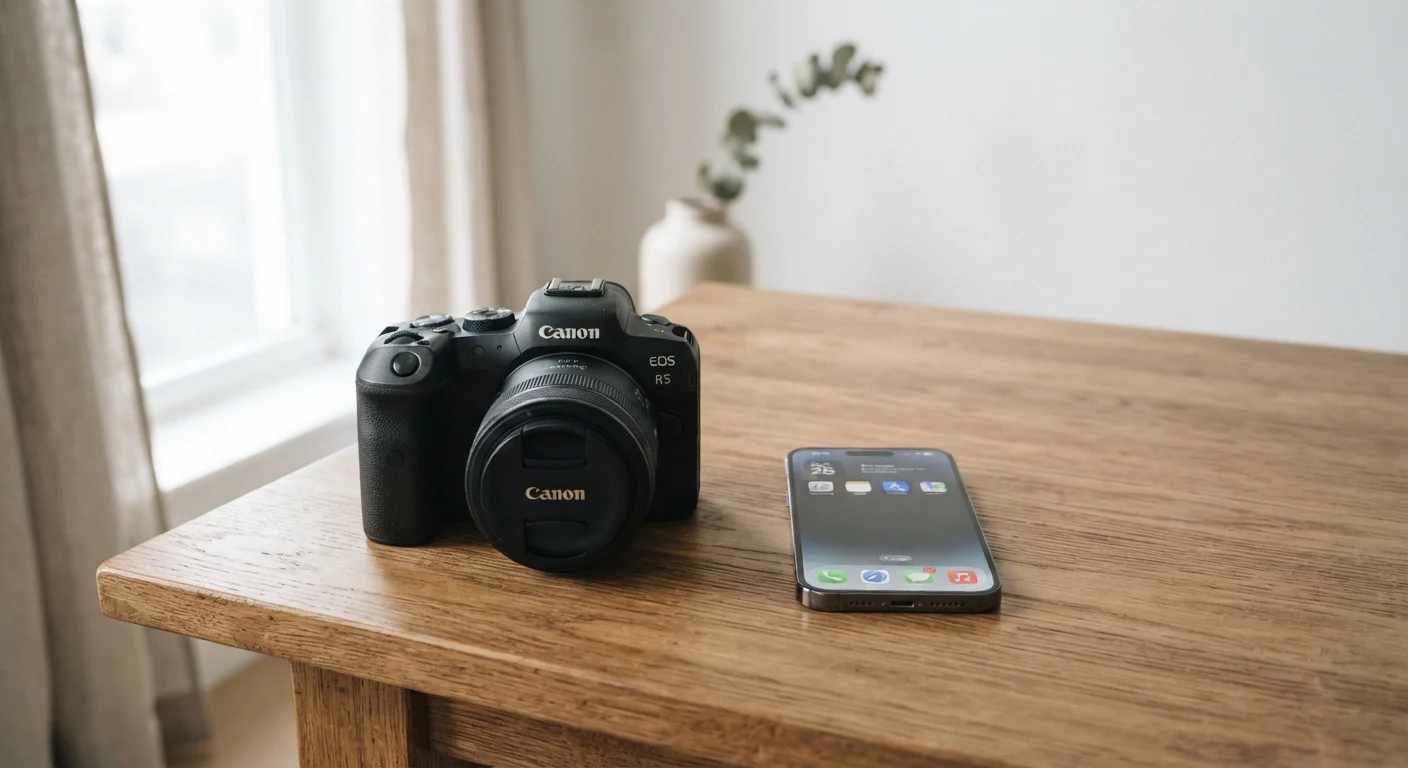
Key Takeaways
- Smartphones excel at convenience, computational features, and everyday social sharing.
- Dedicated cameras offer larger sensors, optical zoom, and greater creative control.
- For low-light, action, or professional work, a standalone camera still holds a real edge.
- Most casual photographers will find a modern smartphone sufficient for their needs.
- Understanding your actual use case - not spec sheets - is the most important factor.
Our Verdict
Smartphones have genuinely closed the gap for casual photography, and for most everyday consumers, a high-quality phone camera is more than capable. However, dedicated cameras still deliver meaningful advantages in low-light performance, optical zoom range, manual control, and image quality for large prints - making them the better tool for enthusiasts, hobbyists, and professionals who shoot regularly and deliberately.
| Best for | Recommended |
|---|---|
| Casual, everyday, and social media photography | Smartphone Camera |
| Low-light, action, sports, or wildlife photography | Standalone Camera |
| Travel photographers who prioritize portability | Smartphone Camera |
| Enthusiasts who want manual control and interchangeable lenses | Standalone Camera |
What Each Tool Is Actually Built For
Smartphones are designed to be everything at once - communication device, navigation tool, and camera. The camera is one feature among dozens, engineered for speed, convenience, and seamless sharing. A standalone camera, by contrast, is purpose-built for one thing: capturing images. Every design decision, from the grip to the shutter mechanism, serves that single goal.
This distinction matters more than any spec comparison. A phone's camera system is increasingly sophisticated, relying heavily on computational photography - software algorithms that combine multiple exposures, apply AI-driven sharpening, and simulate effects like background blur. A dedicated camera processes light optically first, then digitally, giving photographers more raw information to work with. As our breakdown of camera specs explains, megapixel count alone tells you very little about real-world image quality.
Where Smartphones Genuinely Compete
Modern flagship smartphones perform remarkably well in several scenarios that matter most to everyday users:
- Daylight and well-lit environments: In good light, smartphone sensors capture sharp, vibrant images that are difficult to distinguish from entry-level dedicated cameras in standard prints or on-screen viewing.
- Convenience and portability: The best camera is the one you have with you. A smartphone is always in your pocket, launches in seconds, and eliminates the need for a separate device.
- Computational features: Night mode, portrait mode, and HDR on modern phones use software intelligence that produces impressive results without any manual input from the user.
- Sharing and workflow: Images go directly to social platforms, cloud storage, or messaging apps without any transfer step.
For social media content, family snapshots, travel documentation, and video calls, most people will find smartphone cameras more than adequate. Exploring your phone's built-in settings - such as exposure lock and RAW capture - can push quality even further without buying new hardware.
Maximize What You Already Own
Before purchasing a dedicated camera, spend time exploring your smartphone's full camera capabilities. Features like manual exposure control, RAW file capture, and grid-based composition tools are built into most modern phones and rarely used. Developing the habit of intentional framing and lighting awareness will improve your results with any camera.
Where Standalone Cameras Still Have the Edge
Despite smartphone advances, dedicated cameras maintain meaningful advantages in specific, high-demand situations:
| Criterion | Smartphone Camera | Standalone Camera | |
|---|---|---|---|
| Low-light performance | Good with Night Mode; software-dependent | Superior; larger sensor captures more light | |
| Portability | Excellent; always in your pocket | Moderate; requires a bag or strap | |
| Optical zoom range | Limited; digital zoom degrades quality | Strong; optical clarity maintained | |
| Manual creative control | Limited; mostly automated | Full control over aperture, shutter, ISO | |
| Sharing and workflow | Instant; direct to apps and cloud | Requires file transfer step | |
| Interchangeable lenses | No | Yes; broad lens ecosystem | |
| Upfront cost | Bundled with existing device | Significant additional investment |
Sensor size remains the most consequential difference. Larger sensors capture more light per pixel, which translates directly to cleaner low-light images with less digital noise - an area where even premium smartphones still struggle against mid-range mirrorless or DSLR cameras.
Optical zoom is another genuine gap. Smartphone periscope lenses have improved, but physical zoom lenses on dedicated cameras maintain optical clarity across the entire zoom range without the quality degradation that occurs when digital zoom takes over.
Manual control and lens flexibility matter to anyone learning photography seriously. Interchangeable lenses, physical dials for aperture and shutter speed, and full RAW files give photographers creative authority that software cannot replicate. This kind of intentional, craft-driven image-making is what cinematographers understand instinctively - the tool shapes the creative outcome.
How to Make the Right Choice for Your Situation
Rather than asking which device is objectively better, ask what you actually shoot, how often, and what you do with the results.
- If you photograph mostly everyday life, social events, or travel and share primarily to social platforms, your phone is almost certainly sufficient - and adding skill through settings awareness will take you further than new gear.
- If you regularly shoot in low light, photograph fast-moving subjects, or plan to print images at large sizes, a dedicated camera will produce noticeably better results.
- If you're developing photography as a skill or creative practice, a dedicated camera's manual controls teach you to see light and composition more deliberately.
- If portability is non-negotiable and you won't carry a second device consistently, the camera you actually use is the better investment.
Budget is also a realistic factor. A capable mirrorless camera with a kit lens represents a significant upfront cost compared to a phone upgrade. Consider whether the quality difference will be noticeable in your typical use before committing.
Gear Alone Won't Improve Your Photos
A common mistake is expecting a hardware upgrade to automatically produce better results. Composition, lighting, and timing matter more than the device in most everyday scenarios. If your current images feel flat or poorly framed, consider whether technique - not equipment - is the actual limiting factor before spending on a standalone camera.