

Key Takeaways
- A higher megapixel count does not automatically produce sharper or better-looking photos.
- Sensor size, aperture, and image processing software shape photo quality far more than pixel count alone.
- Marketing emphasis on megapixels often distracts consumers from the specifications that genuinely matter.
- Low-light performance, dynamic range, and lens quality are stronger predictors of real-world results.
- Understanding a few core camera concepts helps consumers evaluate devices more accurately.
Why the Megapixel Myth Persists
Camera marketing has long leaned on megapixels because they are easy to compare and easy to inflate. Unlike sensor size or optical quality, megapixels are a single number that translates directly into a selling point on a spec sheet. The result is a widespread consumer belief that a higher number always signals a better camera - a belief the industry has little incentive to correct.
In reality, the jump from 12 to 200 megapixels produces no visible improvement in the kinds of photos most people take and share. What changes image quality in ways consumers can actually see is how effectively the camera gathers and processes light - and megapixels have almost nothing to do with that.
Megapixels Measure Quantity, Not Quality
A megapixel count tells you how many pixels a sensor captures - nothing more. It says nothing about how accurately colors are rendered, how well the camera handles shadows and highlights, or how sharp the final image actually appears. Evaluating cameras on pixel count alone is like judging a car by its engine displacement while ignoring horsepower, fuel efficiency, and handling.
The Specifications That Actually Shape Your Photos
Understanding three core factors gives a far more accurate picture of camera performance than pixel count alone.
- Sensor size: Larger sensors capture more light, which reduces noise and expands the range of tones a camera can record between deep shadow and bright highlight. This is why a camera with a physically larger sensor routinely outperforms one with a smaller sensor, even at identical megapixel counts.
- Aperture: Measured in f-numbers, aperture governs how much light passes through the lens. Wider apertures (lower f-numbers) are the primary reason some cameras handle dim environments without producing grainy, degraded images.
- Image processing: The software and hardware that interpret raw sensor data - sharpening edges, reducing noise, balancing exposure across a scene - can overcome modest hardware limitations and frequently determine final image quality as much as the optics do.
Spec Sheet Numbers Can Be Misleading
Manufacturers are not required to contextualize the specs they advertise. A device may legitimately claim 200 megapixels while producing noisier images in everyday conditions than a camera with a fraction of that count but a larger sensor. Always look at real-world sample images and independent lab tests alongside spec comparisons.
For a practical guide to extracting more from the camera hardware you already carry, see the settings most phone camera users never touch.
Common Misconceptions, Corrected
The myths below appear consistently in consumer conversations and purchasing decisions. Each one oversimplifies camera quality in a way that leads to poorly informed comparisons.
Myth
More megapixels means better photo quality in every situation.
Fact
Megapixels determine resolution - how much detail can theoretically be captured - but sensor size, lens quality, and processing determine how good that detail actually looks.
Resolution is only one dimension of image quality. A 50-megapixel sensor crammed onto a tiny phone module produces smaller individual pixels that gather less light per pixel than a 12-megapixel full-frame sensor. Less light per pixel means more noise, compressed dynamic range, and weaker color accuracy - especially indoors or at dusk. For most everyday uses (social media, standard printing, streaming), images beyond roughly 12 megapixels offer no visible improvement at typical viewing sizes.
Myth
A bigger megapixel number is always a sign of a more advanced camera.
Fact
High megapixel counts are sometimes a marketing signal rather than a reliable indicator of engineering sophistication or photographic capability.
Camera manufacturers know consumers respond to large numbers. A device can push megapixel counts upward by using a dense sensor layout while cutting costs elsewhere - on the aperture, the lens glass, or the image signal processor. Meanwhile, genuinely capable cameras often prioritize sensor architecture and computational photography pipelines over raw pixel density. As noted in discussions about common retail misconceptions, headline numbers frequently obscure the factors that predict actual performance.
Myth
Smartphone cameras can never match standalone cameras because they have fewer megapixels.
Fact
Modern smartphones frequently outperform dedicated cameras in many everyday shooting scenarios, driven by computational photography rather than raw sensor resolution.
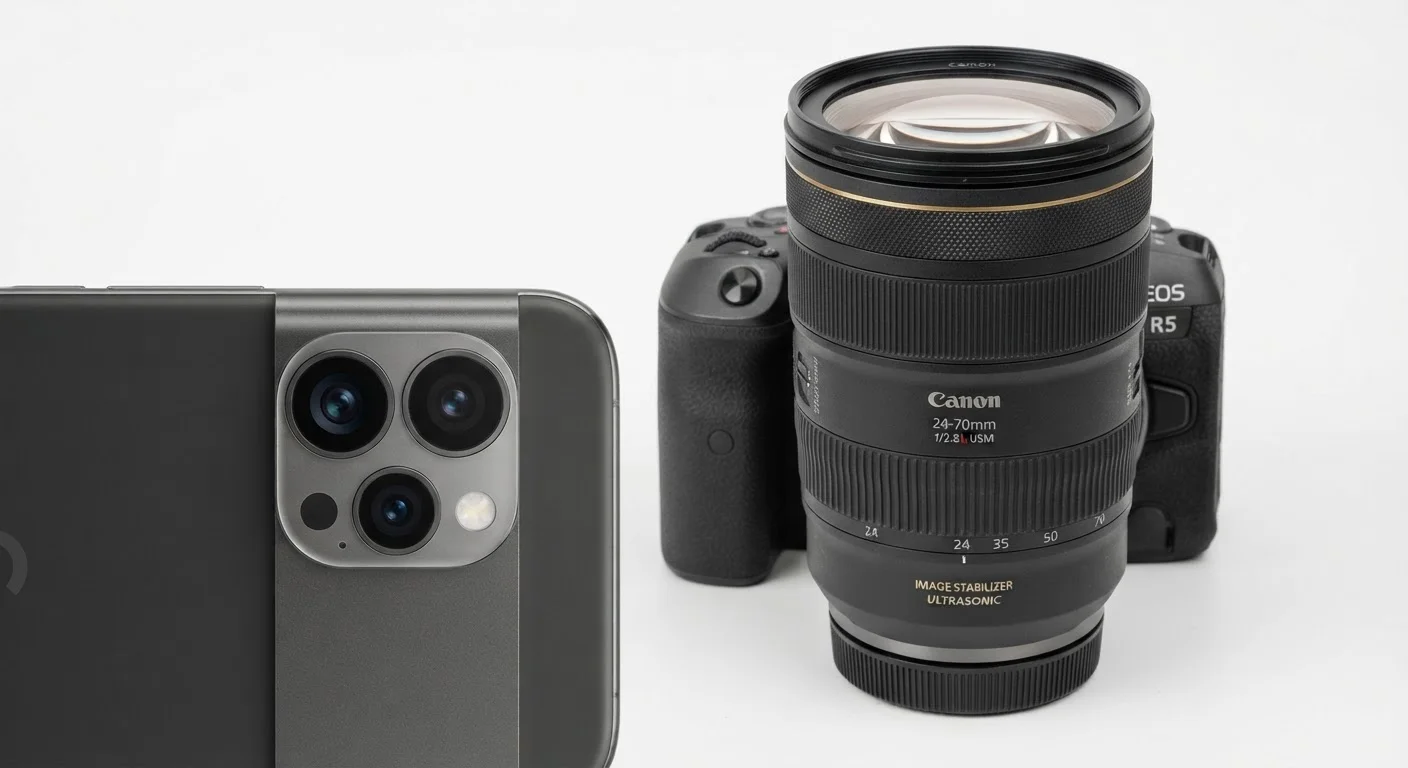
Smartphone manufacturers have invested heavily in software-driven photography: multi-frame processing, AI-based noise reduction, computational HDR, and neural sharpening. These techniques can produce visually superior results to hardware-only approaches in good lighting. The decision of whether a standalone camera still offers a meaningful advantage depends on shooting conditions and intended use - a topic explored in depth in our comparison of standalone and smartphone cameras.
Myth
Printing large photos requires a very high megapixel camera.
Fact
Most consumers rarely print at sizes that expose the resolution limits of a 12-16 megapixel camera, making ultra-high megapixel counts functionally irrelevant for typical use.
A 12-megapixel image printed at a standard resolution of 300 DPI produces a print roughly 14 × 10 inches - larger than the vast majority of consumer prints. To actually see a difference between 12 and 48 megapixels, you would need to print billboard-scale images and view them at close range. For digital sharing, the gap essentially disappears, since most platforms compress and resize images upon upload regardless of source resolution.
Myth
Aperture and sensor size are technical details only professionals need to understand.
Fact
Aperture and sensor size are the two most practical specifications for predicting how a camera will perform in real-world conditions, particularly low light.
Aperture - expressed as an f-number - controls how much light reaches the sensor. A wider aperture (lower f-number, such as f/1.8 versus f/2.8) admits significantly more light, directly improving indoor and low-light performance. Sensor size determines how much physical area collects that light, affecting noise levels and dynamic range. These two factors predict the quality of your everyday photos far better than megapixel count does. Understanding your camera's built-in settings can also help you take better advantage of the hardware you already own.
Making Smarter Camera Evaluations
Applying a few straightforward principles cuts through most camera marketing noise.
- Look at sample images in the conditions you shoot most. Indoor, low-light, and fast-motion samples reveal real-world capability far better than daylight demonstration shots.
- Compare sensor size and aperture first. These two specs do more predictive work than any other number on a spec sheet.
- Consider how much resolution you actually use. If your photos live on social media or are printed at standard consumer sizes, counts above 12-16 megapixels offer diminishing returns for most people.
- Consult independent testing. Photography-focused publications conduct controlled comparisons that surface performance differences spec sheets cannot capture.
Consumers who find themselves choosing between a smartphone and a dedicated device may find this breakdown of when each option holds a genuine advantage useful context. Similarly, readers who notice that online ratings don't always reflect real quality may recognize similar dynamics at work in how review counts and star ratings can mislead.
Camera specifications are a starting point for evaluation, not a conclusion. The images a device produces in the conditions you actually shoot - that is the only metric that matters in practice.