

| Framework author | SAE International (J3016 standard) |
| Total automation levels | 6 (Level 0 through Level 5) (SAE J3016) |
| Where most consumer vehicles sit | Level 1 or Level 2 (General industry assessment) |
| First level where human need not monitor road | Level 3 (SAE J3016) |
| Level 5 deployment status | Not yet commercially deployed (Current industry consensus) |
The SAE Scale: A Six-Level Framework, Explained
When automakers and regulators talk about self-driving capability, they're almost always referencing a framework developed by SAE International (formerly the Society of Automotive Engineers). The SAE J3016 standard defines six levels - 0 through 5 - that describe how much a vehicle's systems, versus a human driver, are responsible for the driving task at any given moment.
The levels aren't simply about how many features a car has. They describe who is in control, under what conditions, and what happens when the system reaches its limits. Understanding this distinction is the key to cutting through marketing claims that often blur these lines.
| Framework author | SAE International (J3016 standard) |
| Total automation levels | 6 (Level 0 through Level 5) (SAE J3016) |
| Where most consumer vehicles sit | Level 1 or Level 2 (General industry assessment) |
| First level where human need not monitor road | Level 3 (SAE J3016) |
| Level 5 deployment status | Not yet commercially deployed (Current industry consensus) |
For a broader look at how autonomous technology fits into modern vehicle ownership, see our guide to comprehensive car ownership.
Levels 0 Through 2: The Human Is Always in Charge
Level 0 - No Automation: The driver controls everything. Some warning systems (like a lane departure alert that beeps but doesn't act) may exist, but they don't physically intervene. Most vehicles still on the road globally fall here.
Level 1 - Driver Assistance: One system assists with either steering or speed - not both simultaneously. Adaptive cruise control that maintains following distance is a classic example. The driver must handle everything else and stay fully engaged at all times.
Level 2 - Partial Automation: The vehicle can manage both steering and speed simultaneously under specific conditions. Highway lane-centering combined with adaptive cruise is the most common real-world implementation. Critically, the human driver must continuously monitor the environment and be prepared to take over immediately. The name "partial" is key - supervision is not optional.
The ADAS features found in many modern EVs - automatic emergency braking, lane centering, blind-spot monitoring - largely operate within Levels 1 and 2. The naming of these features in marketing materials frequently overstates their autonomy, which is why the SAE framework exists as a corrective reference.
SAE J3016
The SAE International standard that defines the six levels of driving automation. It is the universally referenced framework used by automakers, regulators, and researchers to classify autonomous vehicle capability.
Operational Design Domain (ODD)
The specific conditions - road type, speed range, weather, geography - within which an automated driving system is designed to function. A system operating outside its ODD must hand control back to a human or bring the vehicle to a safe stop.
ADAS
Advanced Driver Assistance Systems. A category of vehicle technologies (such as adaptive cruise control, automatic emergency braking, and lane centering) that assist the human driver. Most ADAS features operate at SAE Level 1 or Level 2.
Conditional Automation
The SAE Level 3 designation, where the system manages all driving within its ODD and the human does not need to monitor the road - but must be ready to take over when the system requests a handoff.
Geofencing
A technology that restricts a vehicle's autonomous operation to a predefined geographic boundary. Level 4 robotaxi services commonly use geofencing to ensure the system operates only within environments it has been validated for.
Levels 3 Through 5: Where Automation Takes the Wheel
Level 3 - Conditional Automation: This is where a meaningful handoff occurs. The vehicle's system manages driving within a defined operational design domain (ODD) - specific road types, speeds, or weather conditions - and the human does not need to monitor the road during that period. However, the driver must be able to respond when the system requests a takeover, typically with several seconds of warning. Level 3 represents the first true shift in liability - the system, not the driver, is responsible while engaged. Regulatory acceptance of Level 3 varies significantly by jurisdiction.
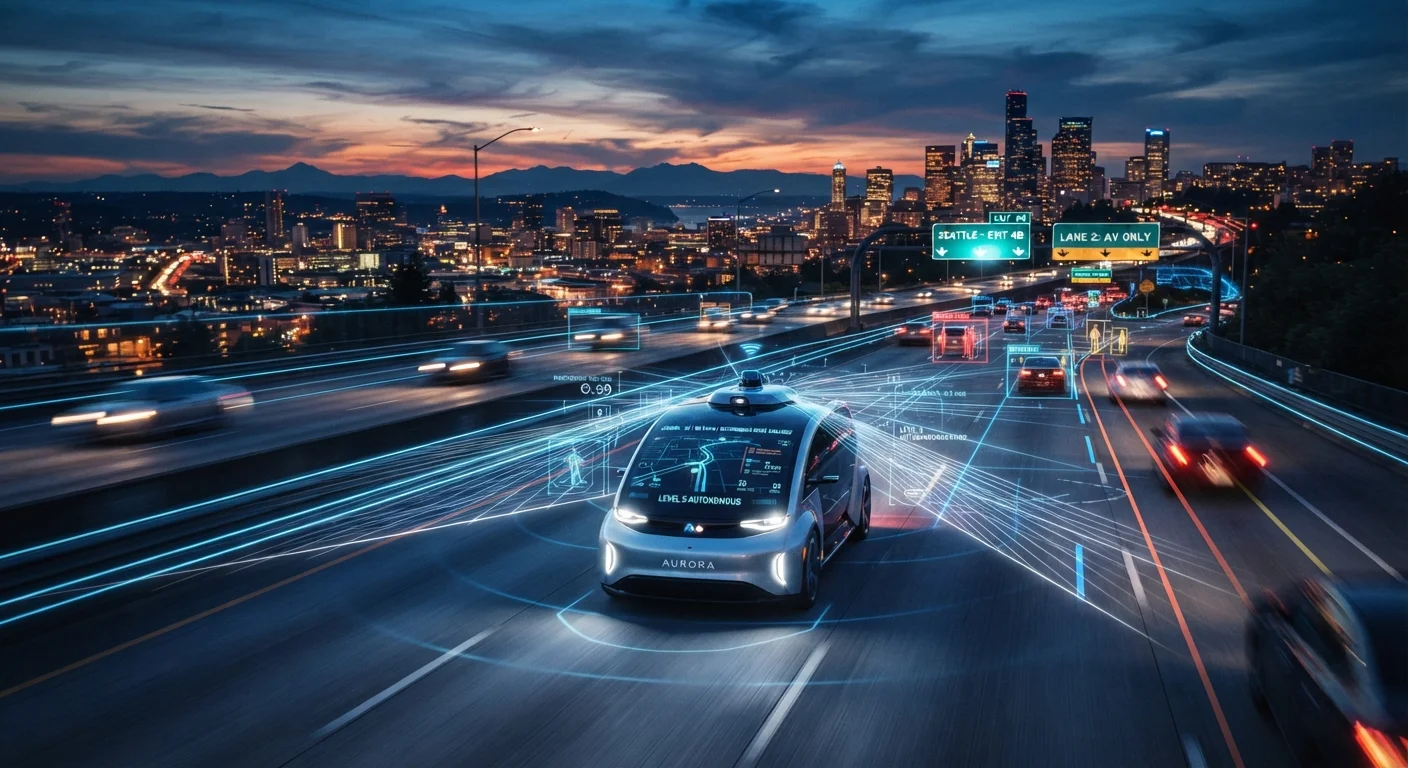
Level 4 - High Automation: Within its defined ODD, the system can handle all aspects of driving without human intervention - and crucially, it can bring the vehicle to a safe stop if the driver fails to respond to a handover request. Outside its ODD, a human may still be needed. Robotaxi services operating in geofenced urban areas are the most visible real-world Level 4 application today.
Level 5 - Full Automation: The system performs all driving tasks under all conditions that a human driver could manage - no ODD restrictions, no steering wheel required. As of current knowledge, Level 5 remains a design target, not a deployed reality.
Distinguishing hype from genuine progress in autonomy requires the same analytical approach used for any maturing technology. The signals that separate maturing tech from hype article offers a useful parallel framework.
Level 2
Highest level in most consumer vehicles sold today
The majority of passenger vehicles with advanced driver assistance features operate within SAE Level 1 or Level 2, according to general industry consensus.
Level 4
Highest level in active commercial deployment
Robotaxi programs operating in geofenced city zones represent the most advanced real-world autonomous deployment as of current reporting.
Where the Industry Actually Stands
The vast majority of consumer vehicles sold today operate at Level 1 or Level 2. Level 3 systems have received regulatory approval in limited markets, with specific vehicles permitted to activate them under narrow highway conditions. Level 4 deployment is real but geographically restricted - typically to defined city zones under robotaxi programs.
One practical consequence of the level distinction: it shapes how drivers should engage with their own vehicles' features. A Level 2 system disengaging unexpectedly requires the driver to respond immediately. Treating it as though it were Level 3 or higher - hands off, attention diverted - creates genuine safety risk. The technology's label matters because it describes where human responsibility begins and ends.
If you're exploring the broader landscape of modern vehicle technology, the EVs hub covers connected driving innovations alongside electric vehicle fundamentals. And for anyone navigating the full arc of owning a vehicle with these systems, the ownership hub addresses everything from insurance to long-term maintenance.