

Key Takeaways
- Smart home devices routinely collect data about your habits, routines, and home environment.
- Convenience gains are real, but so are privacy risks from data sharing and potential breaches.
- Most devices offer privacy controls, though settings are often buried or switched on by default.
- Understanding what each device collects is the first step to making an informed choice.
Genuine energy savings through automated scheduling
Smart thermostats that learn household patterns can optimize heating and cooling cycles without manual input, potentially reducing wasted energy over time.
Real-time home security awareness
Connected cameras and doorbells allow homeowners to monitor entrances remotely and receive alerts for motion or unusual activity, adding a practical layer of awareness.
Accessibility benefits for mobility-limited users
Voice-controlled devices remove the physical demands of switching lights, adjusting temperature, or unlocking doors - a meaningful gain for elderly or disabled individuals.
Convenience that compounds across routines
Automation of routine tasks - lighting scenes, morning alarms, appliance schedules - reduces low-level cognitive load across daily life.
Continuous audio or video collection by default
Many devices operate in always-listening or continuous-recording modes out of the box, with data sent to manufacturer servers for processing or storage.
Third-party data sharing in privacy policies
Manufacturer agreements frequently permit sharing data with advertising or analytics partners, sometimes in ways that are technically disclosed but rarely read by users.
Security vulnerabilities from outdated firmware
Devices that don't receive regular security updates can become weak points in a home network, potentially exposing other connected devices to intrusion.
Limited transparency about data retention periods
It is often unclear how long voice clips, footage, or behavioral data are retained and under what circumstances they may be accessed by employees or disclosed to third parties.
Behavioral profiling that reveals intimate patterns
Data about sleep schedules, daily routines, and household occupancy can build detailed profiles that go well beyond what users intuitively expect a device to know.
Our Verdict
Smart home devices deliver genuine convenience and can even improve home security - but they do so by gathering detailed data about how you live. The privacy trade-off is real, not theoretical. Informed users who review settings, limit unnecessary permissions, and understand data practices can reduce exposure meaningfully.
People comfortable actively managing device settings and privacy configurations, rather than those who prefer a truly hands-off relationship with their technology.
What Smart Home Devices Actually Collect
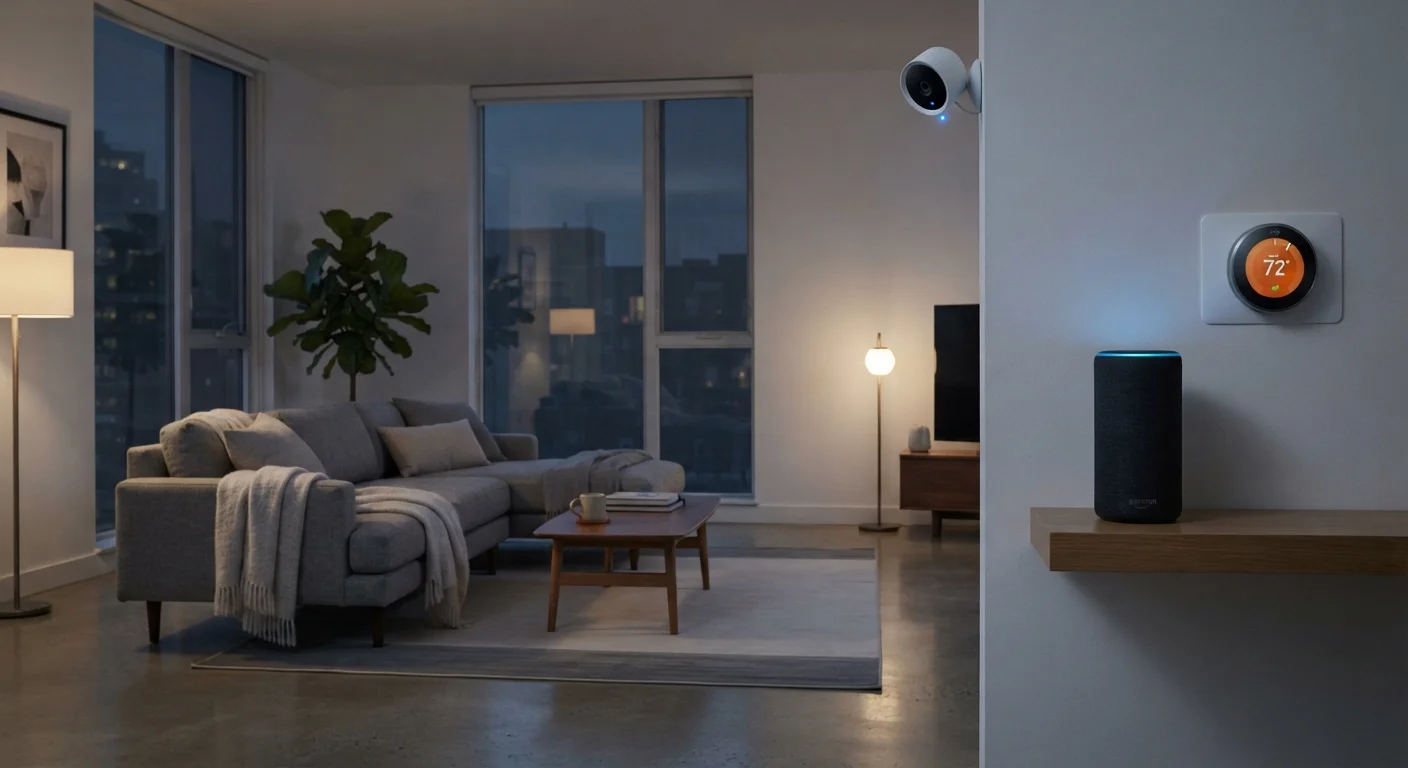
Smart speakers, connected cameras, video doorbells, and programmable thermostats all share one trait: they gather data to function. But the scope of that collection often surprises users when they look closely.
A voice assistant typically listens for a wake word, but audio snippets - sometimes capturing nearby conversations - can be sent to cloud servers for processing. A smart thermostat builds a profile of when you wake up, leave home, return, and sleep. A video doorbell may store continuous footage or movement events on remote servers operated by the device's manufacturer.
Much of this data is processed or retained not just to run the device but to improve AI models or, in some cases, support targeted advertising. What's actually listening and when breaks this down further if you want to understand the mechanics behind audio collection specifically.
Data Collection Varies Widely by Device Type
Not all smart home devices collect the same volume or type of data. A smart plug that simply switches power on and off collects far less than a voice assistant or security camera. When evaluating privacy trade-offs, it helps to consider each device category separately rather than treating 'smart home' as a single privacy category. Reviewing the specific privacy policy for each device you own or plan to bring home gives you the most accurate picture.
The Real Benefits - And Why They Matter
The case for smart home devices isn't just marketing. Convenience, energy savings, and safety are all legitimate draws.
Genuine energy savings through automated scheduling
Smart thermostats that learn household patterns can optimize heating and cooling cycles without manual input, potentially reducing wasted energy over time.
Real-time home security awareness
Connected cameras and doorbells allow homeowners to monitor entrances remotely and receive alerts for motion or unusual activity, adding a practical layer of awareness.
Accessibility benefits for mobility-limited users
Voice-controlled devices remove the physical demands of switching lights, adjusting temperature, or unlocking doors - a meaningful gain for elderly or disabled individuals.
Convenience that compounds across routines
Automation of routine tasks - lighting scenes, morning alarms, appliance schedules - reduces low-level cognitive load across daily life.
Thermostats that learn your schedule can reduce energy consumption without requiring daily manual adjustment. Smart locks and cameras give homeowners real-time awareness when they're away, and automated alerts have helped people respond to break-ins, fires, and leaks faster. For elderly or mobility-limited users, voice-controlled devices can meaningfully reduce reliance on physical effort for everyday tasks.
These benefits are tangible and, for many households, genuinely improve daily life. The question isn't whether the benefits exist - it's whether a given user's comfort with the associated data collection aligns with what that device requires.
The Privacy Costs Worth Taking Seriously
Privacy concerns with smart home devices aren't hypothetical. Several well-documented categories of risk have emerged as these products have become mainstream.
Continuous audio or video collection by default
Many devices operate in always-listening or continuous-recording modes out of the box, with data sent to manufacturer servers for processing or storage.
Third-party data sharing in privacy policies
Manufacturer agreements frequently permit sharing data with advertising or analytics partners, sometimes in ways that are technically disclosed but rarely read by users.
Security vulnerabilities from outdated firmware
Devices that don't receive regular security updates can become weak points in a home network, potentially exposing other connected devices to intrusion.
Limited transparency about data retention periods
It is often unclear how long voice clips, footage, or behavioral data are retained and under what circumstances they may be accessed by employees or disclosed to third parties.
Behavioral profiling that reveals intimate patterns
Data about sleep schedules, daily routines, and household occupancy can build detailed profiles that go well beyond what users intuitively expect a device to know.
Third-party data sharing is among the most common concerns. Many manufacturers' privacy policies permit sharing anonymized or aggregated data with advertising partners. Anonymized data isn't always as private as it sounds - research has repeatedly shown that behavioral patterns can re-identify individuals even when names are removed.
Security vulnerabilities present a separate layer of risk. Devices with weak authentication or infrequent firmware updates can serve as entry points into a home network. This is a structural concern: a smart plug or camera running outdated software may inadvertently expose other devices connected to the same network.
For a related look at how this applies to other connected technology, see what smart TVs collect and why.
69%
US adults with at least one smart home device
According to a Pew Research Center survey, roughly seven in ten American adults report using some form of smart home technology.
~1 in 5
Smart devices with known security vulnerabilities
Consumer security research organizations have repeatedly found significant proportions of mass-market smart home devices carrying unpatched or disclosed vulnerabilities at any given time.
What You Can Actually Do About It
Awareness of the trade-offs is the foundation, but practical steps follow from it. Most smart home platforms offer privacy controls - they're just rarely surfaced during setup.
Reviewing microphone and camera permissions, disabling features you don't use (such as voice purchasing or always-on listening), enabling two-factor authentication, and keeping firmware updated are all meaningful actions. Choosing local storage over cloud storage for cameras - where the option exists - keeps footage off remote servers entirely. Cloud versus local storage walks through that trade-off in more depth.
For a practical audit of device-level settings, privacy settings every gadget user should know covers where to look and what each control actually does. If you're new to the category entirely, a beginner's introduction to smart home devices provides useful context before diving into advanced settings.