

Key Takeaways
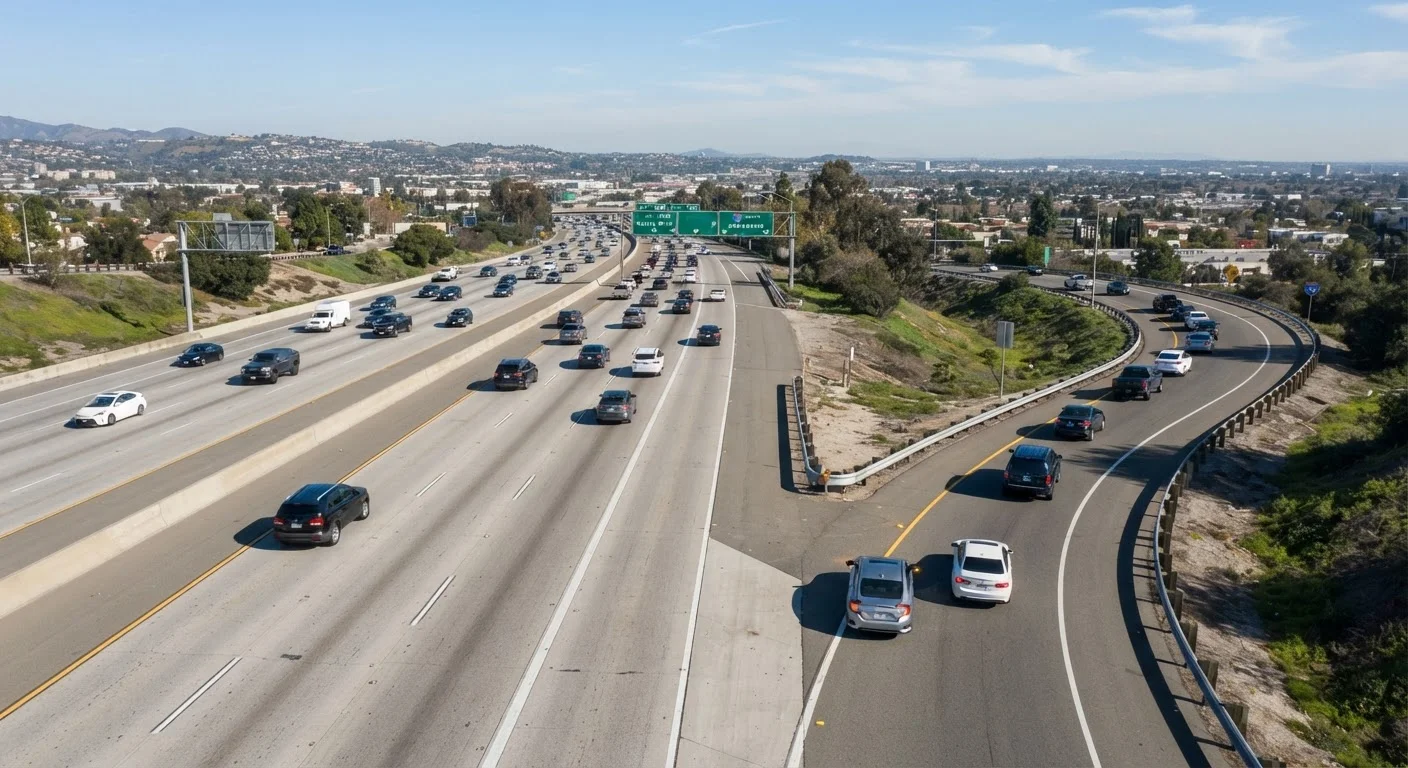
- Drivers entering a highway from an on-ramp are legally required to yield to traffic already on the road.
- The zipper merge - taking turns at the merge point - is encouraged by traffic engineers to reduce congestion.
- Highway drivers are not legally required to move over for merging vehicles, but courteous lane changes improve safety.
- Yield signs at on-ramp ends signal a legal obligation, not just a suggestion.
- Failure to yield when merging can result in traffic citations and liability in a collision.
Highway Merge Right-of-Way
When a vehicle enters a highway from an on-ramp, it is generally required by law to yield to traffic already traveling on the main roadway. Drivers on the highway have the right of way, meaning entering drivers must adjust their speed and find a safe gap - not force their way in. This principle applies across virtually every US state, though specific rules around lane changes and the zipper merge vary by jurisdiction.
Right-of-way rules are codified in each state's vehicle code. While no federal statute governs merge behavior directly, the Uniform Vehicle Code - widely adopted as a model - establishes that entering traffic must yield to through traffic.
The Basic Rule: On-Ramp Traffic Yields
The foundational rule of highway merging is straightforward: if you are entering the highway, you yield to vehicles already on it. Every US state enshrines this in its vehicle code. Through traffic - cars traveling on the main lanes - has established right of way, and drivers joining from an acceleration lane or on-ramp are responsible for timing their merge safely.
A yield sign posted at the end of an on-ramp is a legal directive. It means you must give way, even if that requires coming to a complete stop. While stopping on an acceleration ramp is rarely ideal from a safety standpoint, the legal obligation to yield remains. Drivers who merge without yielding and cause a collision are typically found at fault.
For a broader look at how right-of-way rules work across different road situations, see Right-of-Way Rules Every US Driver Should Know.
Build Speed Before You Merge
Use the full length of the acceleration ramp to match the speed of highway traffic before you attempt to merge. Entering at a significantly lower speed than surrounding traffic creates a dangerous speed differential and makes it harder to find a safe gap. Signal early so nearby drivers know your intention.
What Highway Drivers Are (and Aren't) Required to Do
Drivers already on the highway are not legally obligated to yield to merging vehicles or change lanes to accommodate them. That said, many state transportation agencies and driver's manuals encourage highway drivers to move left when traffic and safety allow, as a matter of courtesy and collision prevention.
This is distinct from the legal requirement that applies in other scenarios - for example, the Move Over laws that require drivers to change lanes or slow when passing stopped emergency or work vehicles. Move Over laws carry real penalties; failing to accommodate a merging car typically does not create legal liability for the highway driver, unless their own driving was independently unsafe.
In practical terms, a cooperative approach works best: the entering driver matches highway speed on the acceleration ramp, signals early, and identifies a gap; the highway driver, if conditions allow, shifts left to create more room.
50
States with yield-on-merge laws
Every US state's vehicle code requires entering traffic to yield to through traffic on the main roadway.
~40%
Reduction in merge-point backup length
Traffic studies cited by state DOTs suggest the zipper merge can reduce queue length by roughly 40% compared to early merging in lane-reduction zones.
The Zipper Merge: What It Is and Why It Works
The zipper merge refers to a technique where drivers in a lane that is ending continue at normal speed to the point where lanes physically converge, then take turns merging - one from each lane, alternating like the teeth of a zipper. This approach is often counterintuitive because many drivers feel compelled to move over early when they see a "Lane Ends" sign.
Traffic engineering research, including guidance published by the Minnesota Department of Transportation and similar agencies, indicates that the zipper merge reduces the length of traffic backups and distributes the queue more evenly. When everyone moves over early, one lane becomes underused and overall throughput drops.
Some states, including Minnesota and Missouri, have run public campaigns to encourage the zipper merge in construction zones. The technique is legal everywhere in the US, and it is consistent with the basic yield principle - drivers still take turns and no one forces their way in.
“The zipper merge, when executed properly, is one of the most effective tools we have for managing congestion at lane reductions. The data consistently shows it outperforms early merging in both safety and throughput.”
— Traffic Operations Research Team, State Department of Transportation, cited in public zipper merge guidance
Common Merge Scenarios and How the Law Applies
Acceleration ramp onto a freeway: The classic scenario. The entering driver uses the ramp to build speed, signals, and yields to highway traffic. Most on-ramps are designed to give drivers enough distance to match the speed of through traffic before the lane ends.
Lane reduction due to construction: When a travel lane closes ahead, traffic in the closing lane should merge into the open lane. The zipper merge at the marked merge point is the legally and operationally preferred method in most states. Aggressive blocking of the merging lane is not sanctioned by law.
Two lanes merging into one: When two lanes converge without a clear yield sign, drivers should treat it cooperatively - effectively alternating. State laws vary slightly here, but reckless or aggressive refusal to merge in turn can still result in a citation.
If you are new to freeway driving, understanding these scenarios before you encounter them matters. Driving on the Interstate for the First Time covers entering, merging, and exiting with practical context for newer highway drivers.
Understanding lane behavior on the highway more broadly - including what the left lane is intended for - also helps. See Lane Discipline on Multi-Lane Roads for details.
State Laws Vary in Specific Wording
While the yield-on-merge principle is universal across US states, the exact statutory language differs. Some states have specific provisions for construction zone merging or lane reductions. Always consult your state's driver's manual or vehicle code for the precise rules that apply where you drive.